Northeast Indian Cinema's Global Rise: Authentic Storytelling Wins International Acclaim
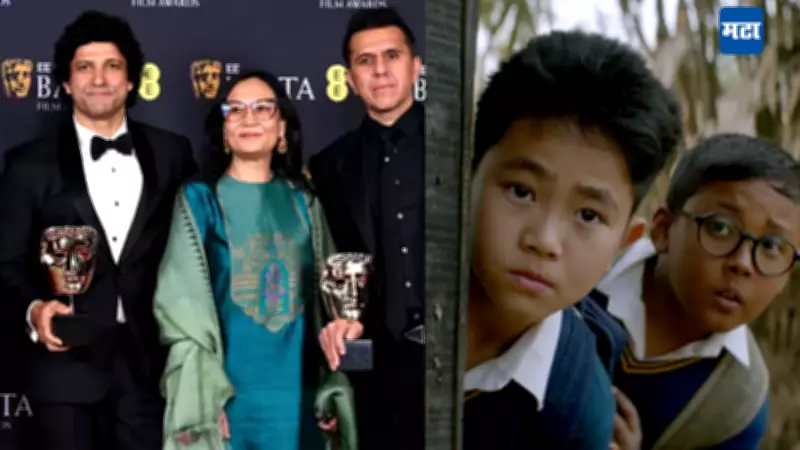
In a landmark moment for Indian regional cinema, the Manipuri film "Boong" achieved a historic win, closely following Assam filmmaker Rima Das's "Not A Hero" receiving a Crystal Bear 'Special Mention' at the prestigious Berlin Film Festival. This dual recognition has ignited widespread discussions about a significant shift in the global perception of Northeast Indian cinema, moving beyond novelty to celebrate craft-driven excellence characterized by tighter writing, assured direction, and emotionally precise performances that resonate universally without reliance on spectacle.
A Legacy of International Visibility
International visibility for Northeast Indian cinema is not a recent phenomenon. Assamese cinema first drew global attention when Jahnu Barua's "Halodhia Choraye Baodhan Khai" won the Silver Leopard at the 1988 Locarno International Film Festival. Manipur followed suit with Aribam Syam Sharma's "Ishanou" being screened in the Un Certain Regard section at the 1991 Cannes Film Festival. Over the years, filmmakers from across the region have consistently appeared on the international festival circuit, including:
- Haobam Paban Kumar from Manipur
- Pradip Kurbah, Wanphrang Diengdoh, and Dominic Sangma from Meghalaya
- Sange Dorjee Thongdok from Arunachal Pradesh
- Tiakumzuk Aier from Nagaland
- Tribeny Rai from Sikkim
- Rima Das, Bhaskar Hazarika, and Jaicheng Jai Dohutia from Assam
Recent films like "Boong", "Not A Hero", "Shape of Momo", "Ha Lyngkha Bneng", "Bokshi", "Rimdogittanga", "Loktak Lairembee", "AFSPA, 1958", and "Joseph's Son" are gaining attention for their deep-rootedness in specific languages, landscapes, and lived experiences. The appeal lies in authenticity rather than exoticism, allowing local details to convey universal themes.

Factors Driving the Global Recognition
The rise of Northeast Indian cinema on the world stage is attributed to multiple interconnected factors. Improved technical finish and broader access to filmmaking tools, formal training through film schools, exposure to international festivals, and the proliferation of streaming platforms have collectively lowered barriers to entry, enabling these films to compete effectively on global platforms.
Rima Das emphasizes that the recognition stems from "authentic, rooted storytelling." She notes, "For many years, the region's stories were underrepresented, but filmmakers are now telling deeply personal narratives that are culturally specific yet emotionally universal. When stories are honest and sincere, they naturally connect with audiences beyond geographical boundaries." Das highlights a new generation of filmmakers working with limited resources but high conviction, focusing on sincerity and truth rather than scale or spectacle.
Manipuri director Haobam Paban Kumar, known for works like "Loktak Lairembee", attributes this success to improved technology, film education, and an increasingly receptive audience for diverse narratives. Similarly, Khasi filmmaker Pradip Kurbah, whose film "Ha Lyngkha Bneng" won multiple awards at the 47th Moscow International Film Festival, credits honest, culturally grounded work with a distinct voice. "These films are not trying to copy anyone. They carry a strong, original voice, and that connects well with international festivals and audiences," Kurbah explains.
Challenges and Community Support
Despite the successes, significant challenges persist. Independent filmmakers in India often struggle to reach international programmers or co-producers, with entry fees for festivals being prohibitive for low-budget projects. Sikkimese filmmaker Tribeny Geeta Rai, whose debut "Shape of Momo" won awards at the Busan International Film Festival, points out that top-tier European festivals remain difficult to access, often favoring films with European co-producers or grants.

However, the Northeast film community has partially mitigated these hurdles through film-school-trained professionals and robust community networks. Kumar notes, "When filmmakers in the community come across a strong film and have contacts with international festival programmers, they personally request them to watch it. This camaraderie within the filmmaking community has been making a difference."
Bollywood's Role and Future Outlook
The involvement of Bollywood, such as in the production of "Boong" by Excel Entertainment and others, is a topic of debate. Kurbah acknowledges that Bollywood's interest can bring visibility and curiosity about the region's stories and talent, potentially opening doors. However, he stresses that the global recognition primarily stems from the steady, authentic work of local filmmakers. "The real strength lies in that authenticity, not just in outside attention," Kurbah asserts.
Premendra Mazumder, vice president of the Federation of Film Societies of India, describes this shift as a conscious departure from mainstream Indian cinema's dominant structures. "They are doing it in a very minimalist way using their own people, landscape, and politics as unique narrative space," he explains. A festival-ready approach with cleaner sound, stronger cinematography, and disciplined editing also plays a crucial role in meeting international expectations.
As Northeast Indian cinema continues to gain momentum, its focus on authentic storytelling, community support, and technical excellence promises to further elevate its presence on the global stage, offering fresh perspectives that resonate with audiences worldwide.