OCD Movie Review: A Morally Complex Psychological Thriller That Demands Attention
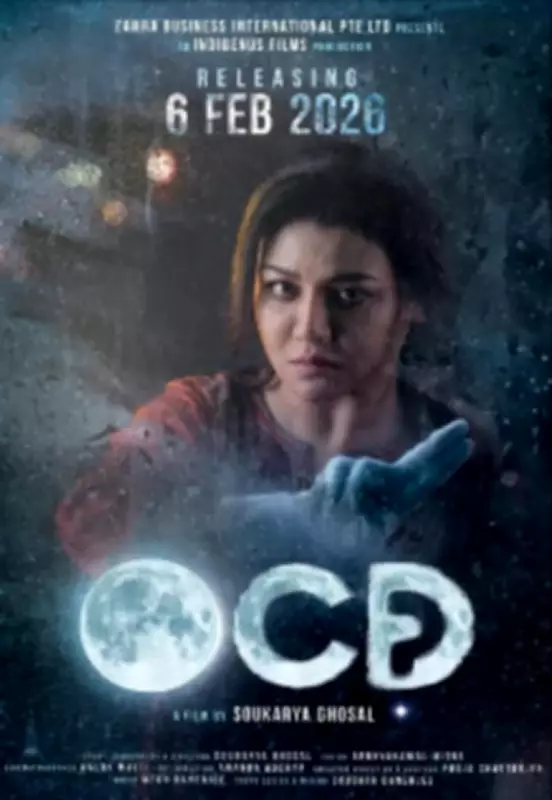
Released on February 6, 2026, Soukarya Ghoshal's latest Bengali film OCD has emerged as a compelling drama-thriller that transcends conventional genre boundaries. With a runtime of 2 hours and 10 minutes, the film has garnered impressive ratings from both critics and audiences, securing a solid 4.0 on both fronts.
A Story of Trauma and Vengeance
The narrative centers on Shweta, portrayed with remarkable depth by Jaya Ahsan, a dermatologist whose life is governed by severe germophobia and touch aversion. Her obsessive cleanliness stems from childhood conditioning by her fiercely protective grandmother, played by Anashua Majumdar. The plot takes a dramatic turn when the person responsible for Shweta's childhood abuse resurfaces, remaining unpunished and compelling her to seek vengeance.
What begins as a psychological thriller rooted in personal trauma gradually unfolds into a layered exploration of how childhood experiences shape adult lives. The film powerfully demonstrates how words and actions from early years leave indelible marks that continue to influence behavior and worldview long into adulthood.

Technical Brilliance and Artistic Vision
Director Soukarya Ghoshal demonstrates exceptional control over visual storytelling, using props, sets, and framing with deliberate precision. The film's first half unfolds at a measured, sometimes languid pace, but this deliberate buildup pays off spectacularly in a gripping final act that keeps viewers on the edge of their seats.
The technical aspects of OCD deserve special mention:
- Sound Design: Arghyakamal Mitra's meticulous sound editing incorporates everything from birdcalls to construction noise, each element carefully placed to match the film's rhythm and enhance the psychological tension.
- Cinematography: Aalok Maiti's assured use of light and framing allows seamless transitions between past and present, while color, makeup, and lighting work together to accentuate emotional states and social contexts.
- Visual Storytelling: The film uses visual elements to suggest neglect and poverty through carefully illuminated objects and spaces, adding layers of meaning to the narrative.
Powerful Performances That Resonate
Jaya Ahsan delivers an impeccable performance as Shweta, fully inhabiting the character with quiet intensity. Her eyes carry much of the emotional weight, conveying trauma, obsession, and determination without excessive dialogue. Anashua Majumdar is equally compelling as the austere grandmother, rendering her uncompromising nature with unsettling realism.
The supporting cast, including Koushik Sen, Koneenica Banerjee, and Sreya Bhattacharya, provide strong performances that enrich the narrative. However, it's the child actors who leave a particularly lasting impression. Arshiya Mukherjee as young Shweta, alongside Rishaan Chakraborty and Debanjali Mondol, deliver natural, assured performances that capture childhood vulnerability with striking sensitivity.
A Film That Provokes Conversation
Beyond its thriller elements, OCD carries a resonant social message about child abuse and the profound influence adults wield over children. Ghoshal avoids prescribing clear moral positions, instead presenting a spectrum of behaviors and consequences that invite viewers to confront uncomfortable truths.
The film succeeds in balancing its entertainment value with social commentary, making it both compelling cinema and meaningful discourse. With direction rated at 4.0, story at 4.0, music at 4.0, visual appeal at 4.0, and dialogues at 3.5, OCD represents a significant achievement in contemporary Bengali cinema.
Ultimately, OCD stands as a testament to how cinema can explore complex psychological themes while delivering gripping entertainment. It's a film that stays with viewers long after the credits roll, prompting reflection on childhood, trauma, and the lasting impact of early experiences.