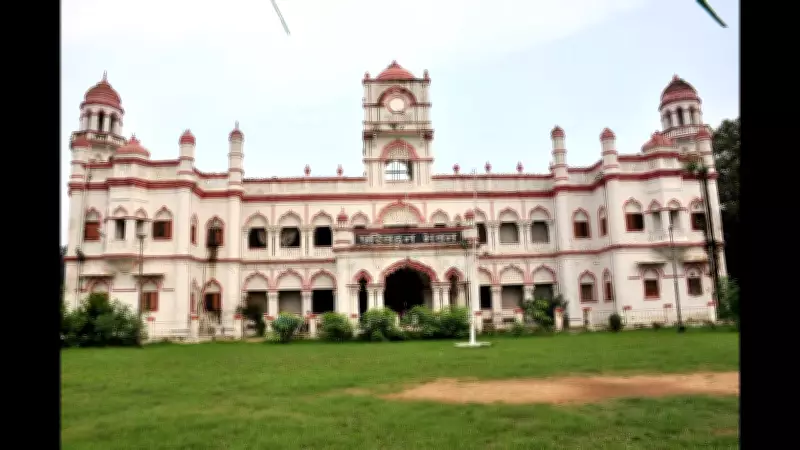
The recent decision by the Bihar state government to classify the 104-year-old Sultan Palace as a 'non-heritage' building, thereby clearing the path for its demolition, has provoked strong criticism from historians, art enthusiasts, and members of Patna's civil society. They are demanding an immediate reversal of the decision and calling for the structure to be granted heritage status to ensure its protection.
Krishna Kumar, the director of archaeology in the state art and culture department, clarified that Sultan Palace is not among the 56 protected monuments in Bihar. In response, the state chapter of the Indian National Trust for Art and Cultural Heritage (Intach) submitted a petition to the Prime Minister's Office (PMO) on Thursday, urging the Prime Minister to intervene and issue directives to preserve the historic building. Similar petitions have been sent to the Chief Minister and Chief Secretary, demanding a halt to the proposed demolition.
Intach state co-convener Shiv Kumar Mishra noted that the state government had previously planned to demolish the century-old building, which currently houses the Bihar State Road Transport Corporation (BSRTC) office, to construct a five-star hotel. This proposal faced strong opposition from historians, conservationists, and the public. Following a Public Interest Litigation (PIL), the Patna High Court stayed the demolition in September 2022 and sought a response from the government. Subsequently, the state cabinet decided on December 10, 2024, that the palace would not be demolished and that the hotel would be built on adjacent vacant land—a move widely appreciated.

However, it has recently emerged that a committee headed by the principal secretary of the state art and culture department observed that Sultan Palace is not included in the state list of heritage buildings, effectively reopening the possibility of its demolition. Mishra expressed shock at this observation, pointing out that the department's own publication, 'Patna — a monumental history', authored by then principal secretary Vivek Kumar Singh, describes the building as significant in terms of architecture, art, style, and structural design, and identifies it as an important heritage structure.
Built in 1922 by Sir Sultan Ahmed, a barrister and the first Indian vice-chancellor of Patna University, Sultan Palace is known for its high-domed tower, slender minarets, and multi-foliated arches, making it a distinctive part of Patna's architectural legacy. The petition argues that the state should follow the example of other Indian states like Rajasthan, where historical structures have been repurposed into heritage hotels rather than demolished.