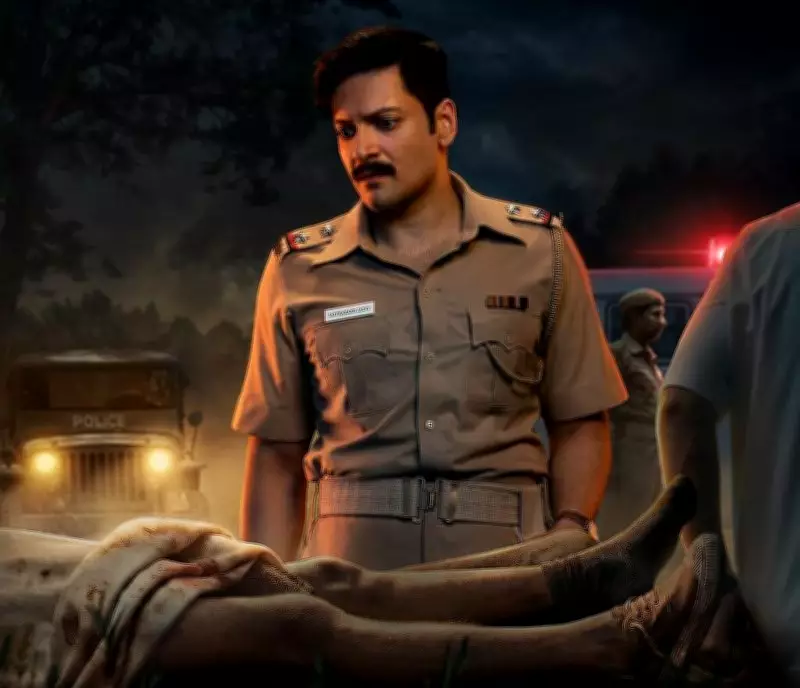
The series 'Raakh' on Prime Video, directed by Prosit Roy, revisits the infamous Ranga-Billa kidnapping and murder case from 1978. Memories of the two-part television crime series 'Crime Patrol' on Sony Entertainment Television, which originally aired in 2018, came rushing back as I watched the same story being stretched out into eight episodes.
It is a resonant but redundant recreation of the heinous crime where two children from a well-to-do family in Delhi were kidnapped and slaughtered for no other reason except that two bored sociopaths wanted to have some fun.
My first impression of the dark, brooding series was, do we really need this? The real Ranga and Billa were given capital punishment (they deserved much worse). This series renews their life, probes into why they became what they were.

Do we really want to know why Ranga and Billa, here played with nettling sincerity by Akash Makhija and Ramandeep Yadav, became what they did, and did what they did? Do they even qualify as human beings? Why give these shameful aberrations a renewability on film, making them look like casualties of an insensitive social order?
Too much time is given to the criminals, too little to the victims of the crime. The slain children's parents, played with constrained conviction by Aamir Bashir and Sonali Bendre, barely get to register their monstrous grief. One 'Hai Oh Rabba' is all the father gets. The mother, a school teacher, goes about doing her work in school as if nothing has happened.
She is in denial. So are the series' five writers who seem undecided on which side of the moral boundaries to choose to rest their case. The bereaved parents are forgotten. The focus is on the criminals and the police procedural pivoted by Ali Fazal, who seems more angry with his extended working hours than the horrific crime.
Fazal plays the cop Jayaprakash like a man who wants to prove a point to himself more than his seniors. The I-can-do-it-Sir stance is superficially heroic, but it does not cut deep into the wound which this series probes so curtly and cursorily.
Most of the other performances are equally diminished by the deficiency in the plotting propulsions, reduced as they are to a series of 'thrills' rather than a genuine exploration of crime, punishment and whatever comes in between.
One of the more interesting characters is Jayaprakash's father, played by Rakesh Bedi, who insists on making and bringing mutton for the entire police station every night. Bedi brings more meat to the table than some of the other characters who meander into the elongated bandwidth of the series, like the journalist (Anshul Chauhan) who is hand in glove (and lots more) with Jayaprakash the cop.
Who cares about a cop-journalist romance when two bestial beings are on the prowl? 'Raakh' leaves many questions unanswered. While speed-dialling the lapses in the police station (at a time when speed dial existed only on landline phones), it manages to hold on to our attention, if for no other reason than to know how the procedure will pan out finally.