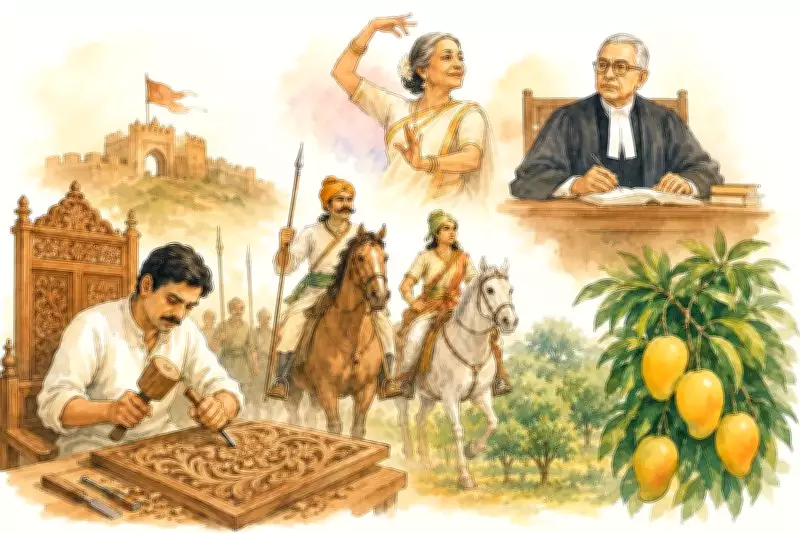
The Wood-Carving Capital of India
Saharanpur does not announce itself gently. It speaks through the mallet and chisel of its woodcarvers, through furniture markets that feed drawing rooms from Delhi to Dubai. They call it the wood-carving capital of India, and the title is well earned. Saharanpur produces over 70 per cent of India's wooden handicrafts, which emerge from these industrious hands and unhurried workshops.
Beyond the workshops, vast mango orchards drape the landscape in languid green, perfuming entire seasons. Yet, Saharanpur is more than the sum of its crafts and orchards. Its soil has long nurtured a stubborn spirit of resistance.
Warriors of History
When Timur swept into India in 1398, he encountered fierce opposition in this region. Local folklore remembers Mahabali Jograj Singh Panwar and a 20-year-old Rampyari Gurjar as leaders of a Mahapanchayat force that challenged the invader through relentless guerrilla warfare. Their attacks inflicted heavy losses on Timur's army, disrupted its supplies, and entered local lore as a defining act of defiance.

That rebellious spirit survived the centuries. In 1813, the Gurjars of Saharanpur launched one of the earliest armed uprisings against British rule in present-day Uttar Pradesh. During the Revolt of 1857, they once again stood at the forefront of resistance, leading the struggle across the region despite facing some of the harshest British reprisals.
The Artist and the Judge
Then there is the grace. Zohra Sehgal, born Sahibzadi Zohra Mumtazullah Khan in the city in 1912, danced, acted, and charmed across eight decades — Bollywood's most irrepressible soul, still performing past a hundred.
And Justice Sayyad Agha Haider embodied a different kind of courage. As a member of the Special Tribunal hearing the Bhagat Singh case in 1930, he refused to sanction the death penalty, telling a government emissary sent to pressure him: "I am a judge, not a butcher." He paid a price for that conscience, losing office rather than compromising principle.
The chisels may be louder. But the warriors, the judge, and the artist endure longer in memory.