

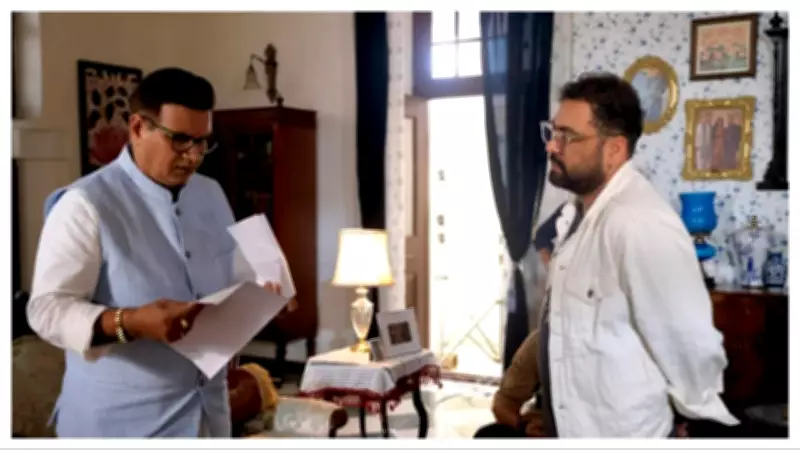
Following his directorial debut with Janhit Mein Jaari starring Nushrratt Bharuccha, filmmaker Jai Basantu Singh has turned his attention to a world rarely explored on screen in Satrangi: Badle Ka Khel. Set against the backdrop of rural Uttar Pradesh, the series stars Anshumaan Pushkar, Mahvash and Kumud Mishra, and delves into themes of caste, identity, dignity, power and survival through the lens of Launda Naach.
A Story Beyond Revenge
At its core, Jai believes the series is about far more than revenge. He shares, “While revenge drives the story externally, at its heart, Satrangi is about dignity, exploitation, love and the need to be accepted.” The story also carries a deeply personal connection for the filmmaker. Having grown up in Uttar Pradesh, he had witnessed the world of Launda Naach firsthand in places such as Banaras and Jaunpur. He recalls, “Their struggles and emotional realities stayed with me deeply. In fact, I had written a film around this world back in 2019, though it never materialised. So, when Satrangi came to me, I instantly connected with it on a personal level.”
The Complexity of Launda Naach
What drew him most strongly to the setting was its complexity and contradiction. He says, “I have always believed the most powerful stories come from worlds cinema has not explored enough. Launda Naach is culturally rich, visually fascinating and emotionally layered, yet it is rarely represented authentically on screen. What intrigued me most was the contrast within that space, performance and pain existing together. These artistes entertain people while dealing with struggles around identity, survival and respect.” That duality informed several creative decisions during filming. Jai recalls stripping away background music from a key confrontation sequence and relying instead on silence, breathing and eye contact to heighten its impact. He also used intimate camera frames during vulnerable moments to draw viewers closer to the characters’ inner lives.

Memorable Moments on Set
Among the most memorable moments during production was a scene involving Anshumaan Pushkar and Kumud Mishra. The sequence follows Babloo, a young man who dreams of becoming an IAS officer, as circumstances force him into becoming a Launda dancer. He says, “There is a scene where Babloo’s father prepares him for his first performance by helping him wear the costume, applying lipstick, and making him wear jewellery and anklets. To build the atmosphere, I played a song on set, and suddenly the entire unit went silent. Many people had tears in their eyes because the scene carried so much helplessness and heartbreak.” He adds, “Later, there are moments where Babloo faces public humiliation while performing. Those scenes were among the most difficult to shoot. Anshumaan was exceptional, and Kumud Mishra brought incredible emotional sensitivity to the father-son relationship. Experiences like these remind me why I tell stories in the first place. When a scene allows people to feel seen, understood and moved, it stays with them long after the screen goes dark.”

