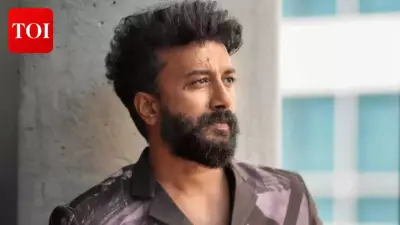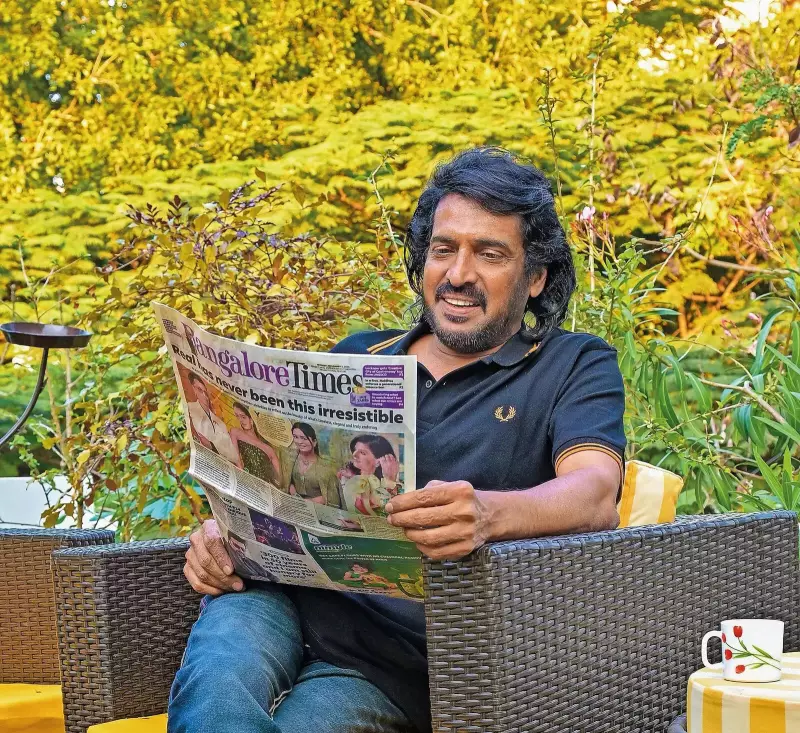
In the heart of Bengaluru's Sadashivanagar, on the garden terrace of a home he describes as arriving "in the most magical way," sits a cinematic disruptor. Upendra, the actor-filmmaker who redefined Kannada cinema in the mid-1990s, remains a vital voice, his relevance cutting across generations. In a candid conversation with Bangalore Times, the artist fondly called Uppi delves into the future of Kannada films, the essence of storytelling, and the seismic impact of emerging technologies like Artificial Intelligence.
Sustaining the Global Momentum: Beyond KGF and Kantara
Upendra expresses immense pride in the pan-India recognition achieved by films like KGF and Kantara. However, he brings a seasoned perspective to the celebration. "The hit ratio has always been just four to five per cent," he notes, pointing out that the discussion is louder now due to the wider reach. The real challenge, according to him, is not just creating isolated blockbusters but building a sustainable ecosystem.
He highlights the glaring gap between high-budget spectacles and small-scale inspirations like Su From So. "How many filmmakers can find producers for such budgets? And how many truly succeed after a shoestring success?" he questions. The solution, he believes, is multifaceted. Today's film success hinges on a strong story coupled with strategic promotions, marketing, compelling artistes, and crucially, the right release window.

Stars vs. Ideas: What Truly Drives Cinema?
When asked if Kannada films are still driven by stars or ideas, Upendra's answer is unequivocal. "Films are always driven by ideas. A hit film will invariably have a strong story," he states. With a characteristic laugh, he adds, "Perhaps it's we, the stars, who lived under the illusion that we made the hit happen!"
He reflects on his own filmography—Ratha Sapthami, Premaloka, A, Upendra—as testaments to powerful ideas expanding into something larger. For him, content alone will push cinema forward. This philosophy stems from a deep-seated purpose. "I didn't come here by choice; life brought me here. In class 7, I wanted to do something for society. I felt cinema would give me the platform to lead something larger," he shares, mentioning his political venture Prajakeeya as an offshoot of that ambition.
Audience Evolution and the AI Revolution
Known for challenging comfort zones, Upendra recalls the mixed reception to his early works like A and Upendra. He faced criticism, with some even claiming women would avoid his films. He cites the example of a scene in Upendra where the character Prema begins as a sex worker. The public focus, he says, was narrowly on the money she charged, missing the broader narrative of redemption and partnership he aimed to portray.
This leads him to the fascinating frontier of technology. Upendra has been deeply contemplating AI and its parallels with human creativity. "Both AI and human beings function on memory," he observes. What he recreates in films comes from personal experience, while AI relies on data fed by humans. The key, he says, is perception: "Whether you see it as competition, a threat, or an accomplice depends entirely on you."
He views AI as an inevitable and powerful creative tool, similar to how graphics became essential. "I can sit here, look at that tree, and transform it into the Himalayas. That's the kind of creative expansion AI enables." He draws an analogy to the introduction of caravans, initially resisted but now valued for privacy. AI has entered filmmaking because the time is right.
Upendra's excitement is palpable as he imagines the possibilities. He reminisces about a complex, dream-sequence comedy scene from Tharle Nan Maga involving flying utensils and Cupid's arrows, wondering how much further it could be explored with AI today. "I'm genuinely excited by the idea that today, I can sit at home, not step out at all, and make a film entirely on my phone; be it shooting, editing, composing music, promoting, and even releasing it," he declares.

Looking ahead, if he were starting now, his focus would shift. Having accomplished his goal of giving people something to think about, he is now exploring what lies beyond. Through his journey—from a class 7 student wanting to serve society to a maverick filmmaker pondering AI—Upendra embodies his own core belief: the future belongs to those who adapt and make technology an ally.