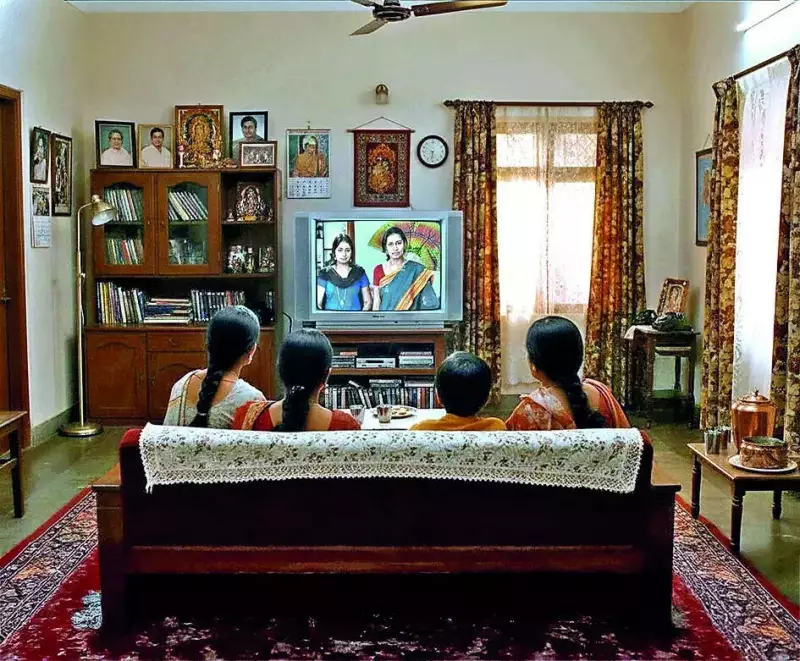
In an age before streaming algorithms and personal screens, watching Kannada television was a collective family ceremony. Households across Bengaluru and Karnataka would synchronize their evening routines, finishing dinner and homework just in time to gather around the single television set. This was not merely about entertainment; it was a catalyst for conversation, reflection, and subtle social commentary within the sanctum of the living room.
The Inward Gaze: Television as Middle-Class Mirror
During its formative years, Kannada TV carved out a distinct cultural niche. At a time when regional cinema was increasingly leaning towards grandeur and hero-centric narratives, television turned its focus inward. It zoomed in on the everyday lives, dilemmas, and aspirations of the middle-class home, speaking directly to its audience in an emotional and relatable language.
Senior filmmaker TN Seetharam traces the evolution of the format. Initially, serials had limited runs of 13 episodes aired weekly. "By the mid-90s, the advent of daily soaps led to exponential growth in viewership," he recalls. These shows transformed into the vocal platform for middle-class families, boldly tackling subjects often considered taboo—women's empowerment, student struggles, legal battles, and domestic tensions. "The impact was so profound that people still request recreations of those serials," Seetharam notes, highlighting the enduring cultural imprint.

From Rooted Stories to Glamorous Influences
Filmmaker and director P Sheshadri points out that Kannada serials gained significant traction in the mid-1980s. This rise coincided with cinema's gradual departure from family-oriented stories. "Television was designed for collective family viewing, engaging all age groups together," he explains. Landmark serials like Mayamruga and Manethana became cultural benchmarks, similar to the iconic status of Shanti in Hindi television.
The core viewership, Sheshadri observes, comprised middle-class women aged 25 to 60, who were deeply engaged with character-driven narratives and emotional journeys. However, a pivotal shift occurred in the mid-2000s with the influx of Hindi television trends, particularly the high-drama style popularized by Ekta Kapoor. "While this infusion of glamour expanded reach and changed perceptions, it diluted some of the rooted, authentic storytelling that defined early Kannada TV," Sheshadri admits.
Resourceful Storytelling and Lasting Social Impact
Actor-director Ramesh Indira remembers the 2000s as a time of creative ingenuity born from budgetary constraints. "A full wedding scene was costly, so we would show a printed invitation with 'akshate' (rice) sprinkled over it, accompanied by the sound of 'vaalagas' (wedding music). Scarcity didn't hinder imagination; it honed it," he reminisces. Serials like Mayamruga, Manvantara, Muktha Muktha, and Moodala Mane championed values of loyalty and self-esteem, resonating with middle-class aspirations. Their characters remain referenced in popular discourse even today.
Beyond entertainment, these shows subtly influenced real-life dynamics. Dancer and actor Seetha Kote believes that serials played a significant role in helping families navigate and better understand complex relationships, sometimes even aiding in conflict resolution. Thus, Kannada television did more than tell stories; it participated in them, shaping a shared social and emotional landscape for a generation.