

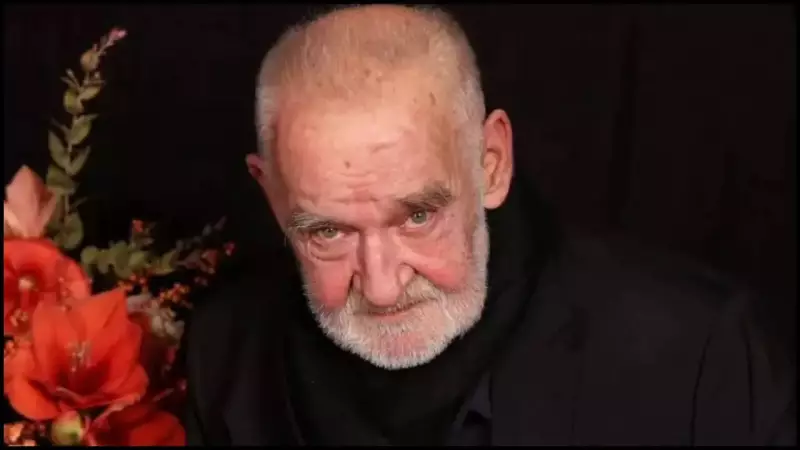
The world of cinema has lost one of its most distinctive voices. Veteran Hungarian director Bela Tarr, widely celebrated as a titan of slow-moving, contemplative filmmaking, has passed away. He was 70 years old.
Confirming the Loss of a Cinematic Giant
The sad news was confirmed by the Hungarian news agency MTI, citing fellow director Bence Fliegauf. The European Film Academy also released an official statement, revealing that Tarr died on January 6 after battling a long and serious illness. The family has requested privacy during this difficult time, asking the press and public for understanding.
In its tribute, the Academy stated it "mourns an outstanding director and a personality with a strong political voice, who is not only deeply respected by his colleagues but also celebrated by audiences worldwide." This sentiment captures the profound impact Tarr had on both the art film community and viewers across the globe.

The Unmistakable Legacy of Bela Tarr
Born in Pécs, Hungary, in 1955, Bela Tarr carved a unique path in the film industry. He was a true pioneer, best known for his hypnotic, black-and-white visuals and exceptionally long, uninterrupted takes. This signature style demanded patience and immersion, creating a powerful, atmospheric storytelling method that became his trademark.
His career began at a Hungarian studio for experimental films. Tarr's directorial debut, 'Family Nest' (1977), won the Grand Prix at the Mannheim Film Festival. Despite this early success, he chose to further his education, graduating from the Academy of Theatre and Film in Budapest in 1982.
International acclaim arrived with his 1988 film 'Damnation', which earned him the Best Young Film Award at the European Film Awards. However, his magnum opus is widely considered to be the 1994 epic 'Satantango'. This monumental film, running for approximately seven hours, depicts life in a collapsing Hungarian collective farm and is based on the novel by László Krasznahorkai.
A Filmography of Profound Depth
Throughout his career, Bela Tarr built a formidable and focused body of work. His filmography includes:
- Nine feature films
- One television film
- Four short films
- Three documentaries
Later works like 'The Man from London' (2007) and 'The Turin Horse' (2011) further cemented his status as a master of his craft. 'The Turin Horse', a bleak and beautiful meditation on existence, is often cited as a masterpiece of 21st-century cinema.
Bela Tarr's passing marks the end of an era for a certain kind of ambitious, uncompromising filmmaking. His films were not merely watched; they were experienced. He challenged conventional narrative pacing, inviting audiences into a deeply meditative and often starkly realistic view of the human condition. His legacy as a visionary director will continue to inspire and influence filmmakers and cinephiles for generations to come.

