Breast of Luck: A Musical Comedy That Finds Laughter in Life's Toughest Battles
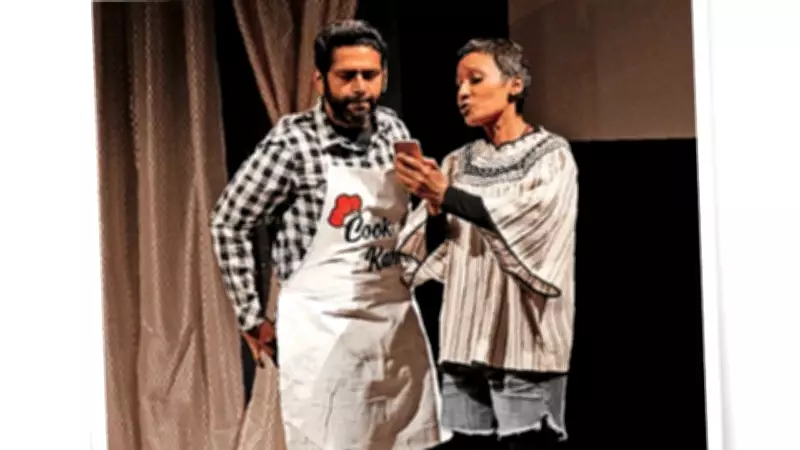
In a world where cancer narratives often drown in solemnity, a groundbreaking play emerges from Mumbai's theatre scene, daring to sing, dance, and laugh through the grimness of diagnosis and treatment. 'Breast of Luck', a musical comedy co-written and staged by actress Tannishtha Chatterjee and actor Sharib Hashmi, represents a bold departure from conventional portrayals of illness, weaving humor and music into a story of resilience and human connection.
From Personal Pain to Theatrical Catharsis
The play's origins are deeply personal. Tannishtha Chatterjee, diagnosed with stage IV oligometastatic cancer last year, found herself grappling with uncertainty just as she was supposed to meet Sharib Hashmi for coffee. Hashmi, whose wife Nasreen has battled mouth cancer four times since 2018, became an unexpected pillar of support. "The day I got my report, I was supposed to meet Sharib for coffee. I almost cancelled," Chatterjee recalls. "I was devastated. But I thought if I go home, I'll have to tell my mother and I'll feel worse. So I went."
That meeting sparked a creative collaboration that would become 'Breast of Luck', directed by Leena Yadav. The play recently opened at G5A in Mumbai to a packed house that included Naseeruddin Shah, Dia Mirza, Tanvi Azmi, Divya Dutta, along with Chatterjee's doctors and cancer survivors. At the first show's conclusion, Chatterjee turned to the audience and confessed, "Honestly, I don't know how I am doing except that I have stopped chasing certainty." Shah reassured her with profound insight: "This is the most cathartic and best thing you could have done for yourself."

A Story of Opposites Attracting Through Adversity
The play's narrative centers on Sheila Roy, a composed classical singer, and Arun Mohan, a divorced stockbroker with a penchant for dad jokes and awkward high-fives. Their initial clashes over morning riyaaz sessions evolve into a connection through a dating app, only to be disrupted by Roy's diagnosis of stage IV oligometastatic breast cancer.
What follows is a poignant exploration of vulnerability and steadfast companionship. Roy attempts to push Mohan away, fearing that love will expose her fragility, but he refuses to abandon her. His caregiving is characterized by relentless puns and unwavering support, creating an emotional anchor that refuses to surrender humor or intimacy to illness. "Exactly. That is the USP," Hashmi explains. "Otherwise, it could easily have become a sad story. We chose to see it from a lighter side — with songs, jokes, laughter."
Drawing From the Depths of Real Experience
'Breast of Luck' incorporates authentic elements from Chatterjee's medical journey. The second half features real hospital visuals — insurance IVRs, chemotherapy rooms, and injections — including footage of Chatterjee singing through painful medical procedures. "The targeted medicine was extremely painful. But when I sing, those 10 minutes used to pass more quickly," she reveals, having invited a documentary cinematographer friend to film her final chemotherapy session.
The creative process unfolded alongside treatment, with rehearsals scheduled between hospital visits and improvisations shaped by both pain and laughter. Chatterjee wrote during her treatment, seeking constant humor even in medical mundanities like doctors debating silicone implants or nurses scolding her for laughing too loudly in hospital rooms.
The Crucial Role of Community and Caregiving
Chatterjee emphasizes that community sustained her through the darkest moments. "I cried alone in my car with my reports," she shares. "My sister told me — you can't save yourself alone." Friends provided levity through video calls, joking about everything from political absurdities to daily life, helping her find moments of lightness.
Hashmi brings personal understanding to his role, having supported his wife through her cancer journey. "After my wife's diagnosis, our lives changed completely," he says. "But she treated cancer like a fever — with courage, humour, incredible strength. We tried to bring that spirit into the play."

Medical Perspectives on Humor and Healing
Medical professionals acknowledge the play's approach with careful consideration. Breast oncoplastic surgeon Dr. Vani Parmar notes that cancer diagnosis often arrives as a profound shock, particularly for younger women, bringing physical, emotional, social, and financial strains alongside fears of recurrence. "'Chemo brain', or brain fog, is also part of the territory," she adds, highlighting the comprehensive challenges patients face.
Psychological counselor Priyadarshini Deo from Kokilaben Dhirubhai Ambani Hospital points to research supporting humor's therapeutic value. "Humour and lightness reduce stress, ease anxiety, improve communication and strengthen relationships, especially with caregivers," she explains, advocating for greater integration of psychological support in cancer care.
Challenging Cultural Narratives About Illness
Chatterjee questions why cancer is typically portrayed through despair in popular culture. "Because it usually comes from an external perspective, not lived experience," she suggests. "I think there's a fear — how can I be sensitive (towards the topic)? I was fearless because it's me."
The play doesn't trivialize struggles, addressing real challenges like insurance battles that left Chatterjee feeling particularly vulnerable. "The day my insurance refused me, I was at my lowest," she confesses, highlighting the financial burdens faced by many patients.
A Message That Resonates Beyond the Stage
Audience responses indicate the play's profound impact. Survivors have experienced both tears and laughter, caregivers have recognized their own experiences reflected on stage, and those who have lost loved ones have found something gentler than pure grief. Hashmi's wife has seen the production three times, finding validation and connection in its portrayal.
Dr. Parmar emphasizes the importance of supporting caregivers too, noting emotional burnout and financial strains that accompany caregiving roles. "Clear communication, shared decision-making and emotional support make the biggest difference," she advises, calling for psychological and financial support integration in standard cancer care.
As 'Breast of Luck' prepares for its staging at the Kala Ghoda Arts Festival on February 4 to mark World Cancer Day, it carries a universal message. "My doctors told me this isn't just about cancer," Chatterjee concludes. "In any illness, people should watch it — to see how art, music, laughter and community are therapeutic." The play stands as a testament to human resilience, proving that even in life's most challenging chapters, laughter can be both medicine and rebellion.