

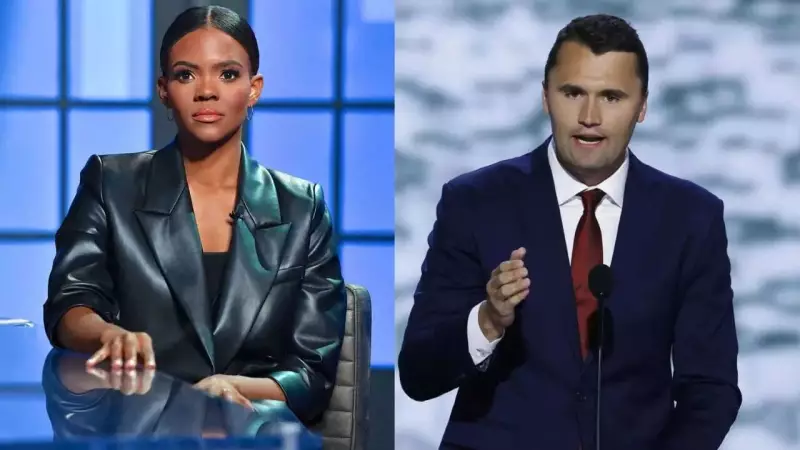
A single social media post from conservative commentator Candace Owens late on Thursday sent political and media circles into a frenzy, reigniting a contentious online debate about responsibility, facts, and speculation.
The Explosive Instagram Claim
On her verified Instagram account, Owens shared a story that immediately captured widespread attention. She wrote, “Think I may officially solved the WHY Charlie Kirk was murdered. Today’s episode is my official theory as to WHY and it neatly ties in Israel, Evangelical Churches, and his last trip to Asia.” The statement, presented without any qualifying language or hesitation, set off immediate alarm bells.
Journalists and media commentators were quick to highlight the problematic nature of the claim, stressing the critical need for factual clarity, especially given Owens' substantial online reach. The post was not just controversial; it became a flashpoint for a larger discussion on digital ethics.

Amplification and Intense Scrutiny
The controversy rapidly escalated when a popular social media account known as Cinema Shogun amplified Owens' story. Cinema Shogun reposted it with sharp commentary, writing, “Candace Owens just officially announced that she believes she has FINALLY SOLVED why Charlie Kirk was murdered.”
The critique did not stop there. The account directly challenged Owens' credibility, asking, “Is this an ADMISSION that she’s just been completely WASTING EVERYONES TIME with all of the other theories for the last three months?” It concluded with a damning accusation: “Everything else she put out has been DEBUNKED so now she’s pretending like those were never her ‘Official’ theories.”
This amplification turned the episode into a major talking point, drawing in a wider audience and intensifying the scrutiny. Critics accused Owens of promoting unfounded conspiracy narratives about Charlie Kirk, who is very much alive, leading to a rapid online clash of assertions and counter-assertions.
Divided Reactions and Broader Implications
The social media response was intensely polarized within minutes. While some supporters rushed to defend Owens, arguing that she was speaking hypothetically or engaging in commentary, detractors remained wholly unconvinced. They emphasized that phrasing carries immense weight when communicating with an audience of millions, and declarative statements about serious topics like murder demand extreme caution.
This episode underscores a growing and persistent tension in the realm of digital media and commentary. It highlights the real-time collision between influence, speculative content, and public accountability. The debate it sparked goes beyond a single post, questioning where the line is drawn between speculation and irresponsible declaration in the high-stakes arena of online discourse.

