Daemon Targaryen's Disturbing Dream in House of the Dragon Season 2: A Deep Psychological Analysis
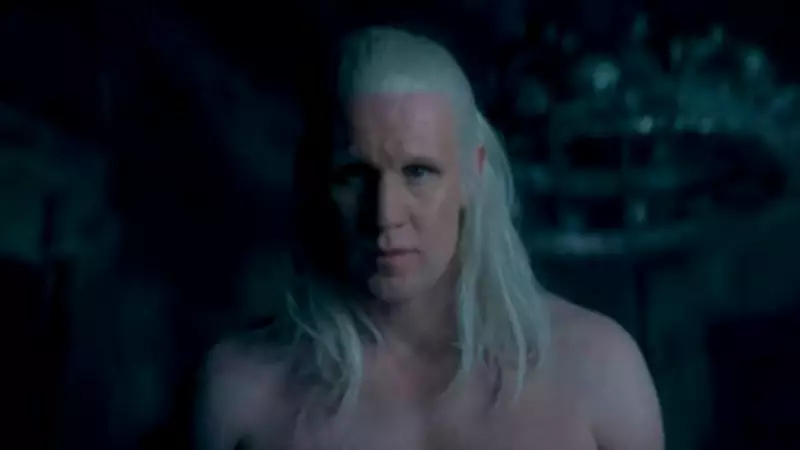
Remember that chilling moment when Daemon Targaryen abruptly woke from his slumber while residing at the ominous Harrenhal castle? Indeed, enthusiasts of House of the Dragon continue to dissect that bizarre and unsettling sequence from Season 2, Episode 5, titled Regent. In this pivotal scene, Daemon experiences a vivid, erotic dream within Harrenhal's haunted walls, where he finds himself intimately entwined with a mysterious silver-haired woman.
The Unsettling Vision: More Than Just a Dream
Initially, it appears as another hallucinatory vision, but the narrative takes a dark turn when she begins whispering to him. She proclaims Daemon as the strong one, her favorite, asserting that his brother Viserys never measured up to his stature. The shocking revelation dawns upon him: this is not merely a lover but his mother, Alyssa Targaryen. However, this scene transcends mere shock value, delving into profound psychological layers, symbolic meanings, and the classic Targaryen family peculiarities that define the series.
Setting the Scene: Harrenhal's Haunting Atmosphere
First, let us establish the context. In Episode 5 of House of the Dragon Season 2, Daemon is depicted as being confined at Harrenhal, a location notorious for its haunted and cursed reputation. The castle exudes malevolent energy, with whispers of ancient magic and spectral presences lingering in its shadows. During his stay, Daemon succumbs to hallucinations and bizarre dreams, with this particular vision standing out as the most disturbing.

As Daemon drifts off during dinner, he finds himself alone with this enchanting woman. They share kisses and intimacy, after which she commends him in the exact manner he has always yearned for. She labels him strong, suggests he should have been the firstborn, and declares him her favorite son.
In her haunting whispers, she articulates, Daemon, you were always the strong one... Your brother had love in his heart but lacked your constitution... If only you'd been born first... my favorite son.
Only later does he comprehend her identity as his mother, a figure he barely recalls due to her death during his childhood. This realization instantly sours the experience, leaving Daemon profoundly shaken and emotionally vulnerable.
Conspiracy Theories: Unraveling Daemon's Subconscious
So, why does his subconscious venture into such treacherous territory? Several compelling reasons emerge prominently.
First, Daemon's entire existence has been marred by feelings of neglect and underappreciation, coupled with a lack of the validation he believes he deserves. As the second son, he perpetually occupies the role of the troublemaker who never ascended to the throne. His mother's premature demise robbed him of the opportunity to know her or receive the love and affirmation he desperately craves.
Thus, in the dream, she bestows upon him precisely that: acknowledgment of his superiority and the wish that he had been the eldest. This represents Daemon's deepest desires surfacing, distorted by the loneliness and frustration he cannot escape.
Second, the lore surrounding Harrenhal and its curse plays a crucial role. The castle possesses an innate ability to infiltrate the psyche of its inhabitants. Additionally, folklore suggests that Harrenhal's curse can induce frenzied states. House of the Dragon subtly implies that a woman named Alys Rivers, whom Daemon refers to as a witch, might be orchestrating some of these visions.
With her alluring presence and profound knowledge, theories abound regarding whether she is drugging Daemon or employing mystical means to manipulate his mind. Consequently, Daemon's dream may not solely stem from his subconscious but could be amplified by Harrenhal's haunted energy and Alys's influence, forcing old wounds and concealed desires to the forefront.

Symbolism and Psychological Depths
While logical analysis provides insights, the dream is rich with symbolism. This vision probes themes of power and identity. The woman's assertion that Daemon should have been heir instead of his older brother Viserys strikes at the core of his lifelong belief: that he is the superior candidate, strong enough to rule and deserving of the Iron Throne.
The dream merges his thirst for power with his need for recognition and selection, profoundly affecting him. It is not merely about losing the throne but about an internal whisper that he never truly belonged.
Furthermore, a deeper layer involves the infamous Oedipus complex. Sigmund Freud's theory posits that boys unconsciously desire their mother's affection and view their father as a rival. Whether one subscribes to this or not, it serves as a fitting lens for Daemon's dream: he seeks his mother's approval not only as a son but as someone who needs to be seen, chosen, and deemed worthy, especially in comparison to his older brother, who also embodies a kingly, father-like figure.
The dream lays bare the tangled, unresolved emotions that Daemon typically masks behind bravado and violence.
Implications for Daemon and the Narrative
Undoubtedly, it is a disturbing scene, yet it offers a rare glimpse into Daemon's psyche. Above all, it illustrates how he is haunted by what he never possessed: a mother's love, a defined familial role, and the validation he perpetually seeks. Daemon's dream, more akin to a nightmare, signifies more than a shocking moment for viewers; it marks a significant shift for his character.
His insecurities are laid bare, revealing that his ambition stems from ancient scars rather than mere thirst for power. Harrenhal's eerie ambiance likely contributes a supernatural dimension, demonstrating that even a formidable figure like Daemon cannot evade the clutches of his own mind.