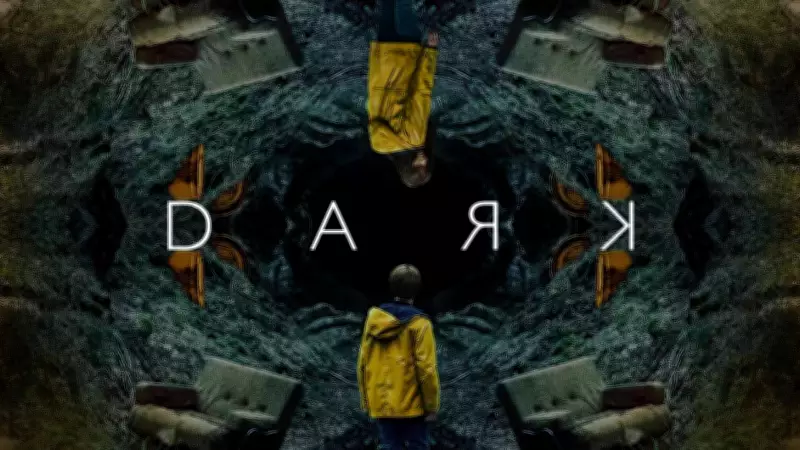
Dark's Enduring Legacy: A Sci-Fi Masterpiece That Refuses to Fade
If you believed that Netflix's German sci-fi phenomenon Dark concluded all its mysteries with its 2020 finale, prepare to reconsider. This is not merely another television series that wrapped up neatly; it is a rare narrative achievement that seizes your attention from the inaugural episode and relentlessly challenges your perception of reality, weaving a complex tapestry of time, fate, and human connection that continues to resonate deeply with audiences worldwide.
The Unforgettable Journey of Winden
Premiering in 2017, Dark introduced viewers to the haunting, rain-soaked town of Winden, a locale simmering with buried secrets, groundbreaking time travel, and more temporal paradoxes than one can possibly tally. Over three meticulously crafted seasons, the show did far more than deliver a satisfying conclusion. It unleashed a finale so audacious and philosophically rich that it has fueled endless online discourse and fan theories for years. The central question persists: Was the destructive time loop genuinely shattered, or does it persist in some subtle, altered form? This debate remains fervently alive in fan communities and critical analyses.
Deconstructing the Core Narrative
At its profound essence, Dark is a masterful exploration of time itself—portraying it not as a linear path but as a convoluted, interconnected web. Themes of destiny, sacrificial love, and inescapable family legacies are not mere plot devices; they are inextricably intertwined threads forming a Gordian knot of narrative complexity. For those new to this epic, Dark is a German-produced science fiction mystery spanning three seasons from 2017 to 2020. The plot orbits four interconnected families in the fictional town of Winden, whose lives become entangled through decades-spanning time travel and, ultimately, the revelation of entire alternate realities.

The story ignites with the disappearance of a child in 2019, but swiftly escalates into a dizzying puzzle linking past, present, and future across distinct eras: 1953, 1986, 2019, and later, parallel dimensions. Characters traverse these timelines in pursuit of answers about a mysterious cave-based time portal and a seemingly inescapable cyclical catastrophe. The series is densely packed with mind-bending paradoxes, including instances where individuals become their own ancestors and timelines fold in upon themselves, perpetually challenging the viewer's grasp of causality and origin.
The Architects of a Temporal Labyrinth
Creators Baran bo Odar and Jantje Friese constructed an immensely detailed universe that leaps across three primary decades and eventually unveils a third, origin world. Every character decision, every concealed secret, and every emotional heartbreak is meticulously interconnected, warping conventional understanding and provocatively questioning the very nature of free will versus predestination. Remarkably, nearly four years post-finale, dedicated fans continue to scrutinize every frame, convinced that hidden layers and clues remain embedded within the show's rich visual and narrative texture.
Deciphering the Controversial Finale
In its climactic episodes, Dark unveils its most monumental revelation: the majority of the series transpires within two alternate worlds, both inadvertently spawned by a time machine created by H.G. Tannhaus, a grief-stricken clockmaker residing in a separate, original reality. Driven by despair after a tragic car accident claimed his family, Tannhaus's invention catastrophically fractures reality, generating two parallel versions of Winden and ensnaring all inhabitants in relentless, painful time loops.

The character Claudia, who has been quietly unraveling the temporal conspiracy from the shadows, dedicates that the sole escape from the cycle is not to outmaneuver it, but to prevent its genesis. Protagonists Jonas and Martha—each hailing from one of the alternate Windens—join forces, travel to the origin world, and successfully avert the fatal car crash. This singular, heroic act erases the time machine from existence, dissolves the two alternate worlds, and causes Jonas and Martha to vanish, as their very beings were products of the now-nonexistent loop.
The series concludes on a subtly poignant note: in the restored origin world, the surviving characters lead ordinary, untroubled lives, completely unaware of the temporal chaos that once was. During a tranquil dinner gathering, one guest experiences a fleeting sense of déjà vu and mentions her intention to name her newborn son "Jonas." This brief, evocative moment lingers with profound ambiguity, suggesting that perhaps faint echoes or memories of the erased timelines persist, haunting the edges of this new reality.
Persistent Fan Theories and Unresolved Mysteries
Despite its dramatically conclusive and emotionally charged finale, Dark intentionally leaves certain narrative threads tantalizingly loose, ensuring that fan speculation and debate endure. Here are the primary reasons the show's ending continues to captivate and confuse audiences:
- Indestructible Paradoxes: The narrative foundation is built upon resilient paradoxes, most notably the bootstrap paradox, where objects or information exist without a clear point of origin because they create themselves. Characters literally become their own ancestors; artifacts circulate without a definitive source. Some theorists argue this inherent paradoxical nature implies the loop may not be entirely eradicated, but merely transformed or subdued.
- The Ambiguous Final Scene: While the origin world dinner appears to depict liberation from temporal entanglements, the mention of the name "Jonas" and the sensation of déjà vu introduce deliberate doubt. Is this merely a sentimental homage, or a subtle indicator that the cycle's influence still lingers, operating just beyond perception?
- Two Dominant Interpretations: The fan community is broadly divided between two compelling theories. One camp staunchly believes Jonas and Martha permanently shattered the loop, granting all characters a genuine fresh start. The opposing camp contends the loop remains unbroken in some form, positing that the alternate realities might still exist in a different state, or that the show's conclusion represents merely another iteration of the cycle, cleverly disguised. Proponents of this view cite the show's own paradoxical logic, arguing that not every layer was fully revealed.
- Profound Philosophical Questions: Ultimately, Dark transcends mere plot mechanics to grapple with weighty existential themes: the conflict between free will and determinism, the nature of destiny, and whether human beings are inevitably trapped in repetitive cycles of behavior and consequence. The series deliberately refuses to provide absolute answers, instead inviting viewers to perpetually question and reinterpret its dense mythology.
So, was the time loop definitively terminated? The answer remains passionately contested, varying depending on individual perspective and interpretation. This very lack of definitive closure is a significant element of Dark's enduring power and legacy. It does not hand you all the solutions; rather, it courageously dares you to continue exploring its labyrinthine possibilities, searching for deeper meaning long after the screen fades to black.