Dayanita Singh Unveils Intimate Photo Exhibit on Ustad Zakir Hussain
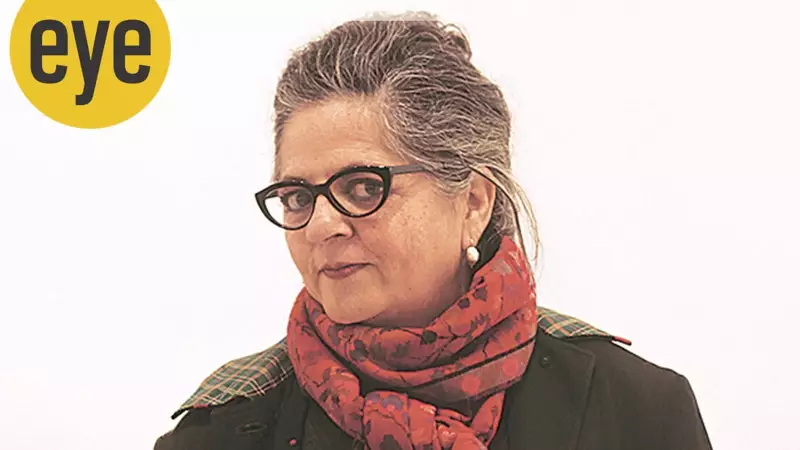
Renowned photo artist Dayanita Singh presents a heartfelt tribute to tabla maestro Ustad Zakir Hussain through a new exhibition. Titled 'Zakir Hussain — Learning to Learn', it features around 300 monochrome images shot over four decades. The show opened last month at Mumbai's National Centre for Performing Arts and runs until February 3.
A Glimpse Into Private Moments
Singh's photographs capture Hussain in everyday settings, far from the stage. Viewers see him eating, sleeping, laughing, and lost in riyaaz with sweat on his forehead. One tender image shows him cradling photographer Ranjit Kaur, Singh's mother, in their Vasant Vihar home. These snapshots highlight Singh's unique access to his life.
"To watch 40 years of someone's life through the same lens is really moving," says Singh. "You are seeing time, and no other medium can hold time like photography." For her, Simla House in Mumbai became a second home during this journey.

How It All Began
Their story started in the 1980s when Singh, then a student at the National Institute of Design, attended a Pt Ravi Shankar concert. After a tussle with organizers, she fell and met Hussain backstage. Determined, she told him, "Someday, I will be an important photographer." He invited her to photograph his practice the next day.
This chance encounter opened doors to the world of ragas and riyaaz. Singh recalls, "In the '80s, as a woman, I was not seen as a photographer. But those early images are so innocent—I'd give my right arm to photograph like that now." She eventually traveled with Hussain's entourage, becoming a constant presence.
Mentorship and Lessons Learned
Hussain acted as a mentor, teaching Singh focus and discipline. She calls it the 'Zakir Hussain Academy of Focus'. He advised her to dedicate herself fully to photography, saying, "Can you give 18 hours to that?" This guidance shaped her approach, emphasizing rigour and knowing her medium inside out.
Singh also learned when not to photograph, such as during moments of loss. She took pictures at his father's burial but refrained afterward. "It was a very big part of his life," she explains, showing respect for his grief.
Curating Memories After Loss
After Hussain's death in December 2024, sorting through hundreds of photos became an emotional task. Singh describes it as heartwrenching, with contact sheets opening a Pandora's box of memories. "His mentorship comes back at times like this," she says. "He would have said, 'Just get on with it.' So that's what I did."
The exhibition focuses on quiet, behind-the-scenes moments. Singh rarely photographed on stage, preferring the green room. "I never got accepted into the boys' photography club," she notes. "That was an advantage—no one pushed me out of the way backstage."
Conveying Music Through Images
Hussain advised Singh not to photograph every sam, or musical cycle. Instead, she captured daily rhythms, like his mother scolding him for not eating. This approach conveys fluidity in frozen moments. At the NCPA gallery, music plays softly, and visitors can interact with tablas on a raised platform.
Singh uses movable wooden structures for her displays, calling them 'museums'. "Being among these photos has been some sort of closure for many," she observes.
Evolution of a Photographer
Over the years, Singh's style evolved. She switched to a Hasselblad square format and began photographing empty spaces. "By then, I had a certain way of photographing, a voice," she says. "But I miss the innocence of the early years."
She hopes to create a permanent exhibit, perhaps at Simla House, where people can gather annually to remember Hussain. "Music, like photography, is sustained by time and devotion," Singh reflects. "What truly lasts is found away from the stage."