

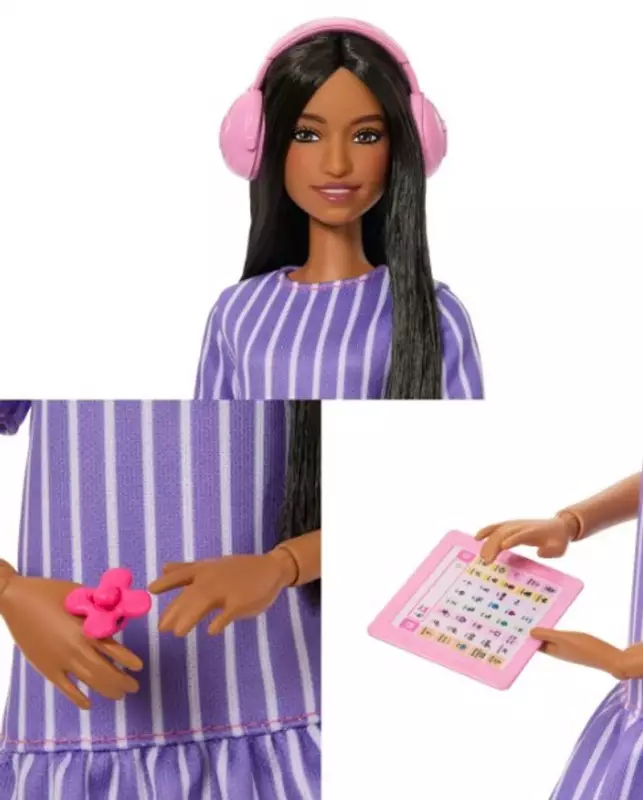
Mattel Launches First Barbie Doll Representing Autism
Mattel has unveiled its first Barbie doll designed to represent autism. This new addition to the Barbie Fashionistas line aims to promote inclusion and diversity in the toy industry. The doll features sensory-friendly design elements to better reflect the experiences of autistic individuals.
Design Features and Sensory Considerations
The autistic Barbie doll comes with several thoughtful design choices. It wears noise-canceling headphones to help manage sensory overload. The doll also includes a fidget spinner accessory, which many autistic people use for calming and focus. These features make the doll more relatable and accessible to children with autism.
Mattel worked closely with autism advocates and organizations during the development process. This collaboration ensured the doll authentically represents the autistic community. The company emphasized the importance of creating toys that celebrate neurodiversity.

Reactions from the Autism Community
Initial reactions to the doll have been mixed but largely positive. Many parents and advocates praise Mattel for taking this step toward inclusion. They see the doll as a powerful tool for raising awareness about autism. It helps children with autism see themselves represented in popular culture.
Some critics, however, question whether the doll goes far enough in its representation. They argue that autism is a spectrum, and no single doll can capture all experiences. Despite this, most agree that the launch marks significant progress in the toy industry.
Impact on Fashion and Toy Trends
The introduction of the autistic Barbie doll highlights a growing trend in fashion and toys. Brands are increasingly focusing on inclusivity and representation. This move by Mattel sets a new standard for other toy manufacturers. It encourages them to consider diverse needs and experiences in their products.
Fashion experts note that the doll's design could influence broader fashion trends. Sensory-friendly clothing and accessories are gaining popularity. The Barbie doll brings this concept into the mainstream, making it more visible and accepted.
Future Prospects and Industry Implications
Mattel plans to continue expanding its inclusive toy lines. The company has stated its commitment to representing various disabilities and conditions. This initiative is part of a larger effort to make toys more diverse and accessible for all children.
The launch of the autistic Barbie doll could inspire similar actions across the industry. Other companies may follow suit, creating more toys that celebrate differences. This shift has the potential to transform how children learn about diversity and inclusion through play.
Overall, the unveiling of the first autistic Barbie doll represents a significant milestone. It combines fashion, innovation, and social responsibility in a unique way. The doll not only provides representation but also sparks important conversations about neurodiversity in society.

