

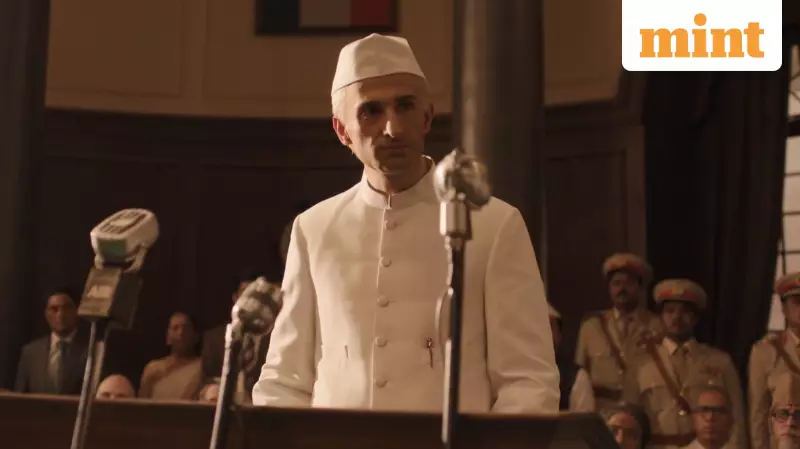
The second season of Nikkhil Advani's historical drama 'Freedom At Midnight' plunges viewers back into the chaotic birth of independent India, offering a narrative that is both richer and more willing to confront the nation's messy origins. A pivotal moment arrives in the third episode, where actor Abhishek Banerjee delivers a powerful cameo as an unnamed Hindu rioter. In a scene reworked from Richard Attenborough's 1982 film 'Gandhi', this anguished man confronts Mahatma Gandhi, played by Chirag Vohra, who is fasting to quell pre-Partition violence in Calcutta.
Portraying the Titans: Gandhi, Nehru, and Patel
The rioter, consumed by guilt after confessing to murder, breaks down before the frail leader. Gandhi, with barely a whisper, advises him to cleanse his heart of hatred. This scene encapsulates the season's complex portrayal of Gandhi himself. Vohra's performance presents a cussed, ornery, yet deeply human figure, whose immense moral sway exists in stark contrast to his declining political relevance in the months surrounding August 1947.
While Gandhi wrestles with a narrative slipping from his grasp, the season's driving force remains the dynamic between India's first Prime Minister, Jawaharlal Nehru (Sidhant Gupta), and its first Home Minister, Sardar Vallabhbhai Patel (Rajendra Chawla). The core tension between Patel's pragmatism and Nehru's idealism continues from the first season, now playing out across critical issues: refugee crises, religious violence, and the integration of princely states. Patel often emerges with tough, practical solutions, while Nehru grapples with the moral and secular foundations of the new nation.

Gupta has grown into the role of Nehru, transforming him from a figure in Gandhi's shadow into a leader acutely aware he is shaping a fragile country—and his own legacy—in real time. His moments of frustration, whether over Kashmir or while addressing a Sikh camp after a massacre, add compelling layers to the statesman.
Navigating Historical Blind Spots and Narrative Choices
The series continues to grapple with the depiction of communal violence. While the first season was criticized for focusing predominantly on Muslim rioters, this season broadens its view to include Sikh and Muslim perpetrators. However, it still largely keeps violence by Hindu mobs off-screen. This selective framing is further highlighted in the handling of Gandhi's assassination.
The show follows Madanlal Pahwa (Anurag Thakur), who attempted to kill Gandhi in 1948, rather than the actual assassin, Nathuram Godse. Pahwa is portrayed as a refugee radicalized by personal loss, while Godse's ideologically driven background as an RSS member is sidestepped entirely; he is not even shown fully when firing the fatal shots. This choice reflects the sensitive political landscape surrounding such portrayals in contemporary India.
A Season of Improved Balance and Revealing Detail
Despite occasional bluntness in storytelling and an overuse of split-screen effects, the season succeeds through its wealth of diverting historical detail. From a maharaja fleeing with his dogs to a prince bribed with a model train set by Pakistan, and Patel's literal 'basket of apples' strategy, the series vividly paints the era's absurdities and tragedies.
While Muhammad Ali Jinnah remains a broadly villainous, vampiric figure, the series offers nuance in its portrayal of Lord Mountbatten. Luke McGibney's performance captures both the vain representative of Empire and a man overwhelmed by the catastrophic consequences of his rushed Partition plan.
In conclusion, 'Freedom At Midnight' Season 2 is a more confident and engaging historical drama. It deftly shifts tones—from comic lessons in the princely states to a thriller-like tension in Gandhi's final days—embracing the inherent chaos of India's independence. Its blind spots are revealing of modern Indian discourse, but its commitment to exploring this foundational period with curiosity and energy makes for compelling viewing.

