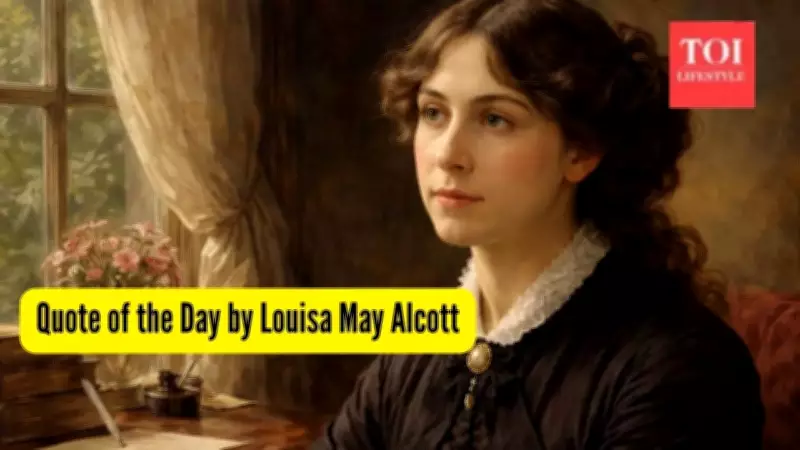
Louisa May Alcott: The Enduring Legacy of a Literary Pioneer
Louisa May Alcott stands as one of the most influential writers of English classics, with her works remaining integral to school and college curriculums worldwide. Far ahead of her era, she crafted stories that brought strong, spirited female characters to life, inspiring countless generations. By transforming everyday family struggles into timeless narratives of love, ambition, and independence, she cemented her status as one of America's most cherished authors.
Early Life and Formative Years
Born in 1832 in Germantown, Pennsylvania, Louisa May Alcott was the second of four daughters. Her father, Amos Bronson Alcott, was a teacher and philosopher who ran experimental schools and embraced transcendentalist ideas alongside friends like Ralph Waldo Emerson and Henry David Thoreau. Her mother, Abigail May, hailed from a family of activists and worked tirelessly to sustain the household amidst persistent financial hardships. Bronson's frequent business failures left the family in poverty, prompting Louisa to start working as a teenager. She took on roles as a teacher, seamstress, and servant, experiences that instilled resilience and deeply influenced her writing. At age 16, she penned her first book, Flower Fables, in 1854, after telling stories to Emerson's daughter, showcasing her early literary talent.
Family Influence and Personal Growth
The Alcott family moved frequently, living modestly in places such as Orchard House in Concord, where much of Little Women was later written. Louisa shared a close bond with her sisters: Anna, the eldest, pursued acting; Elizabeth, gentle and musical, tragically died young from scarlet fever; and May, the youngest, became an artist. These real-life relationships mirrored the March sisters in her iconic novel. During the Civil War, Louisa served as a nurse in Washington, D.C., and her letters home were published as Hospital Sketches in 1863. This raw account of war's horrors brought her early fame but also led to illness from typhoid and mercury poisoning, which weakened her health permanently.

Major Literary Works and Achievements
Louisa's masterpiece, Little Women, published in 1868-1869, revolutionized literature with its semi-autobiographical portrayal of family life. She followed it with sequels: Good Wives (often combined with Little Women), Little Men in 1871, and Jo's Boys in 1886. Other notable works include An Old-Fashioned Girl (1870), Eight Cousins (1875), and Rose in Bloom (1876), all celebrating themes of family, morality, and female strength. Under the pseudonym A.M. Barnard, she also wrote sensational stories filled with mystery and passion, contrasting her wholesome public image. Collections like Behind a Mask later revealed this darker side of her writing.
Writing Style and Lasting Impact
Louisa May Alcott's writing style is characterized by warm, accessible language that feels conversational and engaging. Her prose flows naturally, enriched with dialogue that brings characters vividly to life. She skillfully blended humor, heartache, and hope, addressing real emotions without moralizing. Readers connected deeply because her heroines navigated dilemmas like career versus marriage, reflecting 19th-century societal debates. Drawing from personal experiences—such as poverty, sisterly conflicts, and quiet ambitions—she infused her stories with authenticity that resonates to this day.
Later Years and Enduring Legacy
By the 1870s, Louisa had achieved wealth and fame, enabling her to purchase a home for her parents and care for her father after his stroke. In 1882, she adopted her sister's daughter, Lulu, and wrote Lulu's Library for her. Despite ongoing health issues, including rheumatism and neuralgia, she continued writing until her death on March 6, 1888, in Boston, at age 55, just hours after her father passed away. Her grave lies in Sleepy Hollow Cemetery, Concord, Massachusetts. One of her most memorable quotes, "Far away there in the sunshine are my highest aspirations. I may not reach them, but I can look up and see their beauty, believe in them, and try to follow where they lead," encapsulates her optimistic spirit and enduring influence on literature and beyond.