

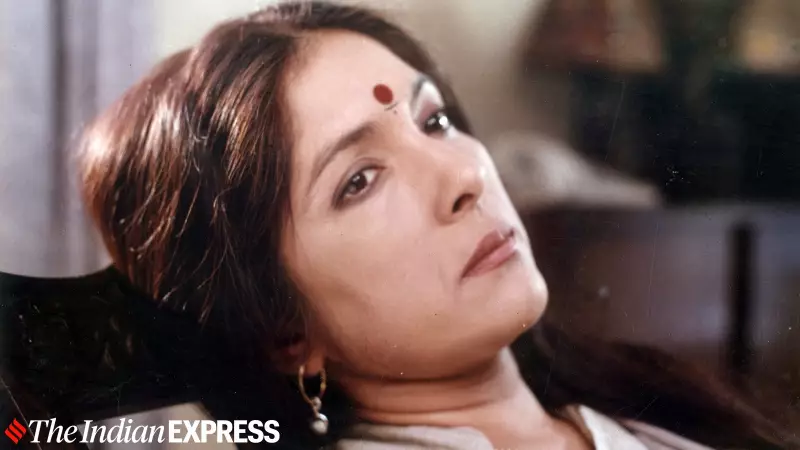
Neena Gupta's Candid Take on Strong Women and Marriage
Actor Neena Gupta recently shared some thought-provoking observations about how society views strong women. In a conversation with Humans of Bombay, she stated plainly that many men do not consider strong women as suitable for marriage. Her comments have ignited a wider discussion about gender roles and expectations in intimate relationships.
The Core of Gupta's Observation
Neena Gupta spoke from her personal experiences and societal observations. She remarked, "A strong woman is not marriage material. Men don't like strong women, most of them." She elaborated further, noting that many men prefer women they perceive as helpless. According to Gupta, men often dislike women who have their own thoughts, careers, and commitments. She emphasized that this desire stems from a need for power over women.
Gupta clarified she was speaking in general terms, not about every individual. She estimated this mindset applies to roughly 95% of the population. She based this on her observations within her own household and broader society, aiming to highlight a pattern rather than create controversy.

Expert Insight on the Psychological and Social Dynamics
Counselling psychologist Athul Raj provided expert analysis on this phenomenon. He explained that Indian society often structures long-term relationships around hierarchy instead of equality. A woman who is self-directed and strong naturally disrupts this established structure. This disruption occurs not through confrontation, but simply because she does not automatically prioritize her partner's comfort or ego.
Raj pointed out that patriarchy often reframes this societal discomfort as a flaw in the woman's character. She might be labeled as rigid, dominating, or unsuitable for marriage. This labeling serves a social purpose. It maintains male centrality while quietly placing the burden of adjustment on women. Over time, female autonomy gets misinterpreted not as personal maturity, but as a failure in relationships.
The Roots in Early Social Conditioning
The issue has deep roots in early gender conditioning. Raj explained how boys in India often grow up watching women handle emotional strain while men retain authority over decisions. Even in households that appear progressive, the final control frequently remains with men.
As these boys become men, many start to equate stability with dominance and intimacy with predictability. Marriage then becomes the arena where these unconscious assumptions play out. Women find themselves evaluated for their flexibility, while men are judged primarily on their earning capacity.
Raj highlighted the significant emotional cost of this conditioning. Men who have never learned to share power often struggle with genuine intimacy, adaptability, and emotional regulation. Unfortunately, society rarely recognizes this as a relational problem. Equality feels destabilizing to them not because it is inherently threatening, but because it was never presented as a safe or normal dynamic.
The Emotional Toll on Women
When relationships break down or engagements are suddenly called off, the impact on women can be profound. Raj described it as a psychological rupture that dismantles both the emotional attachment and the future life the woman was building. In a culture where marriage is closely tied to social legitimacy, many women internalize this loss as a personal failing.
The path to healing, according to Raj, begins when a woman recognizes the experience as a relational collapse, not a personal failure. Rebuilding self-worth involves restoring a sense of agency. This means trusting one's own perceptions, establishing firmer boundaries, and resisting the external pressure to simply "be resilient."
A Larger Cultural Conversation
Neena Gupta's remarks resonate with an uncomfortable question many women face. Why does female independence still feel threatening within romantic partnerships? While workplaces and public spheres have seen progress, private relationships often continue to reward compliance over confidence. This dynamic forces many women to shrink parts of themselves to be deemed acceptable or desirable as partners.

The conversation started by Gupta and expanded by experts like Athul Raj challenges these deep-seated norms. It calls for a re-examination of what makes a relationship successful and what qualities we truly value in a life partner.
