

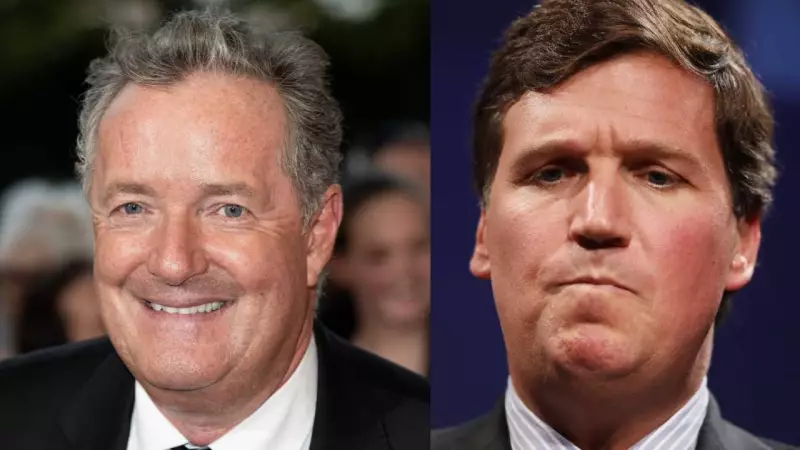
In a dramatic television moment that quickly went viral globally, British journalist Piers Morgan found himself at the center of a heated free speech debate after refusing to utter an anti-gay slur during an interview with American commentator Tucker Carlson. The explosive exchange occurred on November 27, 2025, during an episode of The Tucker Carlson Show and immediately ignited widespread online discussion about censorship, hate speech, and LGBTQ rights.
The Explosive On-Air Confrontation
The controversy began when Carlson repeatedly pressured Morgan to say the word "f****t" during their conversation about a UK legal case involving Elizabeth Kinney, a woman who faced court punishment for sending text messages containing the same offensive term. Carlson framed his request as a test of free speech principles, asking Morgan if he feared arrest by UK police for using the slur.
Morgan stood firm in his refusal, responding with a simple "No" to Carlson's persistent demands. The American host then provocatively asked, "You don't want to get arrested, do you?" attempting to frame the situation as government censorship rather than personal choice. The tension between the two media personalities escalated rapidly, with their discussion soon transforming into a loud argument about the boundaries of free expression and harmful language.

Aftermath and Social Media Reaction
Following the broadcast, the clip spread like wildfire across social media platforms, amassing millions of views within hours. Initial speculation suggested Morgan refused to use the slur due to fear of legal consequences in the United Kingdom. However, Morgan directly addressed these claims through PinkNews, clarifying that his decision was based on moral principles rather than legal concerns.
"I would never use that word because it is rude and hurtful to gay people," Morgan stated emphatically. He further explained that he avoids all slurs in public discourse, believing that such language undermines genuine discussion rather than enhancing it. Many viewers praised Morgan for maintaining his composure during the heated exchange and for taking a stand against using offensive language targeting the LGBTQ community.
Broader Debate on Gender and Sexuality
The controversy took another dimension when Morgan's social media post from November 28, 2025, resurfaced amid the viral video discussion. On platform X, Morgan had written that while being gay "is not a choice," he believed the "trans fad is a social contagion." This statement drew fresh attention and criticism from transgender advocates and allies.
Morgan elaborated his position, asserting that while sexual orientation is innate, some aspects of the increasing visibility of transgender identity might stem from "social pressure." As reported by Sportskeeda, Morgan specifically expressed concern that some young people might be influenced into gender transition without fully understanding the implications. These comments created a divided response online, with some applauding his distinction and others arguing that both positions should receive equal validation and respect.
The incident highlights the ongoing global conversation about how society discusses gender identity and sexual orientation, particularly in media spaces. It also raises important questions about where free speech ends and hate speech begins, a debate that continues to evolve in both the United States and the United Kingdom with their different legal frameworks and cultural norms regarding offensive language.

