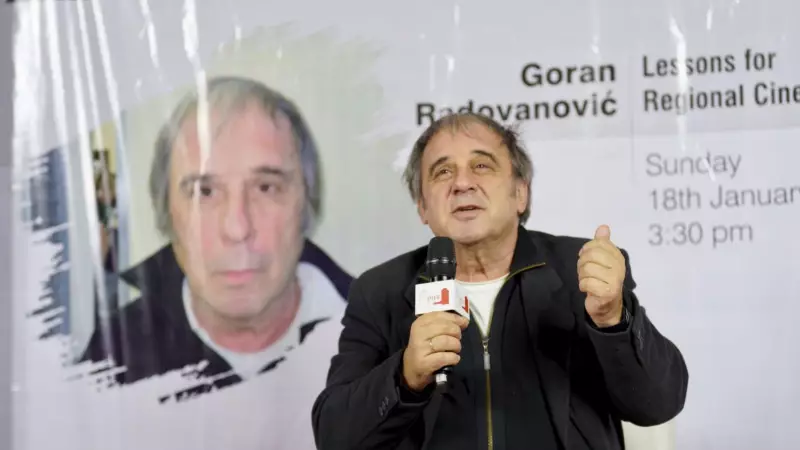
Serbian director Goran Radovanović delivered a powerful message to Indian filmmakers during a workshop at the Pune International Film Festival on Sunday. He urged them to focus on creating small films based on local stories rather than pursuing grand themes with big budgets.
Practical Advice for Aspiring Filmmakers
Radovanović, whose film Enclave was Serbia's official Oscar entry, spoke at a session titled "How European and Independent Cinema Competes with Big American Cinema: Lessons for Regional Cinema." He addressed filmmakers in Pune, a city known for nurturing talent with limited resources.
"Make small films based on local stories and issues from your own region," Radovanović emphasized. "That is where the future lies. Create films on subjects that you truly care about and that give you creative satisfaction."

Avoid the Award Chase
The acclaimed director advised against chasing awards and major festivals. "Do not run after awards," he said. "Instead of focusing only on major film festivals, take your films to smaller artistic festivals and digital platforms. Present your work in smaller countries and create your own platforms."
European Cinema's Parallel Struggles
Radovanović shared insights from European cinema's experience. "Many countries have started collaborating on film productions," he noted. "However, due to a strong commercial focus, while numerous films were made, they often lacked proper distribution."
He explained that the European Union later stepped in to support cinema hall development. "Despite this, gaining entry into major festivals remains difficult without big names or major distributors," Radovanović added. "Political viewpoints are also taken into consideration. As a result, independent filmmakers are increasingly turning towards smaller festivals and digital platforms."
Historical Context of Cinema Decline
Tracing Western cinema history, Radovanović pointed to post-World War II when Italian, French New Wave, and Russian cinema enjoyed global prominence. "Audiences responded well, and cinema was an integral part of everyday life," he said.
"Film festivals played a crucial role in promoting films. In the 1970s, the German New Wave emerged with television network involvement. However, with American pop culture and video technology rise, traditional cinema halls began to decline."
He noted the irony of discussing this at a PVR multiplex in Pavilion Mall. "The collective experience of watching films diminished as theatres moved into shopping malls, leading to original artistic film culture erosion."
Barriers in the Global Festival Circuit
Radovanović highlighted challenges independent filmmakers face with major festivals. "Festivals like Cannes and Venice are difficult to access without a strong distributor," he explained. "Distributors usually look for well-known names. For independent filmmakers, this makes entry extremely challenging."
He shared personal experiences: "I have received letters from selection committee members appreciating my film, yet explaining that festival policies prevent its selection. These policies, often framed as political correctness, strongly influence choices today."
Optimism About Indian Cinema
Despite challenges, Radovanović expressed confidence in Indian filmmakers. "Indian audiences are highly educated and sensitive," he said. "The Indian film Court was extremely successful in Europe and screened at several small film festivals."
His observations resonated with Indian independent filmmakers attending the workshop, many facing similar creative ambition struggles. PIFF Festival President Jabbar Patel was among attendees, reflecting the session's significance for Pune's film community.
Radovanović's message remains clear: authentic local storytelling through small films represents cinema's future, offering creative satisfaction beyond commercial pressures and award pursuits.