

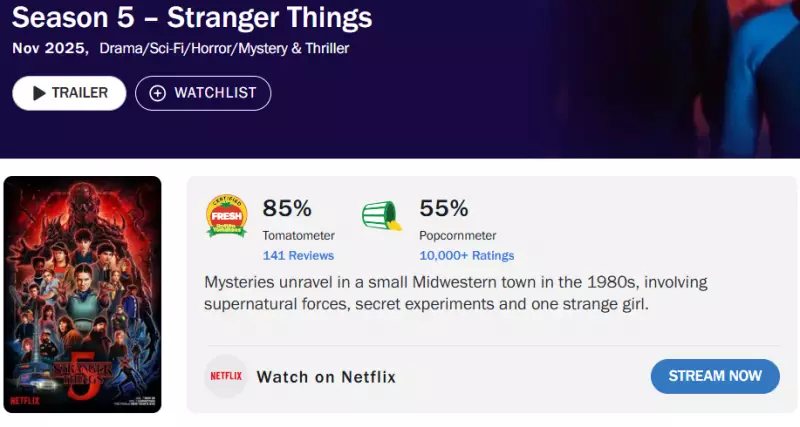
After five seasons and a journey spanning close to ten years, the globally adored series Stranger Things has officially concluded. The final episode, titled Chapter 8: The Rightside Up, premiered on New Year's Eve, marking the end of a story that began as a surprise hit in 2016 and evolved into Netflix's flagship pop-culture phenomenon. In a unique move, Netflix offered a limited theatrical release on December 31 and January 1, transforming the quiet home viewing into a communal cinematic event for fans.
A Final Season Built for the Holidays
The show's fifth and final season was strategically rolled out in three volumes around major holidays: Thanksgiving, Christmas, and New Year's. This build-up led viewers to believe they were prepared for an epic conclusion in a shattered Hawkins, promising answers and a significant emotional climax. However, upon its release, the finale immediately created a rift in the fanbase, generating a wave of conflicting opinions across social media platforms.
Polarised Reactions: Celebration Meets Critique
On platform X, reactions surfaced within minutes, swiftly oscillating between celebration and pointed criticism. A common sentiment among viewers was a sense of conflict rather than clear-cut satisfaction or disappointment. One user encapsulated this, stating they had issues with the season but loved the finale, calling it safe yet satisfying, and praising the character Dustin. Another post highlighted that the brilliance of the ending lay in its ability to provoke conflicting emotions, particularly regarding Eleven's fate.

This tension between a deep affection for the characters fans have grown with for years and frustration with the narrative choices became a central theme. For some, the finale succeeded as a heartfelt farewell to these relationships. For others, that very affection made the perceived narrative shortcomings even more difficult to accept.
Criticism Focus: A Safe and Predictable Conclusion
A substantial portion of the critique zeroed in on the finale's familiar and risk-averse nature. Many described it as tidy, neat, and lacking in creative surprises. Critics called it cliché, corny, and unsatisfying, with one viewer noting the lack of complex writing choices. A recurring complaint was the swift and seemingly easy defeat of the primary antagonist, Vecna, who had been meticulously built up over multiple seasons. Fans argued the final battle lacked the scale and intensity expected for a series conclusion.
The decision to avoid major character deaths also became a significant flashpoint, with some audiences feeling the show pulled its punches at the most critical moment, leading to an ending where everyone essentially "walks off into the sunset."
The Ghost of Game of Thrones and Unresolved Arcs
As with many divisive finales, comparisons to other shows emerged, most notably Game of Thrones. Some angry fans declared that Stranger Things had dethroned Game of Thrones for the most disappointing final season, while others argued it never reached the same level of narrative collapse.
Beyond structural issues, one of the most emotionally charged debates centred on Will Byers. While some appreciated his arc being addressed, others accused the writers of queerbaiting. Critics argued that years of subtext regarding Will's feelings, especially for Mike Wheeler, never received a clear, committed payoff, leaving a sense of unresolved tension that had been simmering since earlier volumes.
Similarly, Eleven's quiet ending divided viewers. Some found its restraint poignant, while others felt it betrayed her core arc about friendship and connection, leaving her ultimately alone.

The Numbers Reflect the Split
The divided audience response is quantifiable. According to reports, the audience score on Rotten Tomatoes, known as the Popcorn Meter, plummeted to 56 percent for the finale. This is a stark drop from the consistently high ratings of previous seasons, which regularly scored above 86 percent, with Season 1 at a stellar 96 percent. This decline is attributed to both genuine disappointment and potential review bombing, highlighting the polarising nature of the ending.
Despite the criticism, positive reactions existed. Some fans admitted to crying and loving the finale, especially when experienced in a theatre full of people. Others joked about enjoying it until they logged on to social media and saw the widespread anger.
In the end, the Stranger Things finale did not provide a clean, unanimous conclusion. Instead, it landed loudly, serving as a mirror that reflected the vastly different expectations of its massive fanbase. For a series that masterfully balanced nostalgia, horror, and coming-of-age drama, its final chapter fittingly extended that very tension, ensuring the conversation continues long after the credits have rolled.
