

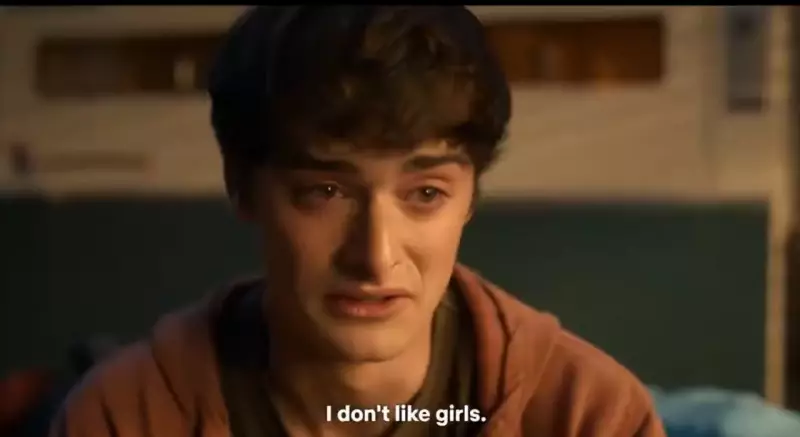
The highly anticipated final season of Netflix's global phenomenon, Stranger Things, has arrived, but not without controversy. As the series barrelled towards its conclusion with the release of Chapter 8: The Rightside Up on December 31, 2025, one emotional scene has overshadowed the battle against Vecna, polarising the show's massive fanbase.
The Scene That Stopped the Apocalypse
In the climactic episodes of Season 5, with the town of Hawkins crumbling under Vecna's influence, the narrative took a deliberate pause. Just before the final confrontation, Will Byers gathers his mother Joyce, brother Jonathan, friends, and allies to share a personal truth. He reveals he is gay, speaking about years of hidden fear, unnameable feelings, and an implied crush on his best friend, Mike Wheeler. The response from his loved ones is immediate and wholly supportive, with no conflict or hesitation. Shortly after, the story resumes its march toward the Upside Down.
This moment, intended as a character's emotional climax, has become the season's biggest lightning rod. Online forums and social media have erupted with criticism, splitting into distinct camps of disapproval.

Dual Fronts of Fan Criticism
A significant portion of the backlash has been ideologically charged, with accusations of "woke garbage" and "DEI agendas" flooding comment sections. Conservative commentators and viewers have labelled the scene as evidence of Netflix prioritising progressive messaging over coherent storytelling.
However, a more nuanced critique has emerged from long-time fans. Their frustration centres not on Will's sexuality—a subject of fan speculation for seasons—but on the timing and execution. Critics argue the show halted the apocalyptic finale's momentum for a monologue about something the audience had long understood. They question why Will's fear of rejection is framed as the emotional core when a literal world-ending threat looms.
Further criticism points to historical authenticity. Many argue the scene presents an unrealistically easy acceptance in 1980s Indiana, glossing over the genuine isolation and danger queer teenagers faced during that era. Others feel the scene's length—featuring characters like Murray Bauman who share little history with Will—turned a private reckoning into a public speech meant for the audience, flattening its intimacy.
The Robin Comparison and Queerbaiting Accusations
Much of the critical analysis inevitably circles back to Robin Buckley's coming-out scene in Season 3. Played by Maya Hawke, Robin revealed she was a lesbian in a chaotic, drug-addled bathroom conversation with Steve Harrington. That moment was brief, spontaneous, and woven into the existing chaos, making it feel natural and unforced.
In stark contrast, Will's scene is a staged, deliberate gathering. This difference fuels accusations of queerbaiting. Some fans believe the writers teased Will's feelings for Mike for multiple seasons through longing glances and coded dialogue, only to resolve it with a vague "crush" mention and frame his struggle as one of self-acceptance rather than unrequited love, avoiding an explicit romantic confession.
Creative Intent vs. Audience Reception
The show's creators, The Duffer Brothers, have defended the scene's placement. Ross Duffer has stated that Will's coming out was a years-long build-up, essential to his character arc. Within the season's logic, Vecna feeds on Will's hidden shame; confronting that fear publicly and receiving reassurance directly weakens Vecna's hold on him. The writers intended it as a necessary recalibration before the final fight, not a detour.
The core issue, as highlighted by the backlash, is that this intention did not translate cleanly for a sizable part of the audience. Some viewers felt the show had already given Will a powerful moment earlier in Season 5 when he privately acknowledged his feelings and accessed new abilities. Making him do it again in a group setting felt redundant, not cumulative.

The reaction underscores the fragility of a final season. When narrative time is precious, any pause can feel like a misstep. For some, Will's scene provided closure. For many others, it felt like a moral message inserted into an escapist drama, revealing how cultural exhaustion with perceived corporate progressivism can shape viewer reception. The debate ensures that Stranger Things' legacy will be as much about its final character beat as its battle with the Upside Down.
