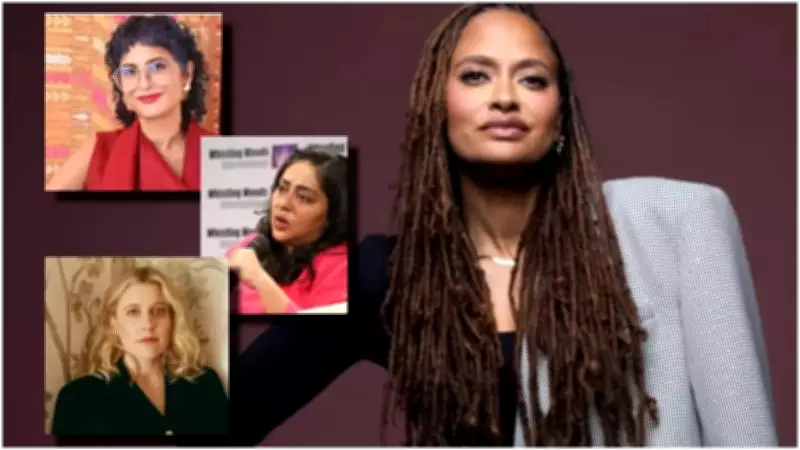
The Rise of Women Filmmakers: A Cinematic Revolution
For many decades, the world of cinema was predominantly shaped by male perspectives, with cameras almost exclusively held by men. This monopoly influenced how audiences perceived reality, stories, and characters on screen. However, a powerful shift occurred as women filmmakers boldly stepped behind the camera, not merely joining the industry but fundamentally reimagining its very framework.
Transforming the Cinematic Lens
Cinema shaped by women often exhibits a heightened sense of observation and profound emotional depth. These filmmakers tend to focus intently on human experiences, inner conflicts, and the nuanced realities of society. From the bustling streets of India to the epic battlefields of Hollywood, women have utilized the medium of film to critically examine themes of power, identity, love, and belonging. Their contributions have forever altered the cinematic landscape, introducing fresh narratives and perspectives.
Visionary Women Who Changed Cinema Forever
Mira Nair: Bringing Indian Authenticity to Global Audiences
Mira Nair masterfully brought the vibrant and chaotic essence of Indian street life to international screens with unflinching honesty. Her groundbreaking debut film, 'Salaam Bombay!' (1988), earned an Academy Award nomination and won the prestigious Camera d'Or at the Cannes Film Festival. Nair has consistently bridged the worlds of Hollywood and Indian cinema through celebrated works like 'Monsoon Wedding' (2001) and 'The Namesake' (2006). Her films are renowned for their vibrant energy, chaotic realism, and deeply human stories, never diluting the Indian experience for Western viewers. Nair's camera remains fearless and firmly grounded in authenticity.

Gauri Shinde: Crafting Quiet, Human Stories
Gauri Shinde's filmography offers a calm and introspective breath of fresh air, characterized by its honesty and deep humanity. Transitioning from a career in advertising, she made her directorial debut with 'English Vinglish' (2012), a gentle narrative about self-discovery and worth. She continued this sensitive approach with 'Dear Zindagi' (2016), a film that thoughtfully addressed emotional and mental health, portraying therapy as a constructive conversation rather than a weakness. Shinde empowers her female characters, allowing their personal growth to unfold softly and truthfully. Her films are quiet, slice-of-life dramas that resonate powerfully with women and their emotional journeys.
Meghna Gulzar: Mastering Empathy and Realism
Meghna Gulzar has quietly built one of the most emotionally resonant careers in contemporary Indian cinema. Beginning as a writer and documentary filmmaker, she seamlessly transitioned into feature films. Her storytelling is deeply rooted in empathy and realism. Films such as 'Talvar', 'Chhapaak', and 'Sam Bahadur' showcase her remarkable versatility, spanning investigative dramas, spy thrillers, and biographical pictures. Gulzar often emphasizes moral complexity over spectacle, crafting narratives where women exhibit strength without aggression, and men reveal vulnerability without appearing weak.
Kiran Rao: The Power of Subtle Storytelling
Kiran Rao excels in the art of quiet, reflective storytelling, believing that cinema can inspire deep thought without relying on flashy elements. Her directorial debut, 'Dhobi Ghat' (2011), offered a raw and intimate glimpse into the hidden layers of Mumbai, exploring themes of class and loneliness through interconnected lives. She returned to directing with 'Laapataa Ladies' (2024), a poignant satire addressing rural patriarchy. As a producer, Rao actively supports marginalized stories, demonstrating that empathy and simplicity can create a profound and lasting impact.

Zoya Akhtar: Redefining Commercial Hindi Cinema
Zoya Akhtar has fundamentally redefined the aesthetics of commercial Hindi cinema, shifting focus from traditional melodrama to the complexities of modern urban relationships. Her debut film, 'Luck By Chance' (2009), offered a witty critique of Bollywood, while 'Zindagi Na Milegi Dobara' (2011) became a cult classic celebrating male friendship. 'Gully Boy' (2019) captured the raw, energetic spirit of Mumbai's underground rap scene. Akhtar also co-created the hit series 'Made in Heaven', which exposes the darker facets of elite weddings. Her characters are notably flawed, relatable, and distinctly contemporary.
Greta Gerwig: From Indie Darling to Hollywood Powerhouse
Greta Gerwig transitioned from a beloved indie actress to one of Hollywood's most influential directors. Her journey began with writing realistic, dialogue-driven scripts like 'Frances Ha'. Her solo directorial debut, 'Lady Bird' (2017), beautifully captured the tumultuous experience of adolescence. She followed this with a modern adaptation of 'Little Women' (2019) and the billion-dollar blockbuster 'Barbie' (2023). Gerwig's films explore female ambition and girlhood with immense respect, showcasing her unique talent for making deeply personal stories feel universally resonant.
Kathryn Bigelow: Dominating Action and War Genres
Kathryn Bigelow steadfastly refuses to be confined by the label of "female director," instead dominating the action and war genres with unparalleled skill. Her cult classic 'Point Break' (1991) redefined the action thriller. Later, 'The Hurt Locker' (2008) made history by earning her the Academy Award for Best Director, the first woman to achieve this honor. She continued with 'Zero Dark Thirty' (2012), a gripping account of the hunt for Osama bin Laden. Bigelow's work immerses viewers in high-pressure environments, meticulously examining the psychology of violence and danger.
Sofia Coppola: Exploring Loneliness and Privilege
Sofia Coppola is celebrated for her subtle, reflective filmmaking style, often exploring themes of loneliness, privilege, and inner emptiness from distinct female perspectives. She gained critical acclaim with 'The Virgin Suicides' (1999) and won an Oscar for the screenplay of 'Lost in Translation' (2003). Films like 'Marie Antoinette' (2006) and 'Priscilla' (2023) poignantly depict isolation, allowing mood and stillness to communicate more powerfully than dialogue.
Ava DuVernay: Cinema as a Tool for Social Justice
Ava DuVernay powerfully uses her camera as an instrument for social justice and advocacy. She made history as the first African American woman to receive a Best Picture Oscar nomination for 'Selma' (2014). Her limited series 'When They See Us' (2019) ignited global conversations about racial profiling and injustice. DuVernay seamlessly transitions between big-budget projects like 'A Wrinkle in Time' (2018) and intimate dramas like 'Origin' (2023). Through her distribution initiative, ARRAY, she actively promotes inclusion, providing a platform for women and people of color in the industry.
Jane Campion: A Pioneer of Cinematic Poetry
Jane Campion stands as a pioneering force in cinematic poetry. She made history as the first woman to win the Palme d'Or at Cannes for 'The Piano' (1993). After a significant hiatus, she returned triumphantly with 'The Power of the Dog' (2021), winning the Best Director Oscar. Campion also created the critically acclaimed TV series 'Top of the Lake'. Her films frequently delve into complex, hidden desires and the harsh realities of patriarchal environments, using nature as a profound mirror to reflect human emotion and turmoil.