

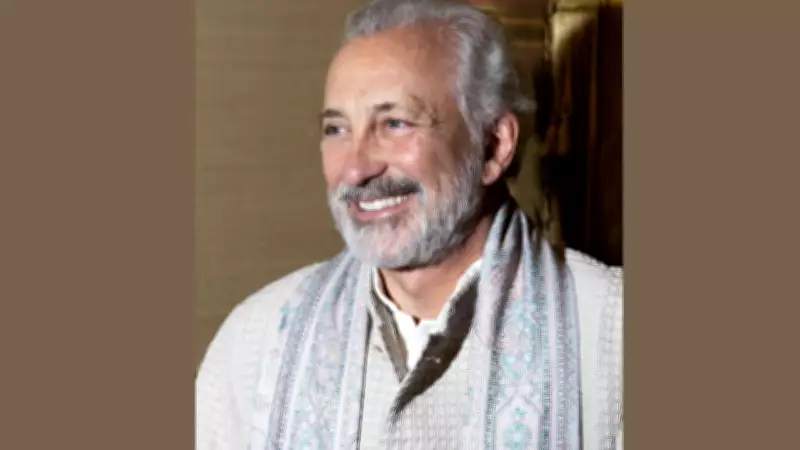
Dr. Tony Nader: Ayurveda and Consciousness as the Next Frontier in Modern Healthcare
When people think of Ayurveda or Vedic wisdom, they often imagine ancient texts, herbal remedies, or serene meditation retreats hidden in mountainous landscapes. However, according to Dr. Tony Nader, these time-honored practices are profoundly different from common perceptions. In an era where stress, lifestyle-related diseases, and mental exhaustion are escalating rapidly, individuals are increasingly seeking alternatives beyond conventional pills and medical procedures to prevent illness, restore equilibrium, and sustain long-term health. This is precisely where Ayurveda and consciousness-based approaches like Transcendental Meditation (TM) become crucial.
Bridging Ancient Wisdom and Modern Science
Dr. Nader, who seamlessly connects Vedic science with contemporary medicine, elucidates that these ancient teachings extend beyond spirituality to exert significant effects on the brain, nervous system, and overall physiological health. He emphasizes that the human body is not isolated from nature; rather, it is an integral part of the same universal intelligence that structures the cosmos. By training the mind through practices such as meditation, the body responds positively: stress levels diminish, emotional stability enhances, and the nervous system gains resilience.
Tony Nader holds a medical degree and a PhD in Brain and Cognitive Sciences from Harvard University and the Massachusetts Institute of Technology. As a globally acknowledged authority on consciousness science and human development, he serves as the successor to Maharishi Mahesh Yogi and leads Transcendental Meditation organizations worldwide. His research has been featured in peer-reviewed journals and presented at numerous academic and governmental forums across the globe. Through his recent best-selling book, Consciousness Is All There Is, and engaging podcasts and online dialogues with prominent thinkers, Dr. Nader is broadening the comprehension of consciousness, physiology, and the realization of full human potential.

Insights from an Expert Interview
In an exclusive discussion, Dr. Nader delved into how Vedic principles translate into measurable biological processes, the profound meaning behind "I am the Veda," and why awareness and meditation could represent the next breakthrough in healthcare.
Ayurveda is frequently labeled as "ancient," yet it is experiencing a resurgence in Western healthcare. What factors are prompting modern medicine to embrace integrative systems like Ayurveda more earnestly today?
Dr. Tony Nader: The world is confronting stress- and lifestyle-driven diseases on an unprecedented scale. While modern medicine excels in acute care, people are now prioritizing prevention, balance, and sustainable wellbeing. Ayurveda provides a time-tested framework for harmonizing with nature, daily rhythms, and individual constitutions. What was once considered "alternative" is now being acknowledged as essential.
Many view meditation as a lifestyle enhancement rather than a medical instrument. What does scientific evidence reveal about Transcendental Meditation's impact on the brain?
Dr. Tony Nader: Studies on Transcendental Meditation demonstrate enhanced brain coherence, reduced stress physiology, improved cardiovascular health, and greater emotional stability. The nervous system becomes more orderly and resilient. Meditation is not about withdrawing from life; it fortifies the brain to manage life more effectively.
What is the fundamental connection between Vedic texts and human physiology?

Dr. Tony Nader: The Vedic perspective holds that the human body is not separate from nature; it is an expression of the same intelligence governing the universe. The laws structuring the cosmos also structure our physiology. Modern physiology reveals remarkable order and coordination within the body, concepts that Vedic seers described millennia ago in the language of consciousness. They articulated natural laws through Vedic terminology, while modern science describes these same laws through contemporary language. The structures, patterns, and functions of Veda correspond directly to various organs and physiological systems. Thus, the statement "Vedoham," meaning "I am the Veda," is a physical reality, indicating a deep correlation between matter and consciousness, physiology and intelligence.
Emotional resilience is increasingly recognized as a vital health indicator. How do consciousness-based practices differ from cognitive or behavioral methods in fostering long-term emotional stability?
Dr. Tony Nader: Most techniques help manage stress, but consciousness-based practices address stress at its root. By allowing the mind to settle into profound inner silence, the nervous system rests and resets. From this inner stability, emotional strength becomes natural and enduring. Extensive research on high-pressure groups, such as doctors, nurses, first responders, and soldiers, clearly shows that Transcendental Meditation significantly enhances emotional resilience and nervous system stability.
How do ancient Vedic concepts translate into measurable biological processes?
Dr. Tony Nader: When awareness becomes calm and coherent, the body mirrors this state. We observe lower cortisol levels, reduced blood pressure, improved cardiac function, better glucose metrics, decreased diabetes risk factors, balanced inflammation, and healthier gene expression. Ancient wisdom spoke of harmony; modern science measures integration and regulation.
How could integrating consciousness transform modern healthcare?
Dr. Tony Nader: By incorporating consciousness, modern healthcare would shift from primarily treating diseases to cultivating resilience. Prevention, mental wellbeing, and self-regulation would become central pillars. Integrating consciousness does not replace modern medicine; it completes it.
Beyond healthcare, how could Vedic principles and consciousness-based education reshape leadership, decision-making, and organizational culture in high-pressure environments?
Dr. Tony Nader: Clear thinking originates from a clear mind. Leaders who nurture inner stability make less reactive decisions, communicate more effectively, and foster healthier organizational cultures. In high-pressure settings, inner balance becomes a competitive advantage.
Is consciousness the next frontier in medicine, and what would make it mainstream?
Dr. Tony Nader: Yes, consciousness is the next frontier; indeed, it is the immediate frontier. Medicine has explored organs, cells, molecules, and genes. The subsequent step involves understanding consciousness's role in regulating the entire system. As research accumulates, consciousness-based approaches will become a natural and respected component of mainstream care. For India, this presents a unique opportunity. Knowledge of consciousness is not novel here; it is preserved in the Vedic tradition and increasingly supported by rigorous studies. With thoughtful integration into medical education, India could lead globally in incorporating a consciousness-based dimension into modern medical practice. Thus, the future of medicine will not only rely on developing new external technologies but also on rediscovering and scientifically validating one of India's greatest contributions to human knowledge: the inner technologies of consciousness.





