

RSS Chief Mohan Bhagwat Advocates for Responsible Coexistence with Stray Dogs
In a significant address at Nagpur, Rashtriya Swayamsevak Sangh (RSS) chief Mohan Bhagwat on Thursday highlighted the profound interconnection between human, animal, and environmental health. Speaking amidst the ongoing national debate on stray dogs, Bhagwat cautioned against extreme viewpoints and called for responsible coexistence as the only viable path forward.
Beyond Binary Choices: A Call for Scientific Solutions
"The choice is not between killing dogs or endangering human lives. Co-existence is unavoidable. The real issue is how to live together responsibly," Bhagwat asserted. He advocated for scientific population control measures, including widespread sterilization programs, alongside concerted efforts to minimize risks to people. His remarks come at a time when communities across India are grappling with the challenges posed by stray dog populations, balancing safety concerns with animal welfare.
Proposal for an Independent Veterinary Research Council
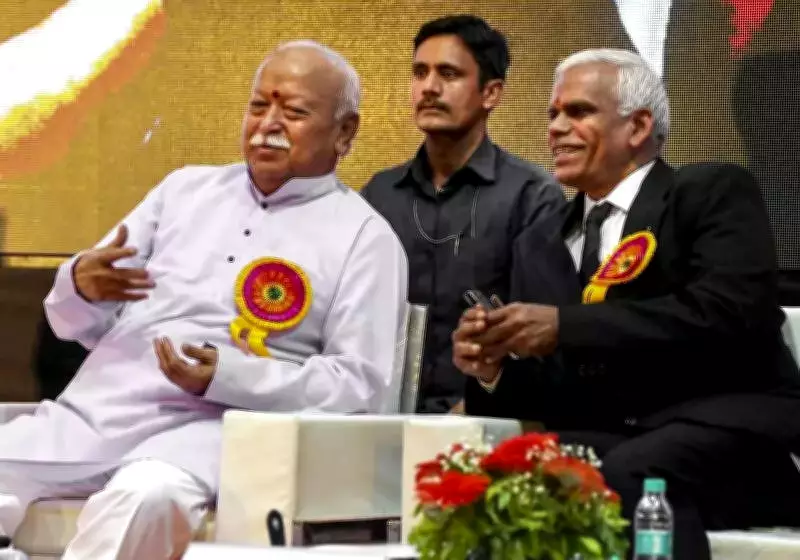
Bhagwat, speaking at the national symposium on ‘Role of Canine in One Health: Building Partnerships and Resolving Challenges' held at the Nagpur Veterinary College campus, proposed a stronger national role for veterinarians. He specifically called for the establishment of an independent Indian Council of Veterinary Research (ICVR), modeled on the lines of the Indian Council of Agricultural Research (ICAR).

"Sectors advance most effectively when led by domain experts. An independent ICVR would significantly strengthen research, infrastructure and innovation in veterinary science," Bhagwat noted. He observed that while veterinary institutions have gradually gained autonomy from agricultural universities and the Veterinary Council of India (VCI) oversees academic regulation, research funding and innovation still lack a dedicated national structure.
Aligning with India's Civilizational Ethos and Global One Health Approach
Bhagwat emphasized that India's civilizational ethos regards humans, animals, plants, and nature as integral parts of a single ecosystem. This philosophy, he pointed out, is now echoed globally through the One Health approach, which recognizes the interconnectedness of health across species and environments.
He described environmental protection as one of the world's biggest challenges and stated that Indian veterinarians have a unique responsibility to offer a sustainable, Indian model of coexistence. Bhagwat expressed confidence that the deliberations at the Nagpur symposium could one day be viewed as a starting point for addressing global One Health and environmental challenges.
Veterinarians as Pillars of Economy and Rural Livelihoods
Calling veterinarians a key pillar of India's economy, Bhagwat said agriculture thrives only when farming, animal husbandry, and fisheries function together in harmony. "Veterinarians are not merely animal doctors. They are central to rural livelihoods, economic growth and environmental balance," he added, underscoring their multifaceted role beyond clinical care.
Event Organization and Personal Reflections
The symposium was jointly organized by the Indian Society for Advancement of Canine Practice, Maharashtra Animal and Fishery Sciences University (MAFSU), Nagpur, and the National Association for Welfare of Animals and Research. As an alumnus of the Nagpur Veterinary College, Bhagwat expressed pride in the transformation of the campus, seeing it as a symbol of the broader growth of the veterinary profession in India.
"This progress is not limited to a college alone. It reflects how veterinary science has expanded in scope and relevance across the country," he remarked, highlighting the profession's evolving significance in national development.






