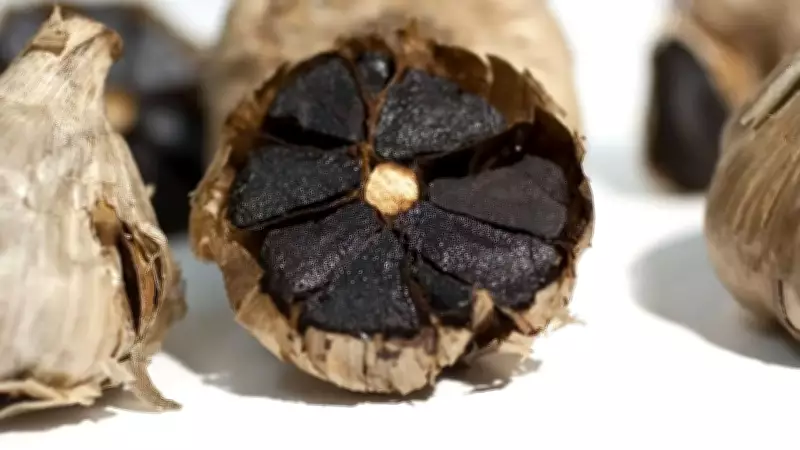
Black garlic cannot be referred to as a new version of garlic since it is just another version that comes about after ageing ordinary garlic. When one keeps garlic bulbs in a warm and humid environment for weeks, the bulbs gradually cook due to ageing, and hence, it results in different flavours.
How heat and humidity change garlic into black garlic
The process of producing black garlic relies on the use of specific temperatures and moisture levels. The bulbs of garlic are exposed to temperatures ranging from 60°C to 90°C for weeks with high moisture content. In this period, the cloves turn dark brown and soft. The transformation is not caused by burning; rather, it is a result of the chemical reactions that occur between sugars and amino acids called the Maillard reaction. The Maillard reaction causes the garlic to turn dark and change its taste as well. At the same time, it changes the cellular composition and makes the garlic soft and sticky.
Why black garlic tastes mild and slightly sweet
The reason for the sharp flavour in fresh garlic is the presence of sulfuric compounds such as allicin. In the process of cooking, the sulfuric compounds decompose, making the garlic less strong. On the other hand, sugar levels in the food increase, transforming into a new flavour. The taste is usually sweet but with an element of sourness, similar to caramel or molasses. This balance of sweet and savoury makes black garlic very different from raw garlic, even though it comes from the same ingredient.

Changes in texture and composition during the process
Not only does it change its flavour profile, but it also changes its texture. The black garlic is soft and sticky and has a spreading consistency, unlike the hard cloves of fresh garlic. There are changes that occur in terms of the chemicals. There will be some that have fewer compounds, while there are those that have more. This is especially true when it comes to the breakdown of the aromatic compounds, making it easier for those who find fresh garlic too potent.
Why is black garlic considered different from fermentation
While black garlic is frequently called “fermented” garlic, it actually does not involve any kind of real fermentation in its production process. There are no microorganisms used to ferment the garlic. Rather, it is heat reactions that bring about the desired changes. This is significant since the taste is produced through the ageing process.
A simple change with surprising results
Black garlic is a perfect example of how the same product may change dramatically depending on the environmental conditions it experiences. When garlic is stored under certain temperature and humidity levels, there is no denying that its flavour, appearance, and chemical composition will all change, becoming more mellow and sweet. It proves how minor adjustments in the environmental conditions may affect our food results and tastes significantly.