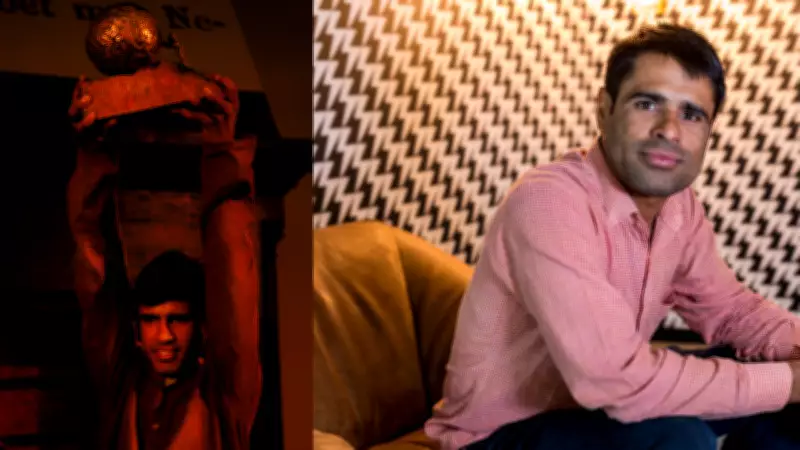
From Child Labourer to Global Advocate: Om Prakash Gurjar's Inspiring Journey
In numerous villages across rural India, childhood is frequently molded by forces far beyond a child's influence. Poverty, debt, and social inequality can silently erase the most basic dreams, such as attending school, engaging in play, or even having the freedom to shape one's own future. For Om Prakash Gurjar, childhood commenced under these exact conditions. However, his path would ultimately evolve from that of a child labourer into one of the youngest global voices championing children's rights.
A Childhood Lost to Labour
Om Prakash Gurjar was born in 1992 in a small village in Rajasthan, into a family grappling with severe poverty and debt. His parents served as bonded labourers for a landlord, a system that ensnared many families in cycles of unpaid or underpaid work across generations. For Om Prakash, childhood concluded almost as soon as it began. At the tender age of five, instead of learning the alphabet or playing with peers, he was dispatched to work in the fields alongside adults. The days were lengthy, and the labour was draining. The expectation was straightforward: assist in repaying the family's debt.
School was not even a consideration. Like millions of children trapped in labour globally, he had never stepped inside a classroom. Education seemed like a privilege reserved for other children, those whose families were not shackled by poverty. Years later, he would recall those early days not only for the physical toll but for the silent sensation of being invisible and overlooked by society.

The Moment Everything Changed
His life underwent an unexpected transformation when activists from Bachpan Bachao Andolan arrived in the region. This organization, founded by Nobel Peace Prize laureate Kailash Satyarthi, had dedicated decades to rescuing children trapped in labour and advocating for their right to education. Om Prakash was among the children they liberated. For the first time in his life, he was no longer expected to toil in the fields. Instead, he was granted something he had never envisioned for himself: the opportunity to attend school.
The transition proved challenging. Sitting in a classroom after years of labour demanded immense courage and patience. Yet, the young boy who had once been denied education approached this new chapter with unwavering determination. Gradually, letters transformed into words, and words blossomed into ideas. With education emerged something even more potent: awareness. Om Prakash began to comprehend that his experiences were not merely personal misfortune but part of a broader injustice affecting millions of children worldwide.
Finding a Voice for Other Children
As he matured, Om Prakash refused to abandon his past. Instead, he chose to confront it head-on. Still in his early teens, he commenced speaking out against child labour and championing the right to education. He traveled to villages, urging parents to send their children to school rather than work. He also emphasized the significance of birth registration, which often serves as the initial legal acknowledgment of a child's existence and rights.
What rendered his voice compelling was its authenticity. He was not speaking as an outsider or a distant activist but as someone who had lived that reality firsthand. Other children listened because he genuinely understood their struggles. Adults paid attention because his narrative was impossible to disregard, rooted in raw, lived experience.
Global Recognition at Fourteen
In 2006, the world started to take notice of the young activist from Rajasthan. At just 14 years old, Om Prakash Gurjar was honored with the International Children's Peace Prize, one of the most prestigious accolades bestowed upon young changemakers dedicated to children's rights. The award acknowledged his bravery in standing up against child labour and campaigning for education and identity rights for children.
For a boy who had once labored silently in fields, standing on an international stage symbolized something far greater than personal achievement. It demonstrated that the voice of a child, even one born into the most challenging circumstances, could resonate across the globe and inspire change.

Turning Pain into Purpose
Today, Om Prakash Gurjar continues his work as a child rights advocate. His efforts focus on safeguarding vulnerable children and ensuring they receive education, legal identity, and freedom from exploitation. Yet, perhaps the most powerful aspect of his story is not the awards or recognition but the profound transformation. A child who once toiled silently in fields now speaks for children who remain voiceless. A boy who was denied education now fights so that others may enter classrooms without fear.
His life serves as a poignant reminder that behind every statistic on child labour lies a human story, a child with dreams awaiting an opportunity to flourish. And sometimes, when one child seizes that chance, they become the catalyst for thousands of others to find their own paths to freedom and fulfillment.