

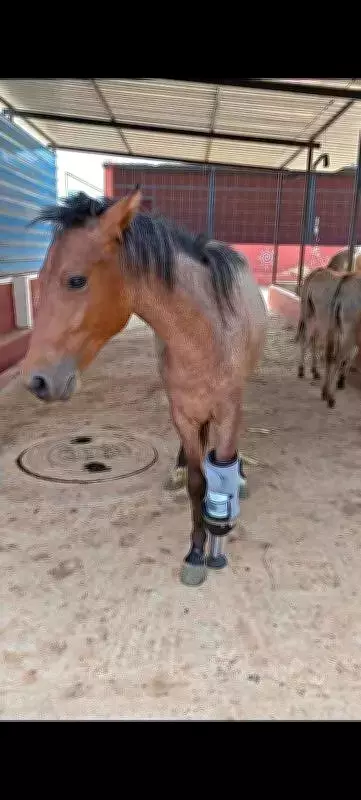
Mare Regains Mobility with Custom Prosthetic Limb After Severe Injury in Mysuru
A mare that lost mobility following the amputation of her forelimb due to a severe injury has begun walking again after being fitted with a customised prosthetic limb. This remarkable recovery was made possible through a collaborative effort involving veterinarians, animal welfare activists, and engineers in Mysuru.
Rescue and Emergency Medical Care
The incident came to light when People for Animals (PFA) received a distress call about a badly injured female horse at Shukra Hundi near Yelwala on the outskirts of Mysuru. An approximately four-year-old mare, whose age was determined through a dental examination by veterinarians, suffered a catastrophic forelimb injury. The limb was crushed and hanging by a flap of skin, prompting immediate action.
The rescue team promptly shifted the animal to the PFA Mysuru shelter for emergency medical care. Upon examination, veterinarians Dr Amardeep Singh and Dr Kiran determined that the limb was beyond salvage, making amputation the only viable option. Although the surgery was successful, the recovery phase proved challenging.

Challenges in Post-Operative Recovery
The mare required intensive post-operative care, including daily wound dressing, medication, and continuous monitoring, as she struggled to maintain balance on three legs. After nearly two months of treatment and rehabilitation, the wound healed well. In consultation with Dr Navaz, CEO of PFA Bengaluru, the team explored the possibility of fitting a prosthetic limb to restore her mobility.
On his recommendation, the case was referred to aeronautical engineer Suprith Gowda, who took on the project with dedication and expertise.
Design and Development of the Prosthetic Limb
The customised prosthetic limb was designed and developed by Suprith Gowda along with a team of students from Gopalan College of Engineering and Management in Bengaluru. While the team initially explored the use of 3D printing technology, they later opted for an alternative design and material approach. This decision was made considering the weight-bearing requirements and long-term durability needed for a horse, ensuring the prosthetic would be effective in real-world conditions.
The final design ensured the prosthetic was lightweight, stable, and capable of supporting the animal comfortably, allowing her to walk again with ease.
Collaborative Effort and Impact on Animal Welfare
Savitha Nagabhushan of PFA Mysuru highlighted the significance of this collaboration, stating, "This collaboration reflects how technology and compassion can come together to create meaningful change in animal welfare. We deeply value this partnership and the renewed quality of life it made possible." This case underscores the potential for innovative solutions in veterinary medicine and animal care, driven by interdisciplinary teamwork.
The successful outcome not only restored the mare's mobility but also set a precedent for future efforts in prosthetic development for animals, showcasing the power of human ingenuity and empathy in addressing complex challenges.






