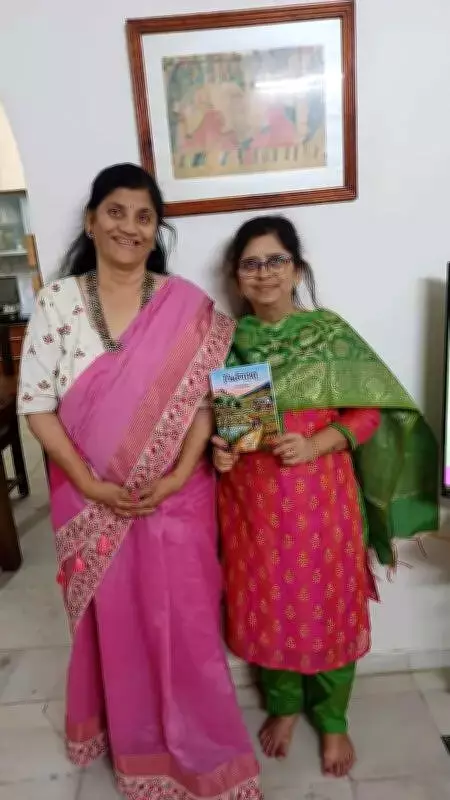
Swati Bedekar's 'PadGatha' Chronicles Women's Empowerment Through Sanitary Pad Production
For over a decade, Vadodara-based social entrepreneur Swati Bedekar has quietly spearheaded a transformative movement that has empowered thousands of women across India to achieve financial independence by manufacturing sanitary napkins. Widely recognized as the 'Padwoman' for her pioneering work, Bedekar has now compiled these powerful experiences into a compelling book titled "PadGatha", which narrates the real-life journeys of women who overcame adversity, shattered social taboos, and established their own small-scale enterprises.
Documenting Transformative Journeys
The book features more than twenty-five inspiring stories of women from diverse states and varied socioeconomic backgrounds. "I have meticulously documented the immense difficulties these women faced and how they courageously overcame numerous challenges to establish manufacturing units and earn sustainable livelihoods. Each narrative carries a profoundly inspiring message of resilience and empowerment," explained Bedekar, who founded and leads the Vatsalya Foundation.
The Genesis of a Grassroots Movement
Bedekar established the Vatsalya Foundation in Vadodara twenty-six years ago, initially focusing on enhancing academic performance among children in rural Gujarat. However, during her extensive visits to remote villages, she observed alarming menstrual hygiene practices among women, primarily due to the prohibitive cost of commercial sanitary napkins. "I resolved to provide them with affordable, high-quality sanitary napkins. This presented significant challenges, including initial quality concerns that needed addressing," she recounted.

Expansion of the Sakhi Units
In 2010, Bedekar launched her first Sakhi manufacturing unit for sanitary pads in Devgadh Baria, located within the tribal-dominated Dahod district. Local tribal women received comprehensive training to produce pads at this facility, enabling them to generate a steady income. The initiative proved remarkably successful, leading to the foundation's expansion of manufacturing units across Gujarat within a few years. Through "PadGatha", Bedekar meticulously documents these transformative journeys, emphasizing how access to livelihood opportunities, restored dignity, and increased awareness empowered women to rewrite their personal narratives.
Impact and Legacy
Bedekar's work has fundamentally transformed lives at the grassroots level, providing not only economic stability but also fostering social change by breaking long-standing taboos surrounding menstruation. The stories in "PadGatha" serve as powerful testimonials to the resilience and entrepreneurial spirit of Indian women, highlighting a sustainable model for women's empowerment that combines health education with economic opportunity.