Ahmedabad Health Screening Uncovers Significant Non-Communicable Disease Burden
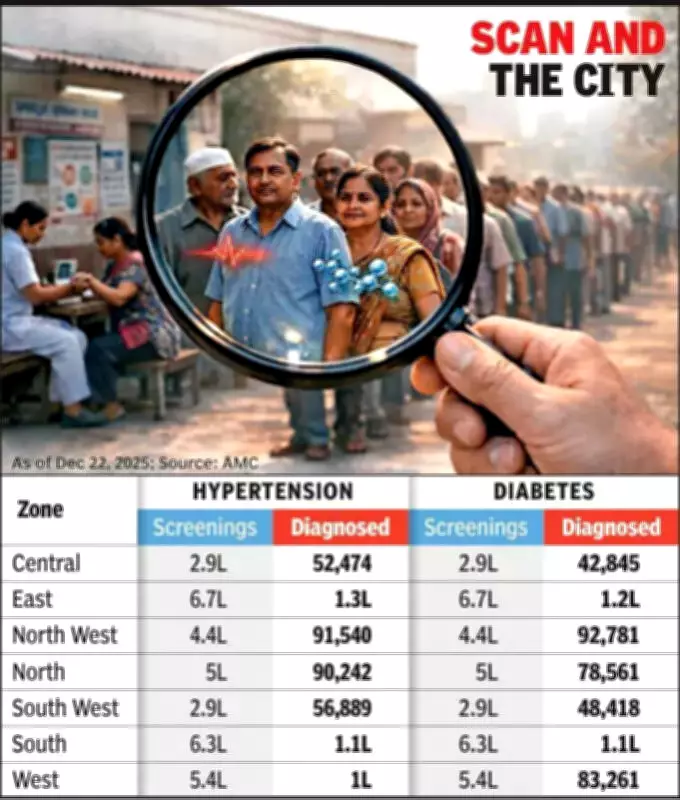
In a comprehensive health initiative spanning the past five years, the Ahmedabad Municipal Corporation (AMC) has screened an impressive 33 lakh citizens at its urban health centres. The results reveal a concerning prevalence of non-communicable diseases, with 19% of those screened diagnosed with hypertension and 17.2% with diabetes.
Detailed Data and Collection Efforts
The data, meticulously gathered from various areas across the city, indicates that approximately 6.2 lakh individuals were identified with hypertension, while around 5.6 lakh were found to have diabetes. This screening effort, conducted from 2021 to 2025, has been pivotal in providing free tests and treatments for these and other conditions, including cervical cancer.
An official from the AMC, who preferred to remain anonymous, explained that the corporation operates 82 urban health centres. During the Covid-19 pandemic, these centres were repurposed for vaccinations and child immunizations, leading to increased public visitation. Post-pandemic, this surge prompted the state health department to shift focus towards combating non-communicable diseases, which are a growing public health concern.

Strategic Health Initiatives and Future Goals
The corporation is actively collecting and analyzing data on patients with hypertension, diabetes, and cancer to better understand disease patterns and improve healthcare delivery. Medication has been provided to those diagnosed, underscoring a commitment to proactive treatment. The official emphasized that screening citizens over the age of 30 is essential to this mission, as early identification and management are crucial in preventing severe complications, particularly cardiac problems, which rank among the most dangerous non-communicable diseases.
This aligns with the central government's ambitious aim to reduce non-communicable diseases by 30% by 2030. The AMC's efforts represent a significant step towards this goal, leveraging urban health infrastructure to enhance community well-being and address chronic health issues effectively.