

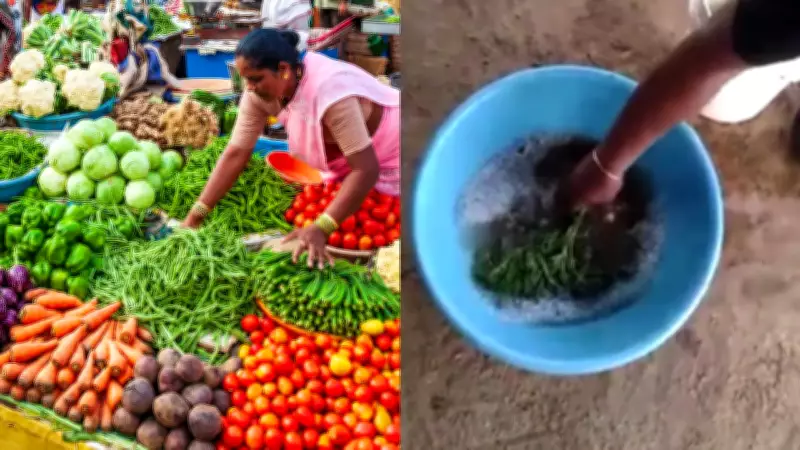
A shocking video from March 2023, recently resurfaced on X (formerly Twitter), has reignited concerns about the quality and safety of vegetables sold in markets. The video, shared by surgeon and trekker Amit Thadhani, shows leafy greens being soaked in a foamy chemical solution for a few seconds. After resting on a crate, the shrunken leaves broaden and turn bright green, appearing freshly harvested. The clip has garnered over 1 million views and hundreds of comments, raising questions about what we actually consume.
Are Artificial Colors Allowed on Vegetables?
According to the Food Safety and Standards Authority of India (FSSAI), the use of colors on fruits and vegetables is strictly prohibited under sub-regulation 2.3.6 of the Food Safety and Standards (Prohibition and Restrictions on Sales) Regulations, 2011. Despite this, vendors often resort to artificial coloring to make produce look more appealing and fetch higher prices.
Why Are Vegetables Artificially Colored?
Bright green vegetables are visually more attractive and can command better prices. Experts explain that vendors soak or wash vegetables in chemical solutions to enhance appearance. However, these artificial enhancements often involve harmful chemicals that can cause allergies, gastrointestinal issues, and long-term complications such as organ damage.

Health Risks of Artificial Coloring
Artificial dyes commonly used include malachite green, copper sulfate, rhodamine B, and Sudan dyes—all unsafe for consumption. Health risks include:
- Allergic reactions: Especially in children and sensitive individuals.
- Digestive issues: Nausea, vomiting, and abdominal pain.
- Long-term damage: Liver and kidney damage from prolonged exposure.
Common Chemicals Found in Vegetables
- Malachite Green: Used on green vegetables like peas and leafy greens to enhance green color.
- Metanil Yellow: Added to turmeric or vegetables to intensify yellow tones.
- Rhodamine B: Provides a bright pink or red hue.
- Sudan Dyes: Oil-soluble dyes used to deepen red or orange colors; classified as carcinogenic.
- Copper Sulfate: Makes greens look brighter and fresher but can be toxic in excess.
How to Identify Artificially Colored Vegetables
Look for these signs:
- Unnatural brightness: Overly bright or fluorescent greens indicate artificial coloring.
- Color residue: Rub a leaf or skin with a damp cloth. If color comes off, it's likely artificial.
- Uniform color: Real vegetables have slight shade variations due to natural growth.
- Water test: Soak vegetables in salt water. If the water turns green, artificial dye is present.
Tips to Avoid Artificially Colored Vegetables
- Buy from trusted sources: Farmers' markets or organic stores are less likely to sell tampered produce.
- Inspect thoroughly: Look for natural freshness signs like firm stems, crisp leaves, and earthy smell. Avoid glossy or waxy vegetables.
- Wash thoroughly: Rinse under running water and use warm salt water to remove chemicals. Peel when possible before cooking.
By staying vigilant, you can protect your health and avoid harmful chemicals in your diet.






