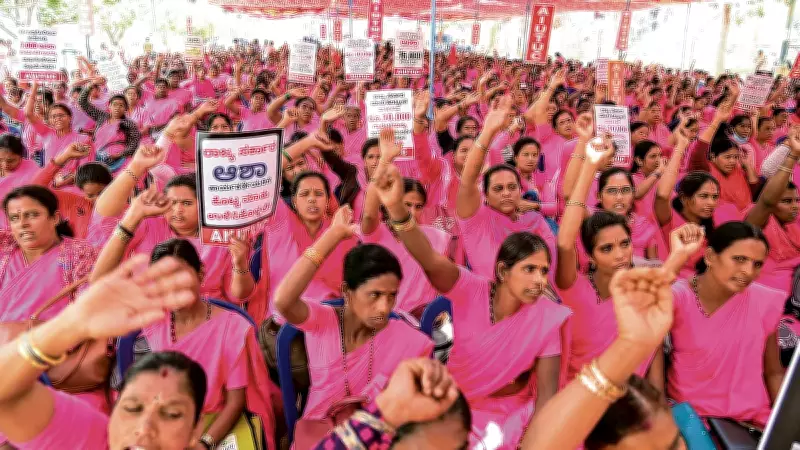
Bengaluru ASHA Workers Stage Protest Over New Regulations and Honorarium Demands
In a significant development in Bengaluru, Accredited Social Health Activists (ASHA) workers have taken to the streets to voice their opposition against newly implemented government rules. The protest centers on a contentious policy change that has substantially increased their workload without a corresponding rise in compensation.
Key Issue: Doubled Workload Under New Rules
The primary grievance stems from a recent decision by the health department to alter the population coverage assigned to each ASHA worker. Previously, these frontline healthcare workers were responsible for a population of 1,000 individuals in their respective areas. However, under the new regulations, this number has been doubled to 2,000 people per worker.
This change effectively means that ASHA workers are now expected to manage twice the number of households, patients, and community health initiatives without any immediate adjustment to their honorarium. The move has sparked widespread discontent among the workforce, who argue that the increased responsibilities warrant higher pay to reflect their expanded duties.

Demands for Increased Honorarium
Alongside their protest against the new rules, ASHA workers are intensifying their long-standing demand for an increase in their honorarium. They contend that their current compensation does not adequately reflect the critical role they play in the public health system, especially in rural and underserved urban areas.
The workers emphasize that their duties include a wide range of essential services, such as:
- Conducting health awareness campaigns
- Facilitating immunizations and maternal care
- Providing basic medical assistance and referrals
- Maintaining health records for their assigned populations
With the doubled workload, they assert that a higher honorarium is not only justified but necessary to sustain their motivation and ensure the quality of healthcare delivery.
Background and Implications
The protest highlights ongoing challenges in the healthcare sector, particularly regarding the welfare of community health workers. ASHA workers have been instrumental in bridging gaps in healthcare access, especially during public health crises, yet their compensation has often been a point of contention.
This latest policy change has exacerbated existing frustrations, leading to organized demonstrations in Bengaluru. The workers are calling for a review of the new rules and a prompt resolution to their honorarium demands to prevent disruptions in community health services.
As the situation unfolds, stakeholders are closely monitoring the impact on public health initiatives in the region. The outcome of this protest could set a precedent for how ASHA workers are treated and compensated across the country, underscoring the need for balanced policies that support both healthcare goals and worker welfare.