

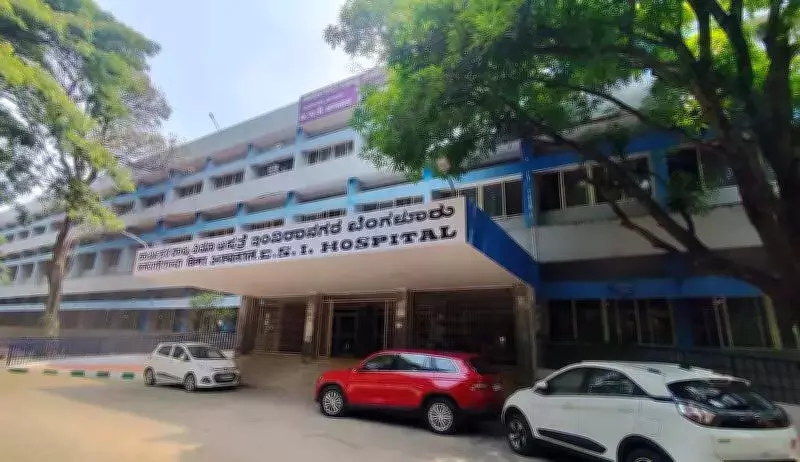
Bengaluru's ESI Hospital Struggles with Low Bed Occupancy Amid Resource Underutilisation
Despite being located in Karnataka's capital city, which hosts one of the state's largest concentrations of government employees, the Employees' State Insurance (ESI) hospital in Indiranagar, Bengaluru, continues to report alarmingly low bed occupancy rates. This persistent trend has raised serious concerns about the underutilisation of critical healthcare resources and significant gaps in access to medical care for insured workers and their dependants.
Occupancy Rates Remain Far Below Optimal Levels
In the fiscal year 2023-24, the hospital's bed occupancy stood at just 32.6%, showing a slight improvement from 25.8% in 2022-23 and 21.3% in 2021-22. However, these numbers are still critically low. During the Covid-19 pandemic in 2020-21, occupancy plummeted to a mere 8.3%. Even prior to the pandemic, the facility failed to achieve optimal levels, recording 34.5% in 2019-20 and 35% in 2018-19. These figures are substantially below the 70% benchmark required to qualify for additional central grants from the Employees' State Insurance Corporation (ESIC).
Statewide Impact and Financial Losses
This issue extends beyond Bengaluru, affecting ESI hospitals across Karnataka. According to the Comptroller and Auditor General of India (CAG) report for 2024, the state has lost over Rs 65 crore in potential grants from ESIC between 2019-20 and 2023-24 due to consistently low bed occupancy rates. The report specifies that if an ESI hospital achieves an occupancy rate exceeding 70%, the state government becomes eligible for an additional grant of Rs 200 per insured person in Karnataka.

Among the hospitals, Mysuru recorded the highest occupancy, followed by Hubballi. In stark contrast, facilities in Dandeli, Mangaluru, and Belagavi reported alarmingly low utilisation, with occupancy rates dropping to single digits during the review period.
Systemic Gaps and Infrastructure Deficiencies
The audit attributes the poor occupancy largely to systemic gaps, including inadequate infrastructure, shortage of medical equipment, lack of Intensive Care Unit (ICU) facilities, and an absence of specialist doctors. The absence of ICUs has had a particularly significant impact. As per Indian Public Health Standards (IPHS) guidelines, district-level hospitals are required to have between four and twelve ICU beds to cater to 5% to 10% of patients. However, none of the test-checked ESI hospitals in Karnataka had functional ICU facilities.
This deficiency has severely restricted clinical services. Following a Supreme Court ruling that prohibits hospitals without ICUs from performing major surgeries, even qualified surgeons in ESI hospitals have been unable to carry out such procedures. This limitation has narrowed the scope of available care and likely contributed to reduced patient footfall.
Government Response and Operational Challenges
In response to the audit findings, the Karnataka government cited infrastructural, financial, and operational constraints as reasons for the absence of ICU facilities. Officials also pointed to delays by ESIC in upgrading hospitals and challenges in augmenting existing facilities. Despite these issues, the government maintained that emergency and critical care services have not been compromised.
The report further highlighted poor utilisation of investments in medical and digital infrastructure. Several crores worth of projects remain underused or non-functional, including Rs 5.3 crore spent on telemedicine services, Rs 7.7 crore worth of uninstalled medical equipment, and liquid oxygen plants established during the Covid-19 pandemic that are currently non-operational.
Financial Strain from Referrals and Service Gaps
ESI hospitals are government-run healthcare facilities that provide free or subsidised medical care to workers covered under the Employees' State Insurance scheme and their dependants. The CAG report emphasises that referrals to tie-up hospitals have placed a significant financial burden on the ESI system, accounting for 21% to 31% of total expenditure in recent years. Referral costs increased from Rs 105.8 crore in 2019–20 to Rs 140.1 crore in 2023–24.

This trend is attributed to inadequate infrastructure and a shortage of specialist doctors in ESI hospitals. For instance, in Davanagere, over 2,200 cataract patients were referred despite the presence of an ophthalmologist, while in Mangaluru, outdated ENT equipment led to 1,765 referrals. The audit also flagged lapses in the provision of medicines after patient discharge, further exacerbating service gaps.
The low bed occupancy at Bengaluru's ESI hospital and across Karnataka underscores a critical need for systemic improvements in infrastructure, staffing, and resource management to enhance healthcare access and optimise financial resources for the state's insured workforce.





