

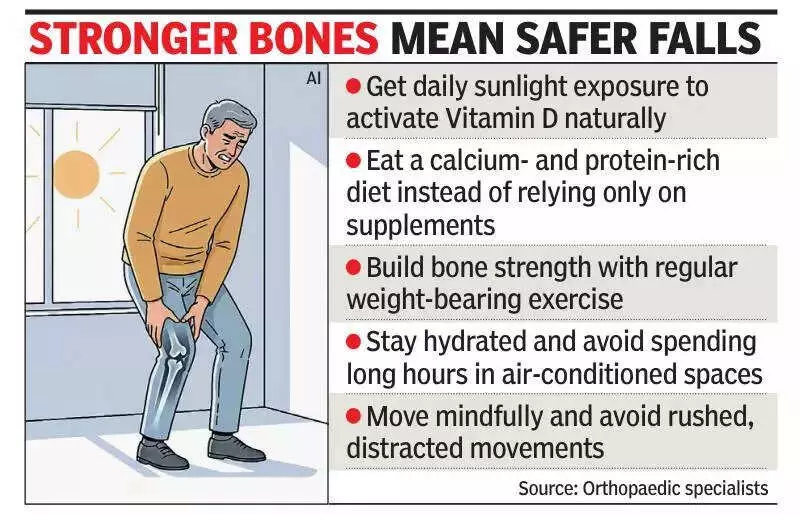
Bengaluru Doctors Sound Alarm Over Rising Fracture Cases from Minor Injuries
Orthopaedic specialists across Bengaluru are reporting a concerning increase in patients suffering fractures from surprisingly minor injuries, with medical experts pointing to Vitamin D deficiency and post-pandemic lifestyle changes as primary culprits.
The Vitamin D Connection: A Common Thread in Fracture Cases
Doctors have identified a consistent pattern among patients presenting with fractures from low-impact incidents that previously would have caused minimal harm. Dr Kumardev Arvind Rajamanya, director and lead consultant of orthopaedic surgery at KIMS Hospitals, explained the clinical observations: "Fractures typically require significant trauma, but we started noticing patients arriving with smaller injuries resulting in fractures. A simple Vitamin D blood test revealed a common link — deficiency."
The problem extends beyond simple fractures to include stress fractures caused by repetitive strain, which have become more frequent in clinical practice. Dr Deepak Sampath, senior consultant and head of orthopaedics at Hosmat Hospitals, emphasized the biological mechanism: "Vitamin D is crucial for calcium absorption and bone mineralisation. Low levels reduce bone quality, making fractures more likely, especially in weight-bearing areas like the legs and feet."

Post-Pandemic Lifestyle Changes Exacerbating Bone Health Issues
Medical professionals attribute the Vitamin D deficiency crisis to reduced outdoor activity since the COVID-19 pandemic, which has limited sunlight exposure essential for Vitamin D synthesis. Dr Sampath reported seeing 80–100 fracture cases monthly, with most resulting from low-impact injuries that wouldn't typically cause such damage.
The demographic spread of these injuries reveals concerning patterns:
- Children frequently experience elbow and forearm fractures
- Adults commonly suffer distal tibia and fibula fractures
- Adolescents and young adults are increasingly affected
Modern Lifestyle Habits Contributing to the Problem
Dr Anand Chavan, senior consultant in orthopaedics at Fortis Hospital, highlighted how contemporary behavior patterns compound the bone health crisis: "People move carelessly — distracted, hurried — and a small misstep can cause a fall. When weaker bones are subjected to twisting or rotational force, fractures occur easily."
Dr Chavan issued an important warning about supplementation limitations: "Vitamin D, calcium and protein need sunlight exposure and mechanical loading through exercise. Walking and weight-bearing activity signal the body to maintain bone strength. Without movement, bone density drops, even with supplements."
A Multifaceted Public Health Challenge for Bengaluru
The rising fracture cases represent a significant public health concern for Bengaluru, combining several factors:
- Reduced outdoor activity and sunlight exposure post-pandemic
- Increased screen time and sedentary behaviors
- Nutritional deficiencies affecting bone mineral density
- Changing movement patterns in urban environments
Orthopaedic specialists emphasize that this trend requires comprehensive attention, combining medical intervention with lifestyle modifications to address the root causes of weakened bone health in the population.






