Bhopal's Air Quality Deteriorates Sharply, AQI Hits 'Poor' Category
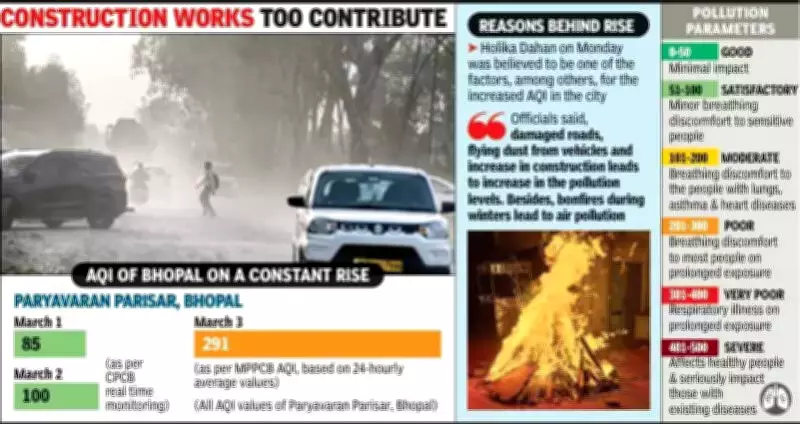
On Tuesday, the air quality in Bhopal was officially rated as poor, marking a significant environmental concern for the city. The air quality index, a measure of air pollution, has surged dramatically, increasing threefold over the past three days. Specifically, the AQI in Bhopal was recorded at 85 on March 1, but it escalated sharply to 291 by March 3, indicating a severe deterioration in air conditions.
Health Implications and Official Data
According to the Central Pollution Control Board, an AQI ranging between 200 and 300 signifies that prolonged exposure can cause breathing discomfort for most individuals. The Madhya Pradesh Pollution Control Board confirmed that the AQI at Paryavaran Parisar in Bhopal reached 291 on Tuesday, based on 24-hour average values. This location, known for its dense green cover and housing the MP pollution control board office in the upscale Arera Colony, has been particularly affected by the spike in pollution levels.
Factors Contributing to Increased Pollution
Officials have identified multiple factors behind the sharp rise in AQI. Holika Dahan, celebrated on Monday, is believed to be one of the key contributors, despite government efforts to promote environmental protection. Prior to the festival, authorities urged citizens to use cow-dung logs instead of wood for bonfires to mitigate pollution. Additionally, damaged roads, flying dust from vehicles, and increased construction activities have exacerbated air quality issues. Winter bonfires also play a role in elevating pollution levels.

The AQI data reveals a concerning trend: it was 85 on March 1, 100 on March 2, and then jumped to nearly 300 on March 3. Air quality is assessed by monitoring levels of sulphur dioxide, nitrogen oxide, RSPM10, and fine particulate matter. Among these, PM2.5 is highlighted as the most harmful, linked to severe lung diseases due to its ability to penetrate deep into the respiratory system.
Sources of Particulate Matter and Seasonal Variations
PM10 primarily originates from dust and construction activities, including road building, while PM2.5 results from dust, human activities, and climatic conditions. Officials note that pollution levels typically decrease during rainfall, as showers help settle dust and reduce vehicular pollution by preventing pollutants from becoming airborne. This natural cleansing effect underscores the seasonal variability in air quality.
Environmental and Health AwarenessThe government's pre-Holi message emphasized celebrating with a focus on environmental protection and social harmony, reflecting growing concerns over air pollution's impact. As Bhopal grapples with this air quality crisis, residents are advised to take precautions, especially those with respiratory issues, to minimize exposure during periods of high pollution.