

Union Budget 2026-27 Reduces Pollution Control Allocation Amid Severe Air Quality Concerns
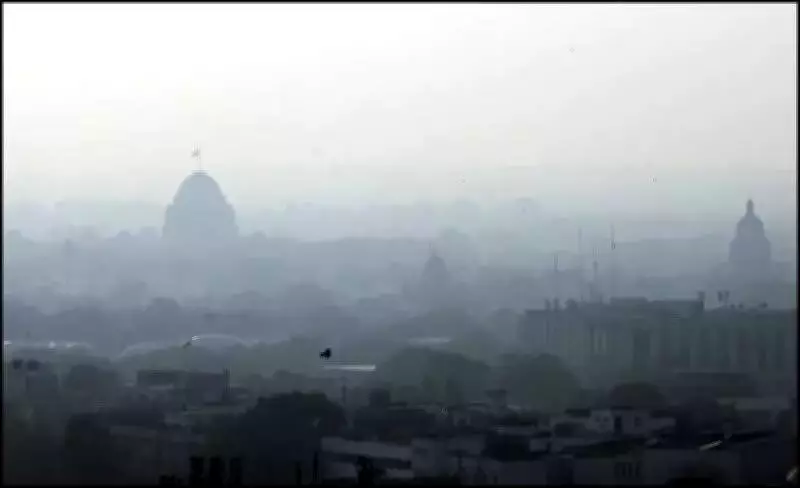
New Delhi: The Union Budget 2026-27, presented on Sunday, has significantly reduced the allocation for pollution control measures at a critical juncture when the toxic air quality in Delhi-NCR and the broader Indo-Gangetic Plains has raised serious alarms about an escalating public health crisis. This budgetary decision comes when millions of residents in these regions are grappling with hazardous pollution levels that pose severe health risks.
Substantial Reduction in Pollution Control Funding
The central government has allocated Rs 1,091 crore for pollution control initiatives in the fiscal year 2026-27. This represents a substantial reduction of Rs 209 crore compared to the revised estimates of Rs 1,300 crore in 2025-26. It is noteworthy that the revised estimates for 2025-26 had already been increased from the originally allocated Rs 853.9 crore, making the current year's cut even more significant.
This funding falls under the Control of Pollution scheme, which supports various critical environmental initiatives including state pollution control boards, specialized committees, and the National Clean Air Programme (NCAP). The NCAP serves as India's flagship initiative aimed at reducing particulate pollution in non-attainment cities, currently monitoring air quality across 82 urban centers nationwide.

Environmental Experts Voice Strong Criticism
The budgetary decision has triggered sharp criticism from environmental experts and activists who argue that the reduction demonstrates a lack of targeted approach for regions experiencing the most severe pollution challenges. Sunil Dahiya of Envirocatalysts highlighted a major gap in the budget's approach, stating that "there is no dedicated allocation for Delhi-NCR or north India, even as air pollution remains a recurring health emergency."
Dahiya further emphasized that "emission reduction at source needs strong policies and financial backing, which are clearly missing in this budget." He pointed out that while the overall Control of Pollution head shows a marginal increase, the funding specifically allocated to NCAP across the 82 cities is actually lower than last year's revised estimates, which he described as "a worrying signal."
Concerns About Implementation and Priorities
Anumita Roychowdhury, executive director at the Centre for Science and Environment (CSE), expressed similar concerns about the budgetary allocation not matching the scale of the environmental crisis. She questioned how NCAP 2.0 could be effectively expanded without corresponding increases in central funding, even if convergence with other sectors is planned.
Environmental activist Amit Gupta described the budget as "deeply disappointing," revealing that "the NCAP allocation was cut by nearly Rs 200 crore." He highlighted an even more alarming statistic: "In FY 2024-25, only Rs 16 crore was spent against an allocation of Rs 900 crore," raising serious questions about implementation efficiency.
Missed Opportunities in Clean Transportation
While the budget does include increased spending on clean energy initiatives, experts argue that this does not translate into a comprehensive anti-air pollution strategy. Aarti Khosla, founder and director of Climate Trends, noted that while record allocations were made for rooftop solar panels, stronger measures were needed given the severity of air pollution.
Khosla stated that "this shows intent for energy transition, but given the extent of air pollution, stronger measures such as accelerating EV adoption and fast-charging infrastructure were needed." Vibhuti, director (south Asia) at IEEFA, echoed this sentiment, describing transport electrification as a missed opportunity, noting that "EVs can deliver immediate public health benefits, yet the budget support remained weak."

Some Positive Developments in Regulatory Funding
Despite the overall reduction in pollution control funding, the budget did include some increases for regulatory bodies and educational initiatives. The Commission for Air Quality Management (CAQM) received Rs 35.26 crore, representing a Rs 4 crore increase from previous allocations. Similarly, the Central Pollution Control Board (CPCB) received Rs 123 crore against Rs 116.2 crore in FY 2025-26.
Additionally, allocations for environmental education and capacity building saw positive growth. A sum of Rs 104 crore was allocated for environment education, awareness, research and skill development, marking a significant jump of Rs 29 crore compared to 2025-26. Environmental knowledge and capacity building received Rs 102.7 crore for FY 2026-27, showing an increase of Rs 33.8 crore.
The budgetary decisions come at a time when air pollution continues to pose severe health risks across northern India, particularly in urban centers like Delhi, where air quality indices frequently reach hazardous levels during winter months. Experts emphasize that without adequate funding and targeted strategies, India's efforts to combat air pollution may face significant challenges in the coming years.





