

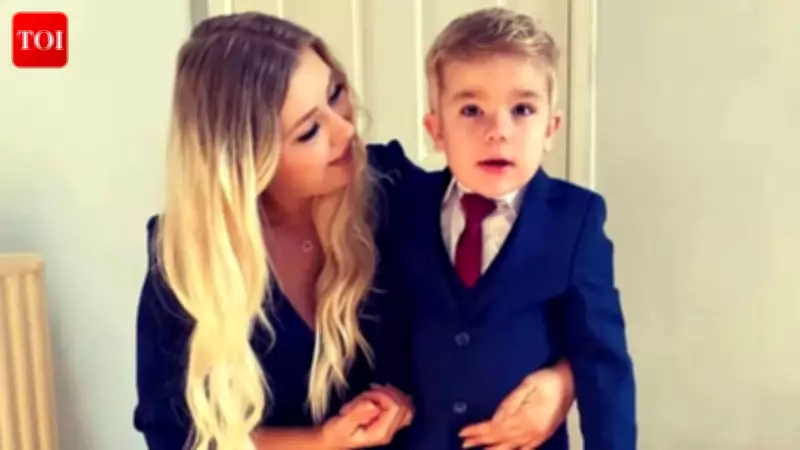
Most parents view childhood as a time of learning new words, first school days, silly jokes, and dreams about the future. For Georgia Nonas, each birthday brings a deeper heartbreak: her son is fading before her eyes.
"I'm watching my child fade away every single day, and it's enough to break a person," Georgia, 29, says about her son Cody, as reported by Metro. He is eight years old and has Sanfilippo syndrome, a rare genetic illness often called "childhood dementia."
For the Nonas family, life suddenly plunged them into a world most people do not know exists. Many associate dementia with old age, but thousands of children worldwide live with conditions that gradually strip away memories, movement, speech, and independence. In Sanfilippo, children lose skills they once had, and currently, there is no cure. For Cody, the condition is worsening, leaving his family to cope with grief and exhaustion from a disease that only progresses.

What is Sanfilippo syndrome?
According to the Mayo Clinic, the official name of Sanfilippo syndrome is Mucopolysaccharidosis Type III (MPS III), a rare genetic disorder where the body cannot break down certain sugars properly. These sugars accumulate in cells, especially in the brain and nervous system, causing increasing damage over time.
Sanfilippo is called childhood dementia because children gradually lose mental and physical abilities. Most appear healthy at first, reaching milestones like other children, but eventually, they experience difficulties with speech, behavioral changes, sleep problems, or loss of previously acquired skills.
As the disease progresses, it affects nearly every aspect of a child's life. Skills such as speaking, walking, eating independently, and even simple communication slip away, with no predictable timeline.
Cody's heartbreaking story: An 8-year-old boy fighting a hard battle
When Cody was young, the warning signs were subtle. His mother recalls that at age one, he had hearing problems and persistent ear infections. Later, he regressed: he said "mama" and "baba," then stopped talking entirely. Doctors initially diagnosed autism when he was two, but it was not until age three that they confirmed Sanfilippo syndrome.
Georgia remembers the day: "It was the worst day of my life. Everyone just sat there silent. I couldn't even process it," she recalls. "I'd fake being OK all day, but once I was alone, I'd cry until I fell asleep. Then I'd wake up, and it would hit me all over again."
There are several types of Sanfilippo. Cody has Type A, the fastest and most aggressive form. Georgia only learned the full implications after many appointments. "Cody's body is missing an enzyme, so waste builds up in his spinal cord and brain. It's progressive; over time, this damage takes away his ability to talk, eat, or walk. It causes brain damage."
In addition, Cody has epilepsy, another common complication of the syndrome. He requires daily painkillers for muscles and joints and takes sleeping aids to rest. Daily life is challenging: his sleep, movement, speech, and even eating are difficult.
Since the diagnosis, Georgia has shared their story on social media to raise awareness, as she had never heard of the syndrome before. "If someone sees Cody's story and thinks, 'Oh, my child looks like that too,' it could mean an earlier diagnosis, which is so important for getting help and therapies."
Despite everything, Georgia takes each day as it comes with Cody, her "loving little boy" with "the most contagious smile." "Everyone who meets him is amazed. I couldn't be prouder," she says.
There is no treatment for Sanfilippo in the UK, but the family is waiting for the FDA in the US to approve a gene therapy. It is not a cure, but it could slow the progression and give Cody more months or even years of being himself. "Our hope is just to hold on to the Cody we know for as long as possible. I don't want birthdays to be reminders of the clock running out. Hope is really all we hang on to."
Why do people call it childhood dementia?
Most people are not accustomed to hearing "dementia" and "children" in the same sentence, but the term covers over 100 rare genetic disorders. Symptoms resemble adult dementia: children lose the ability to talk, remember, move, reason, or care for themselves. The impact is often greater because it begins so early in life.

Families endure relentless pain. With little hope of recovery, losses accumulate. Parents, siblings, and caregivers find themselves in a constant cycle of letting go.
Is there any cure?
Currently, there is no cure. Treatment focuses on comfort: managing symptoms, supporting movement and sleep, and controlling seizures and behavior. Research continues, with scientists exploring gene therapy and enzyme replacement, but these remain out of reach for most.
Raising awareness is crucial. Childhood dementia receives a tiny fraction of the attention and funding given to adult neurological diseases, despite its devastating effects. Georgia and other advocates push for more newborn screening and research, but above all, for recognition.
For the Nonas family, awareness is not just a campaign slogan; it is about preventing other families from feeling lost and alone. Their message is clear: dementia is not only for the elderly. Sometimes, it steals childhoods too.





