

Coldrif Cough Syrup 'Killer Batch' SR-13 Slipped Through All Safety Checks, Chargesheet Reveals
Investigators have detailed in a court chargesheet how Batch SR-13 – the so-called 'killer batch' of Coldrif cough syrup that claimed the lives of over 25 children in Madhya Pradesh's Chhindwara district in October last year – moved freely through the entire pharmaceutical supply, manufacturing, and distribution chain without being intercepted. The document presents a damning account of systemic failures that allowed the contaminated batch to clear every safety gate placed before it, from raw material procurement to final retail sale.
A Continuous Chain of Failures Rather Than Isolated Lapse
The chargesheet, filed on December 31 last year in the court of the additional sessions judge in Parasia, Chhindwara district, describes the events as a "continuous and interlinked chain" of breakdowns rather than an isolated incident. It meticulously documents how sourcing decisions, financial transactions, testing gaps, and retail-level irregularities created a perfect storm that allowed Batch SR-13 to reach vulnerable patients.
Questionable Raw Material Procurement and Financial Transactions
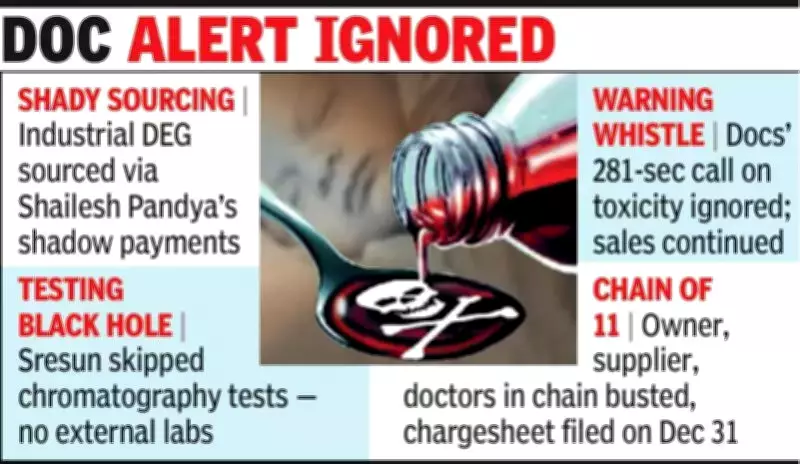
According to the chargesheet, the trail of failures began with the procurement of raw materials allegedly supplied by Shailesh Pandya, an accused who was subsequently arrested. The document states that industrial-grade material was sourced for use in the syrup manufactured by Sresun Pharma, rather than pharmaceutical-grade ingredients required for medicinal products.

Financial records examined during the investigation revealed that payments for these supplies were not made transparently. Instead of direct payments to the supplier, funds were routed through other channels. Investigators pointed to the pricing patterns and documentation surrounding these transactions as clear indicators that those involved were aware the material did not meet standard pharmaceutical grade requirements.
Critical Testing Facility Deficiencies
The chargesheet further records that Sresun Pharma lacked adequate and standard testing facilities, including the crucial gas chromatography capability required to detect contaminants such as Diethylene Glycol (DEG). This substance has a long history of causing toxicity in liquid pharmaceutical formulations when present as a contaminant.
Compounding this critical deficiency, the company had not established any accredited external laboratory arrangements to compensate for its internal testing gaps. Despite these fundamental safety shortcomings, Batch SR-13 was cleared for release and entered the distribution network.
Distribution Network Irregularities
Once dispatched, the batch encountered further irregularities at both stockist and retail levels. The chargesheet details multiple problems including invoices that did not align with manufacturing timelines, missing bottles from shipments, absence of prescription-linked sales documentation, and alleged destruction of leftover stock after concerns about the product began to emerge.
Missed Opportunity for Intervention
The investigation recorded a particularly critical moment when unusual acute kidney injury cases began surfacing in Parasia. A 281-second phone conversation took place between a local doctor and an external medical expert during which the possibility of drug-induced toxicity was discussed, including specific references to earlier DEG-linked pharmaceutical tragedies.
Despite this conversation recognizing the potential danger, the chargesheet notes that no immediate regulatory escalation followed, and the contaminated syrup continued to circulate within the same distribution network. This missed opportunity for intervention allowed the deadly batch to remain available to patients even as medical professionals were discussing its potential toxicity.
The comprehensive chargesheet paints a disturbing picture of how multiple points in the pharmaceutical supply chain failed simultaneously, creating conditions that allowed a contaminated medical product to reach and harm vulnerable children. Each stage – from raw material sourcing through manufacturing, testing, distribution, and retail – presented opportunities to stop the deadly batch that went unheeded until it was tragically too late.






