

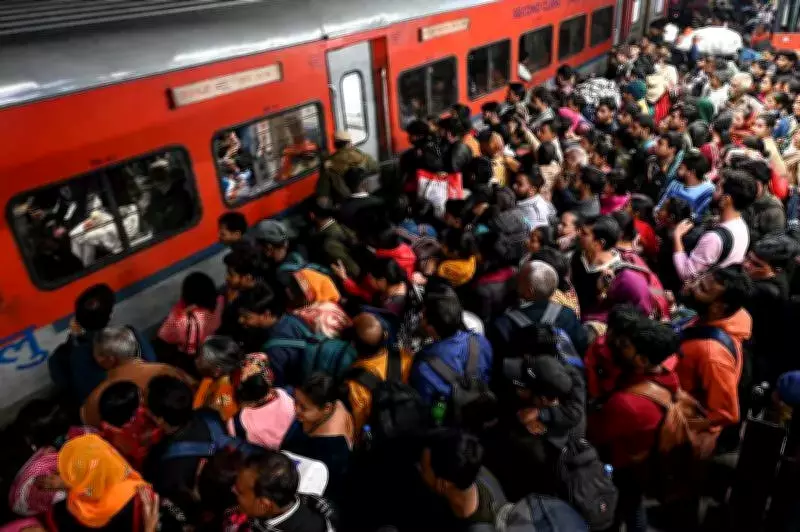
A Year After Delhi Station Tragedy, Families Struggle with Grief and Survival
One year has passed since the devastating crowd crush at New Delhi Railway Station claimed the lives of 18 people, yet the families of the victims remain ensnared in a relentless cycle of grief and hardship. For many, this tragedy has irrevocably shattered their futures, forcing them into a quiet battle for survival amidst profound loss.
Personal Stories of Loss and Resilience
The family of Pinki Devi, 41, one of the victims, continues to grapple with the aftermath. Her relative Sarita Devi, who sustained injuries during the incident, reports persistent shoulder pain that intensifies during winter months. Pinki's young daughter, Kritika, has been deeply affected, transitioning from school to managing household chores prematurely. "She has grown up too fast," Sarita lamented. Residing in Sangam Vihar in south Delhi, the family cherishes a final social media reel made while traveling to the station, where Pinki appeared joyful and excited for her journey to the Mahakumbh. Now, her husband Upender, a carpenter, plans to relocate with their children, Kritika and Prince, to their native Bihar, abandoning the city that holds painful memories.
Manoj Shah, a laborer working at the Tikri border, struggles to cope with the loss of his parents, Vijay and Krishna Shah, aged 45 and 40, and his 11-year-old niece Suruchi. Recalling his parents' wish to see their daughter Kajal married grandly, Manoj explained, "After their death, whatever compensation we received, we decided to use it to fulfil that wish. Last November, we organised my sister's wedding in Bihar using that money. This was the only thing we felt we could do for them."

Educational and Financial Fallout
Education has emerged as a major casualty of this tragedy. For Mamta Jha's family, her death while returning from Madhubani, Bihar, has plunged them into deep depression. Her husband Bipin, living in Kirari, noted that their elder daughter's preparation for medical entrance exams was disrupted for nearly five to six months, with similar impacts on their other daughter. The children's 70-year-old grandmother has stepped in as primary caregiver to support their studies, echoing Bipin's plea: "I wish no other family has to suffer what we are going through."
In Nangloi's Chanchal Park area, the death of Manoj Kushwaha, a 47-year-old welder and sole breadwinner, has left his family struggling financially. His wife Manju appealed for government assistance, stating, "I want the government to provide a job to my elder son. For now, my brother is helping us run the household." Recalling the horrific incident, she narrowly escaped near a lift while her husband was caught in the staircase crowd crush. Manoj's aspirations for his sons—one to pursue a PhD and the other to become an engineer—have been dashed due to financial constraints, forcing them to study in government institutions without tuition support.
Compensation and Railway Reforms
Indian Railways disbursed Rs 2 crore as ex gratia payments, allocating Rs 10 lakh to the next of kin of each deceased, Rs 2.5 lakh to the grievously injured, and Rs 1 lakh to those with minor injuries. Although no FIR was registered by then commissioner Sanjay Arora, the incident was investigated through inquest proceedings.
In response to the tragedy, railway authorities implemented a range of measures to enhance crowd control, particularly during festivals. A permanent holding area was established outside New Delhi Railway Station, with plans to replicate this at other major stations. Additional improvements include medical booths with on-demand doctors, increased road barricading, queue managers, and extra booking counters. For special occasions, strategies such as mini control rooms, war rooms at divisional offices, suspended platform tickets, additional RPF personnel, Rail Sevaks, volunteers, help desks, inquiry counters, and extra phone lines have been deployed. The number of special trains has also been increased to manage passenger surges effectively.
As these families continue to mourn and fight for survival, their stories underscore the lasting impact of the crowd crush, highlighting the urgent need for ongoing support and systemic improvements to prevent future tragedies.






