

Southern India's Fast Food Consumption Linked to Diabetes Surge
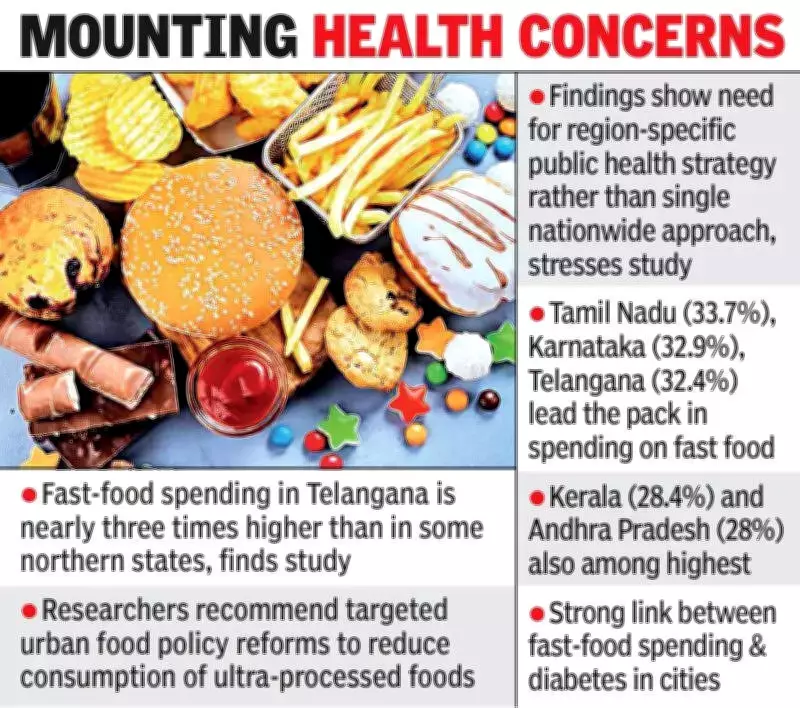
A groundbreaking medical study has uncovered a troubling health trend across southern India, where residents are allocating approximately one-third of their monthly food expenditure to fast food and ultra-processed items. This dietary shift is directly contributing to a significant increase in type-2 diabetes cases throughout the region, with urban centers showing the most pronounced effects.
Study Details and Methodology
The findings emerge from the comprehensive 'Fast-food Attributed Diabetes Index Study' (FADIS), recently published in the prestigious Indian Journal of Medical Research. This collaborative research effort involved medical professionals from both the Mayo Clinic in the United States and Siddhartha Medical College located in Vijayawada, Andhra Pradesh.
The investigation specifically examined dietary patterns and health outcomes across multiple Indian states, with particular focus on the southern regions including Telangana, Tamil Nadu, Karnataka, Kerala, and Andhra Pradesh.

Financial and Health Implications
According to the study's detailed analysis, individuals in these regions typically spend between ₹1,000 and ₹1,450 per person each month on ultra-processed foods. This substantial expenditure represents a significant portion of the average total monthly food budget of ₹4,120 per individual.
These ultra-processed foods include industrially manufactured, ready-to-eat or ready-to-heat meals, along with various snacks and beverages. Such products are characteristically high in refined carbohydrates, added sugars, unhealthy fats, and excessive salt content.
The research team has identified these southern states as being at the forefront of what they term a 'nutritional transition,' where traditional, balanced diets are being progressively replaced by energy-dense, processed alternatives.
Regional Variations and Urban-Rural Divide
Among the eighteen states analyzed for per capita spending on fast food, all southern states occupied the top positions in the rankings. Tamil Nadu recorded the highest proportion of expenditure dedicated to fast food, followed closely by Karnataka and Telangana.
In stark contrast, several northern and northeastern states reported ultra-processed food consumption rates below fifteen percent, highlighting significant regional dietary differences across the country.
The study revealed a particularly strong correlation between fast food spending and diabetes prevalence among both urban men and women. In rural areas, however, this connection was noticeably weaker. Medical experts attribute this disparity to reduced access to junk food outlets in rural regions and differing lifestyle patterns.
Specific Health Impacts in Telangana
Identifying Telangana as a high-risk zone, the study indicates that Hyderabad and other urban areas within the state are already experiencing measurable health consequences. Diabetes prevalence has reached 3.8% among urban men in these areas, representing one of the higher rates documented in the research.
For women, the study identifies excess weight and obesity as the single most significant risk factor for developing diabetes. Obesity levels among women in southern states were found to be substantially higher than current prevalence rates suggest, indicating that a considerable population segment may be at elevated risk for diabetes in the coming years.
Recommendations for Public Health Intervention
The research emphasizes that these findings underscore the necessity for gender-focused and region-specific public health strategies, rather than adopting a uniform nationwide approach. With fast-food spending in Telangana nearly triple that of some northern states, the situation demands targeted interventions.
Researchers have recommended implementing focused nutrition awareness campaigns, reforming urban food policies, and developing community-level interventions specifically designed to reduce consumption of ultra-processed foods. These measures could help mitigate the growing diabetes epidemic linked to changing dietary habits in southern India.






