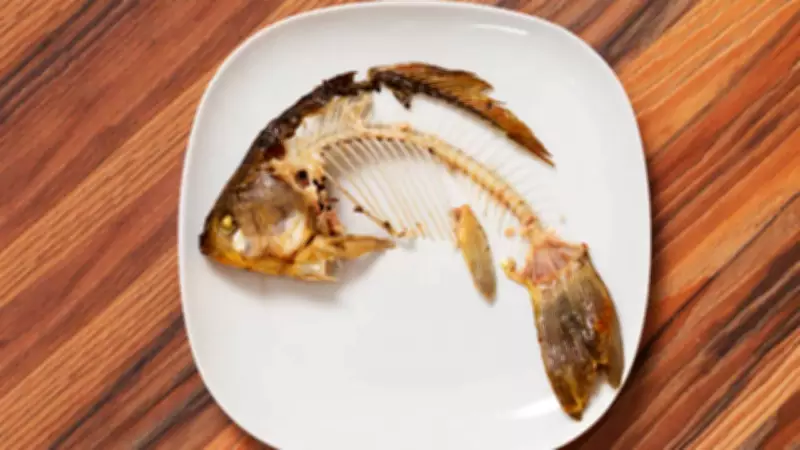
Fish bone is a household health hazard, yet awareness about its risks remains low. Most families assume that if there is no immediate choking or visible distress, the bone has passed safely. However, sharp, thin fish bones, particularly from commonly eaten varieties like rohu and catla, can travel through the esophagus without causing obvious symptoms, only to embed themselves in the stomach lining or further down the bowel. Hours or even days later, the patient develops abdominal pain, fever, or vomiting. By then, it is already a hospital situation.
Medical Cases Highlight the Severity
According to a medical case published in Annals of Medicine and Surgery in 2021, a man presented with “48h evolving abdominal pain, important abdominal distension, nausea, vomiting, and a last bowel movement reported 2 days ago.” The abdomino-pelvic CT scan revealed a distension of the terminal ileum measured at 30mm. Exploration showed a sharp foreign body at the 15 proximal centimeters of the terminal ileum, which had penetrated through the wall. The foreign body was removed, and it was a fish bone. The patient recovered well.
A similar case was published in 2015 in the Turkish Journal of Emergency Medicine, where an 80-year-old female patient presented with complaints of acute abdomen. She denied abdominal pain, nausea, and vomiting but had tenderness and defense on the right lower quadrant. A microperforation due to a fish bone was detected on the terminal ileum, and the patient underwent debridement and primary repair.

The Awareness Gap
There is a serious gap when it comes to fish bone awareness, particularly in homes where fish is cooked whole. Fish is one of the healthiest proteins on the table, but that meal needs a little more care before it is served.
Dr. Akshat Malik, Senior Consultant, Head & Neck Oncology at Apollo Hospital, Delhi, explained to TOI Health: “Fish bones are very slim, hard, and thin and have pointy ends, so they can easily penetrate the delicate mucous lining of the throat and hold fast to it. The anatomy of the pharynx, which has many small spaces (e.g., the tonsils and the base of the tongue), provide excellent places for these pointed objects to become trapped. The involuntary muscle contractions caused by swallowing do not typically bring these objects up towards the esophagus, but instead drive them further into the tissues.”
“While the majority of cases are straightforward, there have been cases of injuries to bones due to improper management leading to a phenomenon called migration of bone through the pharyngeal wall, resulting in a collection of fluid that contains infection abscess such as peripharyngeal abscess. In rare but extreme cases, migrating bones have threatened critical structures found in the neck such as the carotid artery and/or have perforated the esophagus and have required surgical intervention and the administration of very potent intravenous antibiotics,” the doctor says.
Regional Prevalence
“The data of injuries related to fishbones is incomplete,” says Dr. Akshat, “but it does appear that fishbone injuries can be most common on the coasts of India, especially West Bengal, Kerala, and Odisha, where there is a larger demand for fish in meals than in other parts of the country. Many of these injuries cause individuals to seek help from emergency rooms across the country due to the traditional way fish is served, whole with bones, thus resulting in a large volume of patients coming to emergency rooms each year because of ingested fishbones.”
Unsafe Home Remedies
Many people try swallowing rice, bread, or bananas to dislodge a fish bone. Are these home remedies safe? “No, these treatments are not approved by professionals and are unsafe,” warns Dr. Akshat. “When a large piece of food is swallowed, the weight of that large mass has the ability to create enough mechanical force on a bone which can cause it to puncture through the soft tissue of the pharynx. This can lead to extensive damage of the tissue from tearing due to being caught or pushed into the surrounding areas. It may also lead to secondary infection and may complicate the eventual extraction of the bone via medical intervention,” he explains and urges people not to try this.

How to Eat Fish Safely
Deboning fish thoroughly before serving is a good practice. For anyone who does swallow a bone and feels any lingering discomfort, even mild, the right call is always a doctor's visit, not a wait-and-watch approach. The bread trick, the banana trick, the big gulp of water—none of these are medically endorsed, and some can genuinely make things worse.
Medical experts consulted for this article include Dr. Akshat Malik, Senior Consultant, Head & Neck Oncology, Apollo Hospital, Delhi. Their inputs were used to explain the severity of the damages a stuck fish bone can cause. The doctor urges people to eat this high-protein food carefully.