

Groundbreaking Genetic Research Overturns Colonial-Era Racial Classification
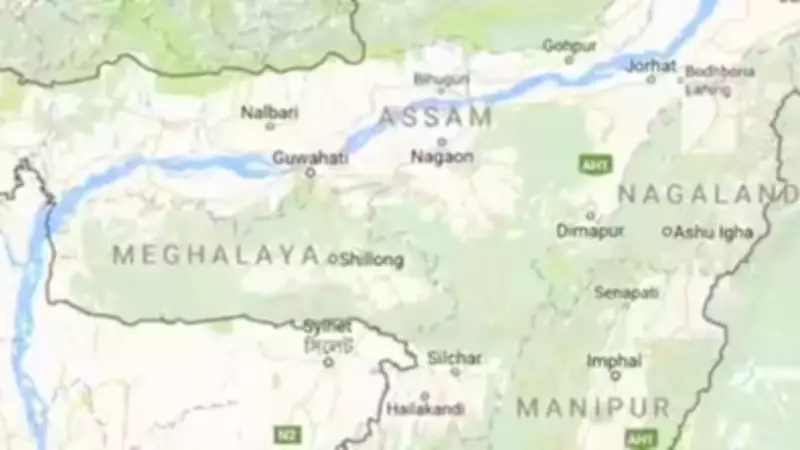
A revolutionary genetic study focusing on Assamese Indo-Aryans has fundamentally challenged long-standing colonial-era racial classifications and a prominent scientific hypothesis that portrayed Northeast India as a genetic barrier. Published in the prestigious American Journal of Human Biology, this research dismantles the notion that the region isolated populations from mainland India.
Northeast India as a Corridor, Not a Barrier
Conducted by a collaborative team from Banaras Hindu University (BHU), the University of Calcutta, and the Hyderabad-based Centre for DNA Fingerprinting and Diagnostics, the study presents compelling evidence of continuous movement and genetic mixing across Asia. The findings reveal that Northeast India functioned as a dynamic corridor, enabling bidirectional gene flow between South Asia and East and Southeast Asia.
This directly contradicts the Barrier Hypothesis, proposed by Germany's Max Planck institutes, which argued for decades that northeastern India acted to isolate populations rather than connect them.

"For decades, scientists relied on the Barrier Hypothesis. Our study directly contradicts this theory, presenting evidence that the region was instead a zone of continuous interaction and exchange," stated Prof. Gyaneshwar Chaubey of BHU's zoology department.
Advanced Methodology and Key Findings
The research employed sophisticated genetic analysis on DNA samples from 50 Assamese individuals who speak Indo-Aryan languages. Of these, 12 samples underwent detailed examination using high-resolution autosomal DNA technology, analyzing over 700,000 genetic markers across the genome. This comprehensive approach provided a far more complete picture of ancestry than previous studies that relied on limited markers like mitochondrial DNA and Y-chromosome data. The team also incorporated samples from 1,120 individuals across different parts of India and Southeast Asia for broader context.
The results were revealing:
- Assamese Indo-Aryans possess a mixed genetic heritage of approximately 76% South Asian ancestry and 24% East and Southeast Asian ancestry.
- This genetic profile highlights centuries of migration and interaction, not isolation.
- Assamese Indo-Aryans do not follow the typical genetic pattern seen across much of India. They cluster more closely with Indo-Aryan populations of Bangladesh while also sharing significant genetic links with communities from the Ganga plains, such as the Harijan and Kol groups.
Evidence of Continuous Mixing and Historical Admixture
The study also identified low levels of "Runs of homozygosity," a genetic indicator that suggests high diversity and a large effective population size. This means the Assamese population has experienced continuous genetic mixing over many generations, firmly rejecting the idea of a genetically closed or isolated population, explained Prof. Chaubey.
Using advanced analytical tools, researchers were able to estimate the timing of major historical admixture events. They determined that significant mixing occurred approximately 55 to 61 generations ago, which translates to roughly 1,650 to 1,830 years in the past. Over this extensive period, people from diverse regions migrated, interacted, and settled in Assam, collectively shaping its unique genetic identity.
Challenging a 150-Year-Old Colonial Narrative
The research carries profound historical implications. During the British colonial era, ethnographers classified the populations of Northeast India based primarily on physical appearance, labeling the inhabitants as "Mongoloid." This classification was used to portray them as a distinct racial group, separate from the so-called "Caucasoid" or "Indo-Aryan" populations of mainland India.
This colonial classification often served a political purpose, framing the Northeast as a frontier zone that was biologically and culturally detached from the rest of the Indian subcontinent.
"We have systematically challenged this 150-year-old narrative," emphasized Prof. Chaubey, marking a significant correction to a long-held historical and scientific misconception.

This landmark study not only rewrites the genetic history of Northeast India but also underscores the region's historical role as a vibrant crossroads of human migration and cultural exchange, rather than an isolated periphery.





