

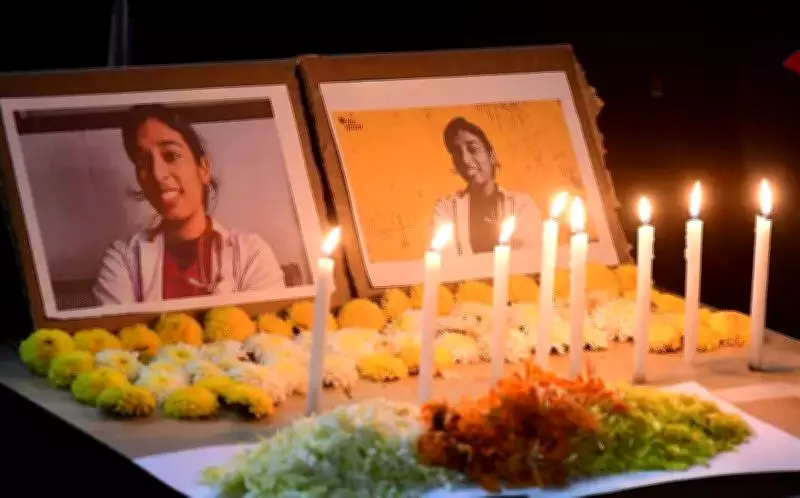
Kerala's Hospital Security Infrastructure Shows Progress Amid Implementation Gaps
More than two years after the tragic killing of young house surgeon Vandana Das inside the casualty department of Kottarakkara taluk hospital triggered statewide protests and government promises of enhanced hospital safety, official data reveals a complex picture of Kerala's response to hospital violence. While security infrastructure has seen partial expansion across the state, the operational effectiveness of emergency response systems designed to address violence remains significantly underdeveloped.
Expanded Surveillance Infrastructure Across Major Hospitals
Government figures from hospitals under the directorate of health services indicate substantial rollout of CCTV cameras, security personnel, and public address systems, particularly in major general and district hospitals. This represents a clear post-2023 investment push following the tragic incident that shook Kerala's medical community.
Ernakulam general hospital leads the state with 130 surveillance cameras, followed by Kozhikode mental health centre with 104 cameras, Sultan Bathery taluk headquarters hospital with 92 cameras, Punalur taluk hospital with 82 cameras, and Kannur district hospital with 70 cameras. Numerous other hospitals across Thrissur, Palakkad, Malappuram, and Kottayam districts report camera counts ranging from 40 to 60, demonstrating concentrated investment in visual surveillance technology.

Persistent Security Gaps in Peripheral Facilities
Despite these improvements, the data reveals stark contrasts between well-equipped urban hospitals and struggling peripheral facilities. Several hospitals continue to function with minimal or no surveillance infrastructure, creating dangerous security vulnerabilities in facilities providing round-the-clock emergency services.
Thodupuzha district hospital, taluk hospitals at Irikkur and Nileshwar, and Malayankeezhu THQH operate without any CCTV cameras, while Nooranad leprosy sanatorium functions with just a single camera. These surveillance gaps persist despite these facilities handling emergency cases regularly, highlighting uneven implementation of security measures across Kerala's healthcare network.
Code Grey Protocol Implementation Remains Incomplete
The operational core of Kerala's Code Grey protocol—which outlines comprehensive pre-emptive actions to ensure hospital, staff, and patient safety alongside procedures for security, reporting, and follow-up during violent incidents—remains particularly patchy outside urban centers. While the protocol envisions enhanced hospital security and institutionalized emergency response systems, implementation has been inconsistent across districts.
Written preparedness under Code Grey shows significant variation. Hospitals in parts of Thrissur, Palakkad, and Alappuzha report completed protocols and utilization of plan funds for walkie-talkies, alarms, and communication systems. However, many other institutions mark their protocol status as "partial," "ongoing," or "not prepared." In numerous cases, funds were received but not fully utilized, or equipment was installed without corresponding procedural clarity.
Command Center Deficiencies Undermine Surveillance Effectiveness
The presence of surveillance cameras has not automatically translated into functional monitoring capacity. A recurring deficiency across multiple districts is the absence of designated command centers to coordinate responses during emergencies.
In Thiruvananthapuram district, only the general hospital reports a functioning command center, despite multiple taluk and specialty hospitals listing between 10 and 40 cameras each. Similar patterns appear in Kollam, Kannur, Idukki, and Ernakulam's peripheral hospitals where surveillance infrastructure exists but lacks centralized control rooms to coordinate emergency responses effectively.
District-Wide Variations in Security Implementation
District-level analysis reveals stark contrasts in hospital security implementation. Alappuzha emerges as one of the more consistent districts on paper, with most major hospitals showing CCTV coverage, command centers, and security staff funded through hospital management committees.

In contrast, hill districts such as Idukki and Wayanad show incomplete protocols, missing command centers, and limited utilization of Code Grey funds, despite some hospitals reporting significant camera coverage. Kannur presents another imbalance with strong investment in cameras and security infrastructure but widespread absence of command centers and incomplete protocol adoption.
Medical Professionals Voice Implementation Concerns
Doctors' organizations highlight these gaps as evidence of deeper implementation issues. "More than two years after Code Grey was announced, its implementation remains incomplete, with compliance at around 60%," stated Kerala Government Medical Officers' Association general secretary Jobin G Joseph.
Joseph identified security deployment as one of the most significant gaps: "Under the protocol, security personnel are supposed to be ex-servicemen below the age of 60, but in many hospitals guards are either above 60 or not ex-servicemen at all." He emphasized that the protocol has been implemented largely on paper rather than in the comprehensive manner originally envisaged.
Casualty Departments Remain Violence Epicenters
Medical professionals identify casualty departments as the primary locations for hospital violence, with overcrowding acting as the main trigger. Doctors have demanded structured triaging systems in casualty departments with red, yellow, green, and black categories in descending order of urgency, along with deployment of two doctors during peak hours to manage patient load effectively.
"The government assured us these measures will be implemented at the earliest. If the assurances are not implemented immediately, we will be forced to resume the strike," Joseph warned, referencing protests held in November and January that were temporarily withdrawn based on government assurances.
Limited Documented Use of Emergency Protocols
Government data highlights the remarkably limited documented use of Code Grey protocols across Kerala's hospital network. Across the overwhelming majority of hospitals, the number of Code Grey events reported since April is either zero or marked as "not reported."
Only a few institutions break this pattern, with Pala general hospital reporting four activations, Ernakulam general hospital reporting three, Nedumkandom district hospital reporting two, and GH Alappuzha, DH Mavelikkara, THQH Mallappally, TH Thamarassery, and TH Bedadka reporting one or two activations each. Against over 140 hospital entries in government records, these isolated entries underline how rarely the protocol is formally logged and utilized.
The data collectively paints a picture of partial progress alongside significant implementation challenges, suggesting that while physical security infrastructure has expanded in response to the 2023 tragedy, the comprehensive emergency response system envisioned under Code Grey remains largely unrealized across much of Kerala's healthcare network.





