

Kidney Stones in Children: A Growing Concern in Hyderabad
In a troubling health trend, kidney stones, once predominantly an adult ailment, are now being diagnosed with alarming frequency in paediatric wards across Hyderabad. Medical experts highlight a significant shift from past decades when bladder stones, often linked to malnutrition, were more common among children in Telangana. Today, improved nutrition has reduced bladder stone cases, but a new set of risk factors is fueling a rise in kidney stones among the young, including infants.
Shift in Trends and Risk Factors
Dr. Mallikarjuna C, chief consultant urologist and managing director at the Asian Institute of Nephrology and Urology, emphasized this change. "There is a clear shift in trend," he stated. "Earlier, we mostly saw bladder stones in children, often linked to malnutrition. Now, we are diagnosing kidney stones even in one-year-olds. Genetic and metabolic factors play a major role." He explained that treatment for children requires precision, as simple endoscopy may not suffice. Extracorporeal Shock Wave Lithotripsy (ESWL) is recommended as a safe, non-invasive first-line treatment for stones smaller than 2 cm, with metabolic issues like increased calcium in urine also contributing significantly.
Dehydration and Dietary Habits as Key Triggers
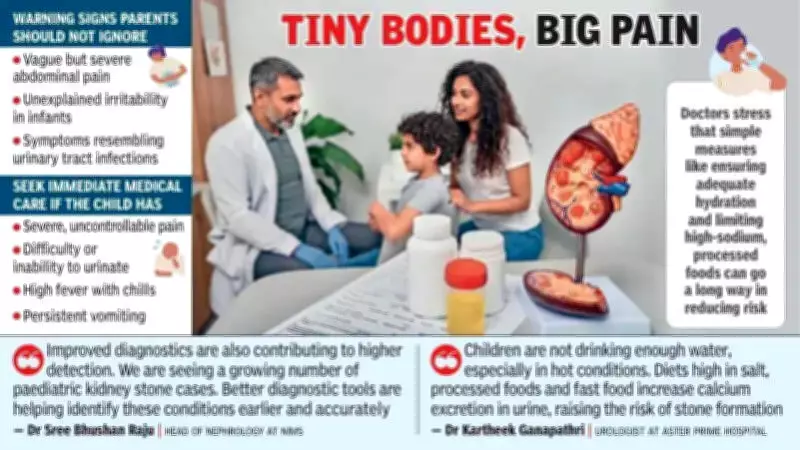
Dr. Kartheek Ganapathri, consultant urologist and andrologist at Aster Prime Hospital, noted a steady increase in cases, citing a recent operation on a four-month-old as an example of this rarity. He pointed to dehydration and poor dietary habits as primary triggers. "Children are not drinking enough water, especially in hot conditions," he said. Diets high in salt, processed foods, and fast food elevate calcium excretion in urine, thereby increasing the risk of stone formation. This combination of factors underscores the need for heightened awareness among parents and caregivers.

Improved Diagnostics and Broader Impact
Dr. Sree Bhushan Raju, head of nephrology at Nizam's Institute of Medical Sciences (NIMS), added that enhanced diagnostic tools are leading to higher detection rates. "We are seeing a growing number of paediatric kidney stone cases in our rare diseases registry," he noted. Queries from parents in neighbouring states like Karnataka indicate a broader regional concern. Early and accurate identification through advanced diagnostics is crucial for preventing severe outcomes, such as infections and long-term kidney damage.
Prevention and Treatment Strategies
To combat this rising issue, doctors recommend:
- Ensuring adequate hydration, particularly in hot climates.
- Reducing intake of high-sodium and processed foods.
- Monitoring for genetic or metabolic conditions early.
- Utilizing non-invasive treatments like ESWL for smaller stones.
Specialized care is essential, as children's cases often differ from adults, requiring tailored approaches to avoid complications.
Conclusion
The increasing prevalence of kidney stones in children in Hyderabad signals a pressing public health challenge. With factors like poor hydration, dietary habits, and genetic predispositions at play, early detection and preventive measures are vital to safeguard young kidneys from lasting harm. Medical professionals urge parents to prioritize hydration and balanced diets to mitigate risks.






