

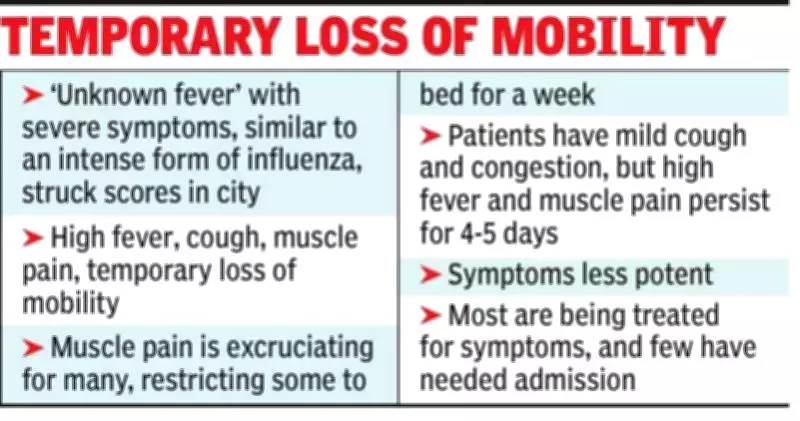
In the wake of recent viral outbreaks including Nipah, Kolkata is now grappling with a mysterious and severe viral fever that has struck numerous residents. This unidentified illness presents with symptoms strikingly similar to an intense form of influenza, causing significant concern among medical professionals and the public alike.
Severe Symptoms and Widespread Impact
The virus manifests with high fever, persistent cough, and debilitating muscle pain that has been described as excruciating by many patients. In severe cases, the muscle pain has led to temporary loss of mobility, with some individuals confined to bed for up to a week. While respiratory illnesses had been declining, this 'unknown' viral fever has now taken center stage in Kolkata's healthcare landscape.
Medical Experts Weigh In
Dr. Soumya Sengupta, Head of Pulmonology at Charnock Hospital, explained the clinical presentation: "These patients typically experience mild cough and congestion, but the high fever and muscle pain persist for four to five days. Most cases are being managed with symptomatic treatment, and fortunately, few have required hospitalization or oxygen support thus far." He attributed the outbreak to recent temperature fluctuations and predicted it would continue until weather conditions stabilize.

Hospital Reports and Diagnostic Challenges
BP Poddar Hospital has documented 26 cases of fever with 'unidentifiable origin.' Dr. Rajdip Sen, Consultant Physician at the hospital, detailed the varied presentations: "We're observing patients with moderate-grade fever where no clear source is identifiable. Some present with mild upper respiratory symptoms like sore throat or runny nose, suggesting primary viral illness, while others report only weakness, body ache, and general malaise." To exclude underlying infections, hospitals are recommending Complete Blood Count, Erythrocyte Sedimentation Rate, and C-Reactive Protein tests.
Dr. Sayan Chakrabarty, Infectious Diseases Physician at Manipal Hospital, highlighted the diagnostic limitations: "Most fevers remain undetected since comprehensive 'biofire panel' tests are rarely conducted. Viral strains mutate annually, leading to varying symptoms each season." He noted a positive development: "While we previously treated many severe bacterial pneumonia cases, we're now seeing more fever of unknown origin that responds well to medication."
Vulnerable Populations and Seasonal Patterns
Dr. Sarbajit Ray, Consultant Physician at ILS Hospitals, Salt Lake, emphasized the virus's impact on vulnerable groups: "This mostly viral illness has particularly affected elderly individuals and those with pre-existing lung or heart conditions. We strongly advise influenza and pneumonia vaccination for these high-risk populations."
Dr. MS Purkait, Medical Superintendent of Techno DAMA Hospital, connected the outbreak to seasonal patterns: "Seasonal change viruses like RSV, influenza viruses, rhinovirus, and human metapneumovirus are currently circulating. Their symptoms overlap with dengue and chikungunya, including high fever with body ache, runny nose, sneezing, and red eyes."
Treatment Approaches and Public Advisory
BP Poddar Hospital has admitted three patients for observation and supportive care, with two others receiving home care under medical monitoring. Dr. Supriyo Chakrabarty, Group Advisor at BP Poddar, issued an important warning: "We urge people to avoid self-medication and seek timely medical attention if fever persists beyond a reasonable period."
The medical community remains vigilant as this unidentified viral fever continues to affect Kolkata residents, particularly during this period of seasonal transition when multiple viruses typically circulate. Healthcare providers stress the importance of proper diagnosis, appropriate treatment, and preventive measures, especially for those most vulnerable to respiratory illnesses.






