

Kolkata Hospital Lift Tragedy Sparks Widespread Fear Among Patients and Kin
In the aftermath of a devastating incident at the Trauma Care Centre of RG Kar Medical College & Hospital in Kolkata, relatives of patients have resorted to avoiding the sole elevator designated for their use. This caution stems from a tragic event on Friday, where a malfunctioning lift led to the death of Arup Banerjee, a resident of Dum Dum. The elevator involved has since been sealed, but the ripple effects are palpable throughout the hospital.
Patients and Kin Opt for Staircases Amid Safety Concerns
Scores of patients and their family members were observed trudging up and down a rarely utilized staircase within the Trauma Care Centre on Saturday. Meanwhile, a gutkha-stained stainless steel lift, meant for patient and kin access, remained idle and unused. Many expressed deep-seated fears, with one patient relative stating, "I would have considered using the lift if there had been a lift operator. But even after the horrific accident, there was none." This sentiment underscores a broader issue of inadequate staffing and safety protocols.
Lack of Lift Operators Exacerbates Hospital Woes
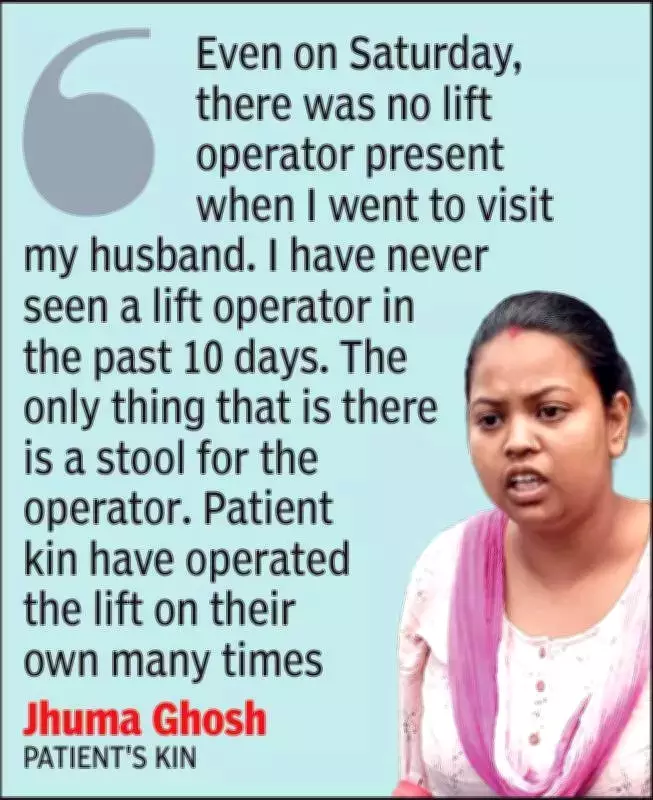
Jhuma Ghosh, whose husband has been admitted to the building for the past ten days, highlighted a persistent problem: the absence of lift operators. "Even on Saturday, there was no lift operator present when I went to visit my husband between noon and 1 pm. I have never seen a lift operator in the past 10 days. The only thing that is there is a stool for the operator. Patient kin, including me, have operated the lift on our own many times," she recounted. However, following the recent tragedy, she lacked the courage to use the lift and instead joined others in taking the stairs.

Hospital Infrastructure and Accessibility Challenges
Doctors at RG Kar Medical College noted that the staircase had been rarely used previously due to its obscure location, unknown to most visitors. "In the Trauma Centre, there is a stair, but most patients don't know it. It is not easily accessible to them. Hence, most of them have to access the lift, even if they have to go up or descend one floor," explained a doctor. The recent incident has prompted patient relatives to discover and utilize this staircase, yet concerns linger about mobility for non-ambulatory patients.
Calls for Improved Safety Measures and Manpower
Nishith Das, another patient relative, emphasized the critical need for operational lifts manned by trained personnel. "For patients who cannot walk, there is no option but to take the lift. The hospital administration must ensure that the lifts are manned by operators who know what to do in case a lift malfunctions or gets stalled," he urged. In response, hospital officials have initiated efforts to post operators in all 32 elevators across various blocks. If adequate manpower is unavailable, they plan to display cautionary posters advising against using lifts without operators. The hospital is currently in discussions with PWD and health officials to streamline manpower allocation and enhance safety protocols.






