

Martin Pistorius: A Journey from Silence to Speaking Out
For more than a decade, Martin Pistorius lived in a state of complete consciousness while being utterly unable to move or speak—a condition often described as being locked inside his own body. Today, more than ten years after regaining his ability to communicate, he stands as a father, a dedicated disability rights advocate, and a successful working professional, embodying a remarkable tale of human resilience.
The Childhood Illness That Changed Everything
In 1988, a 12-year-old Martin Pistorius returned home from school in Johannesburg complaining of a sore throat and headache. What initially seemed like flu-like symptoms rapidly worsened, leading to a gradual loss of his ability to speak, walk, and control his body. Medical professionals eventually believed he had entered a vegetative state, but the reality was far more complex.
I tested positive for cryptococcal meningitis and tuberculosis of the brain and was treated for both, Pistorius revealed in a 2024 interview. My body weakened and I lost the ability to speak and control my movements. He described the profound helplessness of his situation: Everything, from what you wear, to what you eat and drink, even if you eat or drink, to where you will be tomorrow, or next week, and there is nothing you can do about it.

Doctors reportedly informed his parents that their son had the mental capacity of an infant and advised them to take him home to die. His last spoken words were: When home? Contrary to expectations, Pistorius did not die. Instead, he spent years receiving care at home and in day-care centres, with everyone around him believing he was unaware of the world. By his own account, he regained consciousness around age 16, yet remained completely trapped—aware, listening, and thinking, but unable to communicate.
Conscious but Unheard: The Psychological Toll
For so many years, I was like a ghost, Pistorius told NBC News. I could hear and see everything, but it was like I wasn't there. I was invisible. He articulated the psychological burden of his existence in stark terms, emphasizing the complete and utter powerlessness he endured.
Every single aspect of your life is controlled and determined by someone else, he explained. They decide where you are, what you eat, whether you sit or lie down, in what position you lie in, everything. Day after day, year after year, his body remained motionless while his mind wandered. I would literally live in my imagination, he said. Sometimes to such an extent that I became almost oblivious to my surroundings.
His family faced immense struggles during this period. In one particularly painful moment, during an argument between his parents, his mother turned to him and said, I hope you die, believing he could not understand. It broke my heart, Pistorius recalled. But at the same time, particularly as I worked through all the emotions, I felt only love and compassion for my mother.
The Breakthrough That Changed Everything
A pivotal moment arrived in 2001 when therapist Virna van der Walt at his care centre noticed subtle signs of awareness in Pistorius. He had a sparkle in his eye, I could see he was understanding me, she later wrote. She urged his parents to seek cognitive testing, leading to the first demonstration that he understood what was being said to him.
She was the catalyst who changed everything, Pistorius affirmed. Had it not been for her, I would probably either be dead or forgotten in a care home somewhere. With assistive technology that converted tiny movements into speech via a computer, he could finally express himself. One memory stands out vividly: I don't think I will ever forget that feeling when my mom asked me what I'd like for supper and I said, ‘Spaghetti Bolognese,’ and then she actually made that. I know that must seem insignificant, but for me, that was amazing.

Life After Regaining Communication
Recovery was a slow and demanding process. Pistorius had to relearn reading, social interaction, and decision-making. Over time, he regained limited movement in his head and arms, though he still uses a wheelchair and assistive technology to communicate. His journey of rebuilding his life included:
- Pursuing education and learning to drive
- Building a career as a web designer
- Competing in wheelchair racing
- Sharing his story in the New York Times bestselling memoir Ghost Boy
- Regularly updating followers about his life on Instagram
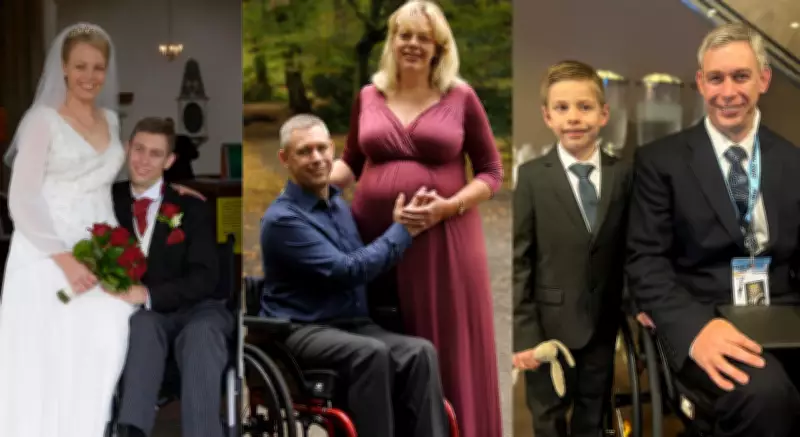
In 2009, he married Joanna Pistorius, whom he met through his sister. The couple welcomed their son, Sebastian Albert Pistorius, in December 2018, marking a new chapter of joy and family life.
Advocacy and Reflections on Resilience
Now an advocate for disability rights, Pistorius frequently speaks on themes of dignity, awareness, and the dangers of assuming someone cannot understand. On his 50th birthday, he reflected publicly on his survival: My life has held deep pain, trauma, and challenges that felt utterly insurmountable. And yet, here I am, having lived through things I was never meant to survive.
He added: When I reflect on the past 50 years, what remains is not hardship or achievement, but love, gratitude, and appreciation and a quiet, sustaining faith that has carried me through both light and dark. Despite ongoing challenges, his outlook remains forward-looking: I still face challenges, but as I step into this next year, my intention is simple: to keep showing up, to shine my light where I am able, and to give back in ways that matter.
His advice, forged through years of being seen but unheard, is clear and powerful: Treat everyone with kindness, dignity, compassion and respect, irrespective of whether you think they understand or not.
