Maharashtra's Healthcare Crisis: Rising Disease Burden Amid Declining Hospital Beds
Mumbai: Maharashtra's public health system is facing a severe and escalating crisis, with infectious diseases surging while critical healthcare infrastructure appears to be deteriorating. According to the latest state economic survey data, the number of hospital beds available per lakh population has plummeted dramatically over the past decade, creating a dangerous mismatch with the growing burden of communicable diseases.
Alarming Decline in Hospital Bed Availability
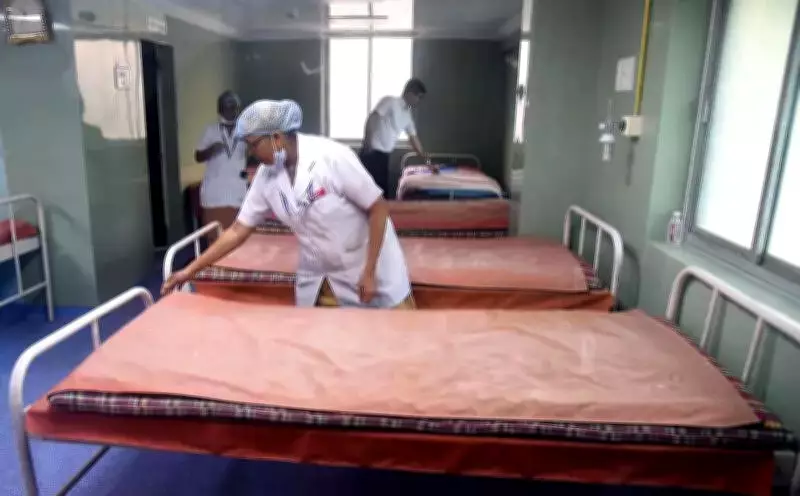
The statistics reveal a troubling trend: Maharashtra had 108 beds per lakh population in 2014, but this number has steadily decreased to just 65 beds in 2025. This represents a nearly 40% reduction in bed availability relative to population growth. The hospital bed-to-population ratio has shown particular volatility in recent years, dropping from 102 in 2020 to 59 in 2021, then increasing to 73 in 2024 before falling again to 65 in 2025.
Surge in Infectious Disease Cases
While healthcare infrastructure struggles, infectious diseases are spreading at an alarming rate across the state. Malaria cases have shown consistent annual increases, with public hospitals registering 16,760 cases and 23 deaths in 2023. These numbers rose to 20,640 cases and 26 deaths in 2024, and from June to December 2025 alone, the malaria caseload reached 20,735 with 27 fatalities.

Dengue has emerged as another major public health threat, with over half a lakh cases reported between January 2023 and December 2025, resulting in 106 deaths. Tuberculosis cases have also surged dramatically, with suspected TB patients per lakh population increasing from 2,027 in 2023 to 3,475 in 2025.
Even HIV continues to spread, with the positivity rate in Maharashtra increasing from 0.24 (representing 10,690 cases) in 2023 to 0.25 (10,830 cases) in 2025.
Conflicting Explanations for Infrastructure Decline
A state health official offered an explanation for the apparent decline in bed availability, stating that "till 2020, our calculation of total beds included those in the state's government, municipal, and charity trust-run hospitals. We only excluded private or corporate hospitals." However, from 2020 onward, the state public health department stopped including charity trust-run hospital beds in their calculations, which they claim accounts for the drop in the bed-to-population ratio.
Health economist and Jan Swasthya Abhiyan member Dr. Ravi Duggal challenged this explanation, suggesting that "65 beds per lakh population seems to be an underestimation or a calculation error. We talk about Digital India, but we seem to be getting basic data wrong."
Government's Defense of Healthcare Infrastructure
State government officials defended Maharashtra's healthcare system, pointing to the extensive network of public hospitals. According to one official, the public health department operates:
- 20 district hospitals
- 71 sub-district hospitals with 100 beds each
- 374 sub-district hospitals with 50 beds each
This totals 609 hospitals of various types and sizes across the state, providing 29,364 beds. Additionally, the state department of medical education runs 35 medical colleges with over 500 beds each. "There are adequate beds in the public hospitals," the official asserted.
The Growing Public Health Challenge
The simultaneous trends of rising infectious diseases and declining bed availability present Maharashtra with a significant public health challenge. The economic survey data paints a picture of a healthcare system under increasing strain, with malaria, dengue, tuberculosis, and HIV all showing upward trajectories while infrastructure metrics suggest reduced capacity to handle this growing burden.
As the state grapples with these conflicting narratives about healthcare infrastructure, the undeniable reality remains that infectious diseases are spreading more widely each year, creating an urgent need for both accurate data collection and effective public health interventions to protect Maharashtra's population.