Mangaluru Men Lead Shift in Fertility Awareness, Breaking Traditional Masculinity Taboos
In a progressive move that challenges deep-seated cultural beliefs, men in Mangaluru are increasingly stepping forward for fertility testing, signaling a notable transformation in how reproductive health is perceived in the region. This shift comes as medical professionals report that male factors are responsible for a substantial portion of infertility cases, yet stigma surrounding masculinity and fertility persists.
Rising Numbers and Statistical Insights
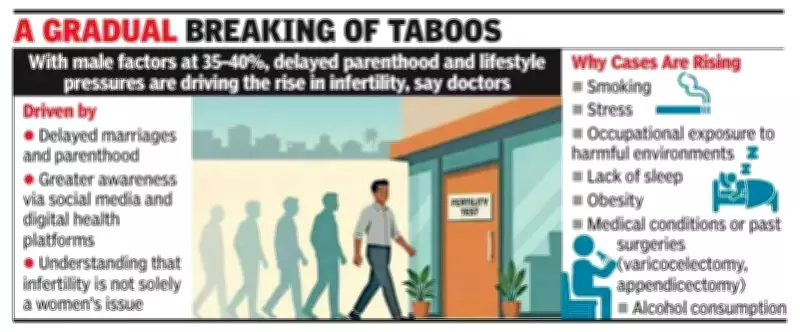
According to Dr. Gaurav Gujarathi, senior consultant and centre head at Birla Fertility & IVF in Mangaluru, male infertility accounted for 35–40% of cases in 2025, with doctors observing an approximate 5% annual increase. He emphasized that male factors alone contribute to 25–30% of infertility cases in the area, while combined male-and-female factors make up nearly 50–60% of instances.
"We are witnessing a clear trend where more men, particularly from urban backgrounds, are opting for fertility assessments," Dr. Gujarathi noted. "This reflects a broader change in attitudes, driven by factors such as delayed marriages, later decisions to start families, and enhanced awareness through digital platforms."

Key Drivers Behind the Changing Mindset
Experts attribute this positive development to several interconnected factors. Greater accessibility to health information via social media and online health portals has played a crucial role in educating the public. There is now a more nuanced understanding that infertility is not exclusively a women's issue, which encourages couples to seek joint evaluations earlier in their reproductive journeys.
Dr. B. Ramesh, an obstetrician, gynaecologist, laparoscopic surgeon, and IVF specialist based in Bengaluru, reported a significant 30–40% surge in male fertility testing over the past three to four years. "Younger men in their late twenties and thirties are notably more health-conscious, better informed, and less reluctant to engage in conversations about reproductive health," he explained.
Dr. Ramesh highlighted the influence of corporate wellness initiatives, fertility awareness campaigns, and the proliferation of reliable online health content as key enablers of this behavioral shift.
Persistent Stigma and Psychological Barriers
Despite these advancements, medical professionals caution that societal stigma has not been entirely eradicated. Long-held beliefs that erroneously link fertility with masculinity continue to deter some men from seeking timely medical consultations.
Urologist and surgeon Dr. Shakir Tabrez commented on this ongoing challenge: "While the stigma has undoubtedly reduced, it has not disappeared completely. Many men still experience discomfort when discussing fertility matters, which can lead to unnecessary delays in testing and treatment. However, we are encouraged to see that conversations are becoming progressively more open and less judgmental compared to previous years."
Common Causes and Affordability of Testing
Dr. Gujarathi outlined several prevalent factors contributing to male infertility, emphasizing lifestyle and environmental influences. "Smoking remains one of the most significant contributors, followed closely by chronic stress, inadequate sleep, occupational exposure to harmful substances, obesity, and excessive alcohol consumption," he stated.
Additionally, certain medical conditions and surgical procedures, such as varicocelectomy or appendicectomy, can impact fertility. Dr. Gujarathi reassured that standard fertility testing is generally affordable and accessible, though more complex cases like azoospermia may necessitate genetic testing, which involves higher costs.
He also pointed out that increased workplace stress, rising instances of sexual dysfunction, and exposure to high-temperature environments are prompting more men to proactively seek evaluations.
The Path Forward: Encouraging Open Dialogue
The collective insights from healthcare providers in Mangaluru and beyond underscore a critical message: continued efforts are needed to normalize discussions around male fertility. By fostering environments where men feel supported and informed, the medical community aims to further reduce stigma and encourage early intervention.

This evolving narrative in Mangaluru serves as a beacon for other regions, demonstrating that with increased awareness and shifting societal norms, men can play an active and empowered role in reproductive health without compromising their sense of masculinity.