

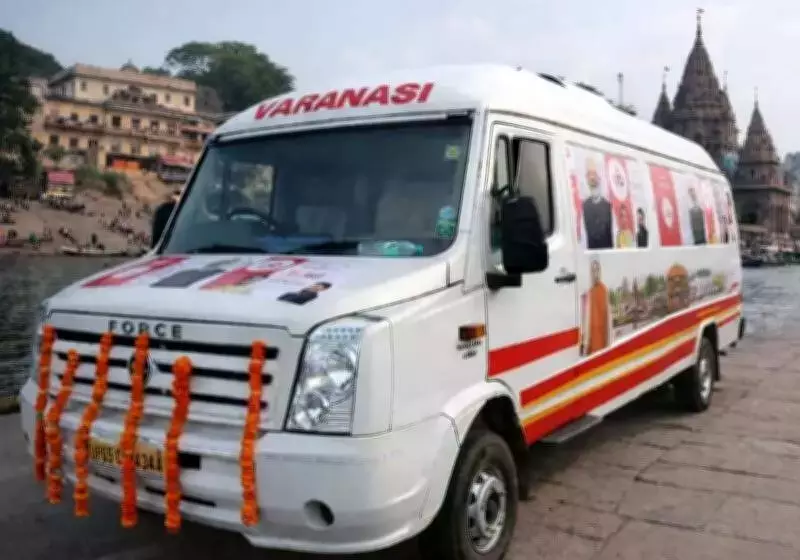
Namo Shakti Rath Initiative Screens Over 11,500 Women for Breast Cancer in Varanasi
In a significant public health drive, the Namo Shakti Rath campaign has successfully screened approximately 11,500 women for breast cancer across both urban and rural regions of Varanasi. This initiative, launched on January 14, leverages state-of-the-art mobile units equipped with advanced cancer detection technology to provide accessible healthcare services.
Government and ITV Foundation Collaboration
The campaign is a collaborative effort between the government and the ITV Foundation, which has supplied 20 Namo Shakti Rath vans specifically to Varanasi district. Chief Development Officer Prakhar Kumar Singh detailed the operational strategy, noting that nine vans were deployed in rural areas and 11 in urban zones to ensure comprehensive coverage.
With the support of ASHA and Anganwadi workers, women were proactively informed and encouraged to participate in the screenings. This grassroots mobilization played a crucial role in maximizing turnout and ensuring that a diverse demographic of women could benefit from the services.

Extensive Reach and Preliminary Findings
The screening efforts have spanned more than 56 wards in urban locales and over 59 gram panchayats in rural settings. As of February 8, the campaign has identified 225 women as suspicious or potential cases, highlighting the critical need for such preventive measures.
To further bolster the initiative, the government plans to partner with a specialized cancer hospital for the detailed examination and treatment of these potential patients. This integrated approach aims to provide a seamless transition from detection to care.
Future Expansion and Goals
ITV Founder and Rajya Sabha MP Kartikeya Sharma outlined the campaign's ambitious future plans. In its first phase, the initiative is projected to operate across 260 gram panchayats and 92 wards within the Varanasi parliamentary constituency.
The campaign is committed to continuing until complete saturation of health services is achieved, ensuring that no woman is left without access to screening. This endeavor is widely regarded as a robust step toward delivering health services with respect, dignity, and equal opportunity for all women in the region.






